
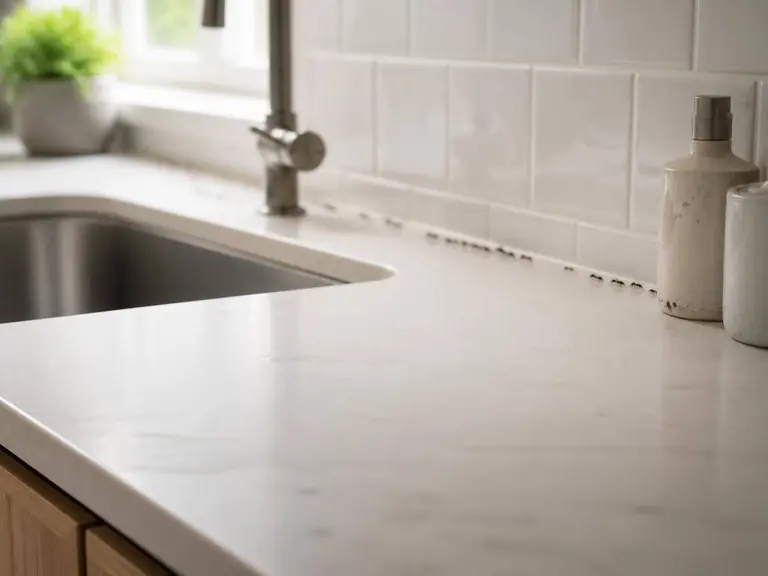
Quick answer: an ant problem
Ants come inside for water and sugar, and they follow pheromone trails laid by scouts. Spraying the trail kills workers and makes the colony split. Use slow-acting bait so foragers carry it back. Large black ants plus fine sawdust means carpenter ants and a moisture problem.
Get it inspected
Most ants are a nuisance. Carpenter ants and, in the South, structural damage from moisture-loving species mean real repairs. Never ignore large black ants with sawdust.
Most likely causes of an ant problem, ranked
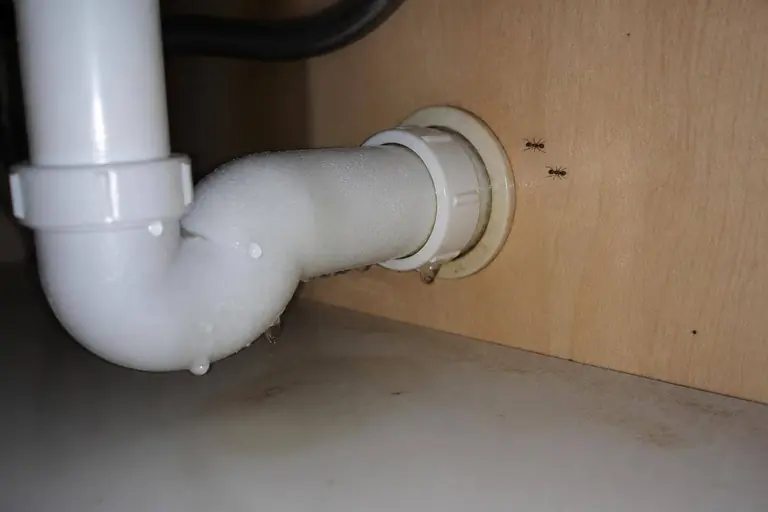
A moisture source they are drinking from
Most common driver, especially in summer heat and drought
Ants need water constantly. A sweating toilet tank, a slow supply line under the sink, a condensate line dripping in a closet, or a leaking dishwasher gasket keeps a trail alive indefinitely. This is why the same ants come back every year to the same bathroom.
10-minute self-test: Follow the trail backwards for two minutes with a flashlight instead of wiping it up. It will lead to the water or the entry point. Then check under sinks, behind the toilet and around the dishwasher with a dry paper towel.
Accessible sugar and grease
Very common
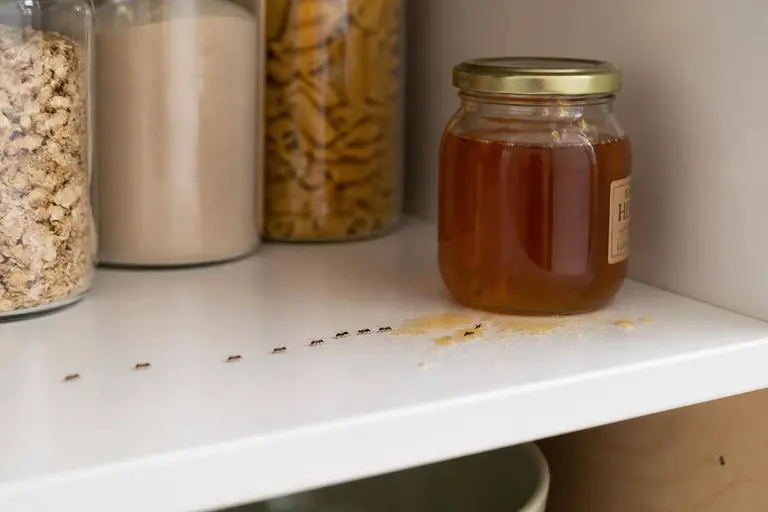
Odorous house ants and pavement ants target sugars in spring and summer and shift toward protein and grease at other times. The reservoirs people miss are the crumb layer under a toaster, syrup residue on a bottle, pet food left down overnight, and the sticky ring under a trash can liner.
10-minute self-test: Put a small dab of honey and a small dab of peanut butter on separate index cards near the trail. Which one they swarm tells you which bait to buy — sugar-based or protein-based. Baiting the wrong one is why most bait stations 'do not work.'
Direct entry paths: siding, foundation gaps and vegetation bridges
Common and totally fixable
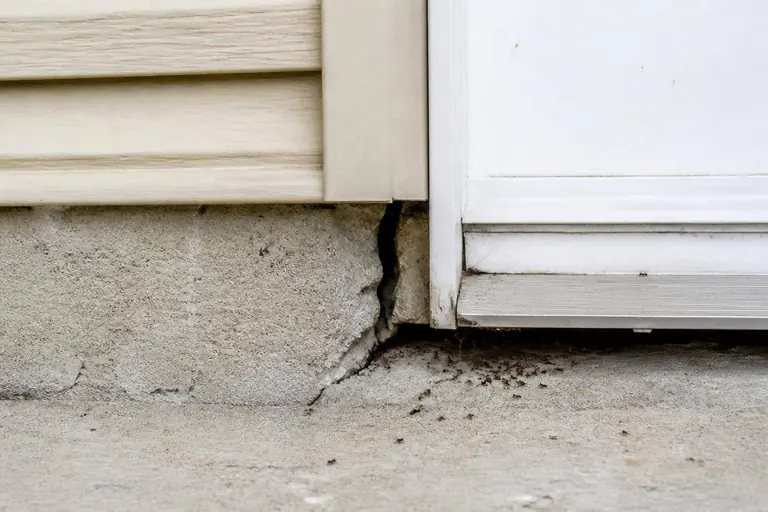
Ants enter through weep holes in brick, gaps around utility penetrations, and unsealed sill plates. Tree branches touching the roof and shrubs against siding are highways that bypass every barrier at ground level. InterNACHI inspectors flag vegetation contact with siding for exactly this reason.
10-minute self-test: Go outside at dusk with a flashlight and follow the trail to the exterior. You will usually find it entering at a specific crack, a utility penetration, or up a plant stem. Mark it with tape.
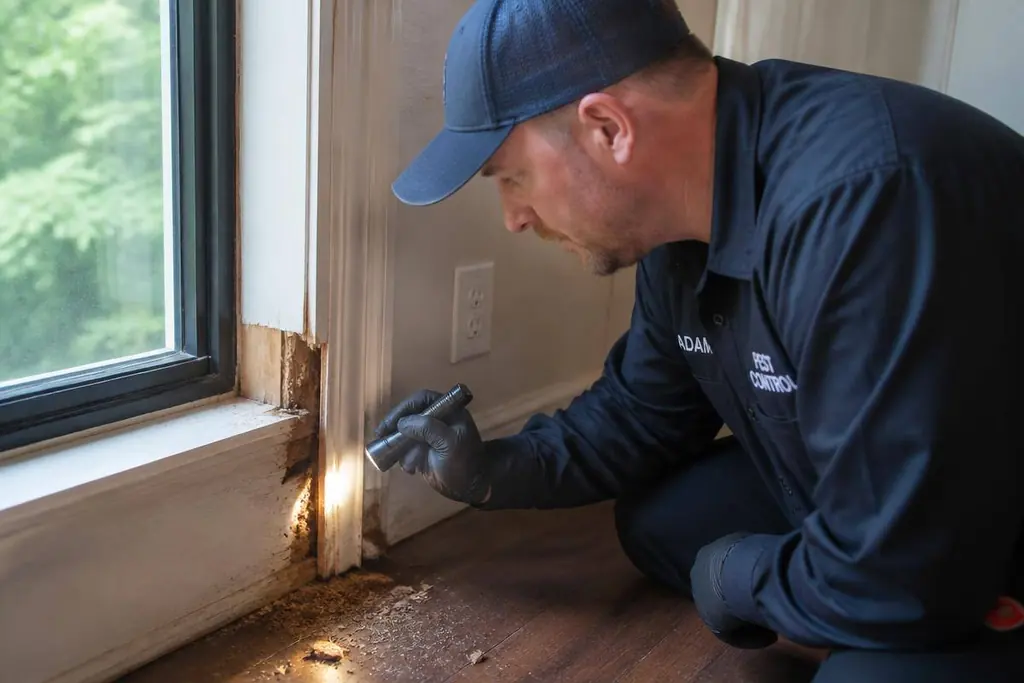
Carpenter ants nesting in damp wood
Serious when present — check for it explicitly
Carpenter ants are 6–13 mm, usually black, with a smoothly rounded thorax. They do not eat wood; they excavate galleries in wood that has been softened by moisture, typically around leaking window sills, roof leaks, deck ledgers and sill plates. The tell is frass — a small pile of what looks like sawdust mixed with insect parts. Winged swarmers inside the house in spring mean the nest is inside.
10-minute self-test: Look for frass piles below window trim, in the basement along the sill plate, and under the sink. Tap suspect wood with a screwdriver handle: a hollow sound and a probe that sinks in easily means galleries. Listen at a quiet wall at night — active carpenter ant colonies make a faint rustling.
Seeing large black ants or sawdust?
A satellite colony already inside the structure
Common in long-running infestations
Odorous house ants readily establish satellite nests in wall voids, under insulation, and behind dishwashers. Repeated spraying triggers budding: the colony splits into multiple queens and multiple nests, which is why the problem gets worse after aggressive spraying.
10-minute self-test: Watch trails at 9–10pm with a flashlight, when foraging peaks. Trails moving from an interior wall outward rather than inward mean the nest is inside.
What it costs to fix an ant problem
Liquid sugar bait stations (borax-based)
DIY cost
$8–$20
Professional cost
n/a
Protein/grease gel bait
DIY cost
$10–$25
Professional cost
n/a
Exterior caulk and foam sealing
DIY cost
$30–$80
Professional cost
$300–$900
Door sweeps and weep-hole screens
DIY cost
$20–$60
Professional cost
$150–$400
Trimming vegetation off the house
DIY cost
$0–$60
Professional cost
$200–$600
Fixing a leaking supply line or trap
DIY cost
$15–$40
Professional cost
$150–$400
Professional ant treatment (single service)
DIY cost
n/a
Professional cost
$150–$350
Quarterly pest control contract
DIY cost
n/a
Professional cost
$400–$700 per year
Carpenter ant treatment + moisture repair
DIY cost
n/a
Professional cost
$500–$3,000
Replacing rotted sill plate or framing
DIY cost
n/a
Professional cost
$1,500–$8,000
DIY fixes for an ant problem
Bait, do not spray
Slow-acting borate or hydramethylnon baits let foragers survive long enough to feed the queen and brood. Expect ant activity to increase for 2–4 days — that means it is working. Colony collapse typically follows in 7–14 days.
Leave the trail alone until the bait is out
The pheromone trail is your delivery route. Wiping it up before baiting scatters foragers. Place bait directly on the trail, then clean up once activity stops.
Test sugar versus protein first
The honey-and-peanut-butter card test takes ten minutes and doubles your success rate. Colonies switch preference seasonally.
Cut off the water
Fix the drip, insulate a sweating toilet tank or cold water line, and wipe sinks dry at night. An ant colony with no water source inside stops coming in.
Create a 12-inch dry, plant-free band around the foundation
Pull mulch back from the siding, trim branches at least 3 feet off the roof, and move firewood away from the wall. This is standard InterNACHI-recommended practice and it removes the highways.
Seal entries after the colony dies, not before
Sealing first just reroutes them. Kill the colony with bait, then caulk the cracks and screen the weep holes so the next colony has to work harder.
Where homeowners waste money on an ant problem
- Spraying visible ants with an aerosol. You kill 1% of the colony and trigger budding.
- Cinnamon, coffee grounds, vinegar and chalk lines. They may briefly disrupt a trail; they do not touch the colony.
- Ultrasonic pest repellers. The FTC has taken enforcement action against these marketers, and controlled studies show no effect.
- Quarterly contracts for a seasonal ant problem you could bait out in two weeks for $15.
When to call a pro about an ant problem
Call a professional immediately for carpenter ants, fire ants, or if you see winged swarmers indoors. Carpenter ant treatment requires locating and treating the nest — and, critically, fixing the moisture that softened the wood.
Ask any pro whether they will bait or spray. A perimeter spray with a repellent product on odorous house ants can cause colony budding and make the problem worse. Non-repellent products and baits are the modern standard.
If someone quotes a structural repair for carpenter ant damage, get an independent assessment. Carpenter ants excavate slowly; catastrophic damage takes years and usually accompanies rot that would need repair regardless.
Frequently asked questions
Why do I have ants when my house is clean?
Water is the more common draw, especially in summer heat and drought. A sweating pipe, a slow supply-line drip or condensation under a sink sustains a trail indefinitely with no food involved. Ants also enter simply because your foundation is warm and dry compared to a saturated yard after rain.
Why did spraying make my ant problem worse?
Repellent sprays kill foragers and scatter the rest. Several common species, especially odorous house ants, respond to that stress by budding — the colony splits into multiple satellite nests with their own queens. You go from one trail to five. Use slow-acting bait so the workers carry the active ingredient back to the queen.
How do I know if they're carpenter ants?
Carpenter ants are large (6–13 mm), typically black, and have an evenly rounded thorax when viewed from the side. The definitive sign is frass: a small pile of shredded wood mixed with insect body parts, usually below a crack in trim or framing. Frass plus a moisture stain means you have both a pest problem and a leak.
How long does ant bait take to work?
Activity increases for 2–4 days as foragers recruit others to the bait, then drops sharply. Most colonies collapse in 7–14 days. If you still see heavy activity after three weeks, you likely have the wrong bait type or multiple colonies — run the sugar-versus-protein card test again.
Related problems
- Why Is My House Full of Spiders?
- Why Is My House Infested With Flies?
- Why Is My House So Humid?
- Why Is My House Smelling Musty?
Sources
- University extension IPM programs — ant identification and baiting protocols
- EPA — Integrated Pest Management for homes
- InterNACHI — wood-destroying organism inspection standards
- FTC — enforcement actions on ultrasonic pest repeller claims