
Why Is My House So Humid?
Reviewed 2026-07-30 · How we research
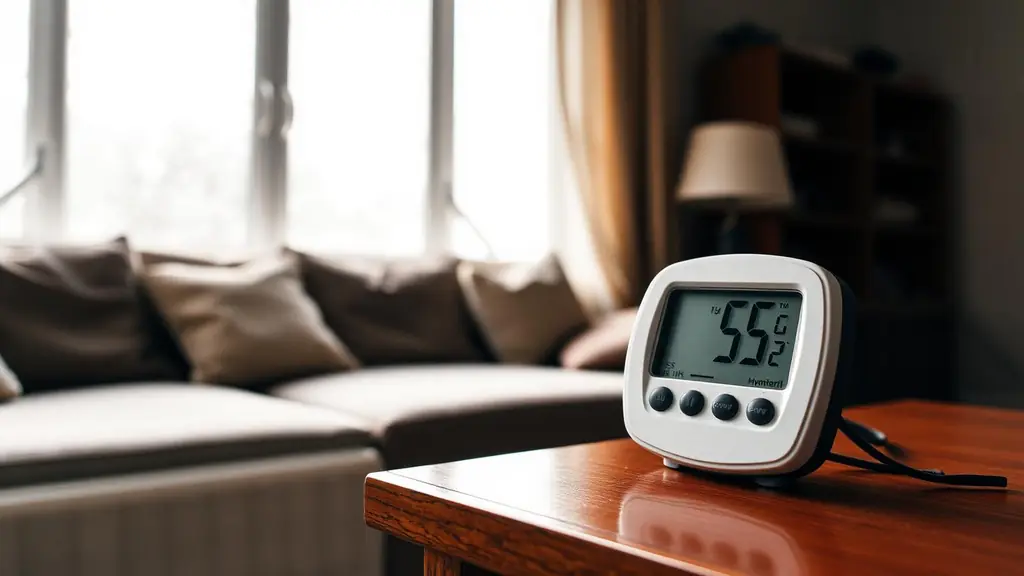
Quick answer: a house that feels so humid
Your house is humid because moisture is entering faster than it leaves. The top causes are an oversized air conditioner that cools without dehumidifying, unvented bathroom or kitchen steam, and ground water wicking through a basement slab. Measure with a $10 hygrometer: EPA recommends 30–50% relative humidity.
Get it inspected
Sustained relative humidity above 60% grows mold on drywall, wood and fabric in 24–48 hours. Fix it within weeks, not months.
Humidity is not a feeling. It is a number, and you can own that number for about ten dollars. The EPA and ASHRAE both put healthy indoor relative humidity between 30% and 50%. Above 60%, mold germinates on paper-faced drywall, leather and wood within 24 to 48 hours. Dust mite populations explode above 50%.
Buy a digital hygrometer and place it 4–5 feet off the floor, away from vents and exterior walls. Let it sit for an hour. Now you have data instead of a hunch. Below are the causes ranked by how often a home inspector actually finds them.
Most likely causes of a house that feels so humid, ranked
1. Your air conditioner is oversized and short-cycles
Most common — the single biggest cause in cooling climates
An air conditioner removes humidity only while the coil is cold and the blower keeps running. A unit that is too large for the house hits the thermostat setpoint in 6–8 minutes, shuts off, and never pulls the latent moisture out of the air. The house is cold and clammy at the same time. Correctly sized equipment runs 15–20 minute cycles on a design day. Contractors oversize constantly because a too-big unit never gets a callback for 'not cold enough' — it just leaves you damp.
10-minute self-test: Time three cooling cycles on a hot afternoon with a phone stopwatch. Cycles shorter than 10 minutes with humidity above 55% mean oversizing or an airflow problem. Then hold the hygrometer at a supply register: the air leaving a healthy coil should be 16–22°F colder than the air at the return grille.
2. Bathroom and kitchen steam has nowhere to go
Very common — roughly 1 in 3 humid houses
A ten-minute shower releases about half a pint of water into the air. Cooking a pot of pasta adds more. Building codes call for 50 CFM of continuous or intermittent exhaust in a bathroom and 100 CFM over a range. Many fans move a fraction of their rating because the duct is crushed, too long, or dumps into the attic instead of outdoors — which just relocates your mold problem above the ceiling.
10-minute self-test: Run the bathroom fan and hold a single square of toilet paper against the grille. If it does not stick flat on its own, the fan is failing. Then go outside and find the exhaust termination. No cap on the wall or roof means it is venting into your attic.
3. Ground moisture wicking through a basement or crawlspace
Common in any home with a below-grade level
A bare concrete slab can pass 10–12 pounds of water vapor per 1,000 square feet per day. A dirt crawlspace passes far more. That vapor rises into the living space through the stack effect. This is why the basement dehumidifier runs constantly and the upstairs still feels sticky — you are dehumidifying the earth.
10-minute self-test: Tape a 12x12 inch square of clear plastic sheeting to the slab or crawlspace floor, sealing all four edges with duct tape. Check it in 24 hours. Water droplets underneath means vapor is coming through the concrete. Droplets on top means room air is condensing and your humidity source is elsewhere.
4. Gutter and grading failures dumping water at the foundation
Common — and the cheapest to fix
One inch of rain on a 1,500 sq ft roof drops roughly 900 gallons of water. If downspouts discharge within 2 feet of the wall, that water saturates the soil against your foundation and then evaporates into the basement. InterNACHI inspectors want to see soil sloping away at 6 inches of fall over the first 10 feet, and downspouts extended at least 4–6 feet out.
10-minute self-test: During or right after rain, walk the perimeter. Look for splash marks on siding, pooled water, and mulch washed against the wall. Lay a 4-foot level on the soil with a block under the far end to check the slope.
5. Unvented gas appliances or a leaking duct in a humid space
Less common but frequently missed
Burning one gallon of propane or natural gas releases roughly a gallon of water vapor. Unvented gas fireplaces and portable propane heaters put every bit of that inside your house, along with combustion byproducts. Separately, return ducts running through a vented crawlspace or attic pull hot, humid outside air directly into the system.
10-minute self-test: Turn on any vent-free gas appliance and watch the nearest window for condensation within 20 minutes. For ducts, run the blower and feel around return duct joints in the crawlspace or attic for air being sucked in.
What it costs to fix a house that feels so humid
| Cause / repair | DIY cost | Professional cost |
|---|---|---|
| Hygrometer to diagnose | $10–$25 | n/a |
| Bathroom fan replacement (80–110 CFM) | $60–$140 | $250–$600 |
| Downspout extensions + regrading | $40–$300 | $600–$2,500 |
| Portable dehumidifier (50 pint) | $200–$320 | n/a |
| Crawlspace vapor barrier (6–20 mil) | $150–$500 | $1,500–$5,000 |
| Full crawlspace encapsulation | not realistic | $5,000–$15,000 |
| Duct sealing (mastic or aeroseal) | $30–$80 | $900–$3,000 |
| Right-sizing / replacing AC with variable speed | n/a | $6,000–$14,000 |
| Whole-house ventilating dehumidifier | n/a | $2,500–$4,500 |
DIY fixes for a house that feels so humid
Run the AC fan on AUTO, never ON
With the fan set to ON, the blower keeps running after the compressor stops and re-evaporates the water sitting on the coil, pushing it straight back into your house. Switching to AUTO can drop indoor RH by 5–8 points and costs nothing.
Raise the thermostat 2°F and add a ceiling fan
A longer, warmer cooling cycle removes more moisture than a short cold one. Air movement at 3 mph feels about 4°F cooler on skin. You end up more comfortable at 76°F and 45% RH than at 72°F and 62% RH.
Put bathroom fans on a countdown timer
A $25 timer switch set to 30 minutes ensures the fan runs long after you leave. Steam needs 20–30 minutes to clear, and nobody remembers to come back.
Extend every downspout to 6 feet
Corrugated extensions cost $8 each and are the highest-return hour of work in this entire article. Do this before you buy a dehumidifier.
Cover the crawlspace dirt with 6-mil plastic
Overlap seams by 12 inches, run the sheeting 6 inches up the foundation wall, and tape it. This alone routinely drops crawlspace RH by 20 points.
Size the dehumidifier correctly and drain it to a floor drain
For a damp 1,500 sq ft basement, use a 50-pint unit. Set it to 45–50%. Emptying a bucket by hand guarantees you will stop using it by August.
Where homeowners waste money on a house that feels so humid
- Moisture-absorbing tubs of calcium chloride crystals. A tub pulls a few ounces of water. Your house gains gallons a day.
- Running a dehumidifier in an open basement while the crawlspace dirt is still bare. You are dehumidifying the soil.
- Adding foundation vents to a crawlspace in a humid climate. Warm outside air hits cool surfaces and condenses — modern building science says seal and condition instead.
- Ozone generators. They do not remove moisture and the EPA warns they produce lung-irritating levels of ozone.
When to call a hvac contractor or waterproofing specialist about a house that feels so humid
Call an HVAC contractor if humidity stays above 55% with the AC running and your cooling cycles are under 10 minutes. Ask specifically for a Manual J load calculation — not a rule-of-thumb estimate off square footage. If they will not do one, call someone else.
Call a waterproofing contractor if the plastic-sheet test showed moisture coming through the slab, if you see efflorescence (white crystalline powder) on foundation walls, or if water enters during rain.
Call a mold remediation professional if you find visible growth over roughly 10 square feet, which is the EPA's threshold for recommending professional cleanup rather than DIY.
Why Is My House So Humid — questions homeowners ask
What humidity level should my house be at?
The EPA recommends keeping indoor relative humidity between 30% and 50%, and never above 60%. In winter, drop toward 30–40% to avoid condensation on windows. Mold needs sustained surface humidity above roughly 70% to grow, which happens on cold surfaces long before the room reading hits that number.
Does air conditioning remove humidity?
Yes, but only while the compressor is running and the coil is cold. A properly sized system removes 20–30% of its total capacity as latent heat (moisture). An oversized system satisfies the thermostat too fast and leaves the house cold and clammy. That is why 'my AC works but the house feels damp' is a sizing problem, not a refrigerant problem.
Will a dehumidifier lower my energy bill?
No — a 50-pint dehumidifier draws roughly 500 watts and adds about $15–$25 a month if it runs half the time. It also dumps heat into the room. It is a symptom treatment. Fixing drainage, ducts and exhaust fans lowers both humidity and the bill.
How fast does mold grow in a humid house?
Mold spores are already present everywhere. Given a cellulose surface such as drywall paper and sustained relative humidity above 60%, visible growth can start in 24–48 hours and colonize within 7–10 days. That is why humidity is a weeks-not-months problem.
Problems related to a house that feels so humid
- Why Is My House Smelling Musty?Often shows up alongside this problem. A musty smell is microbial volatile organic compounds — geosmin and 2-methylisoborneol — released by mold and bacteria digesting damp material.Smells & Odors Get it inspected
- Why Is My House So Cold?Often shows up alongside this problem. Most cold houses lose heat through air leaks and thin attic insulation, not through a weak furnace.Heating, Cooling & Air Get it inspected
- Why Is My House So Dusty?Often shows up alongside this problem. If you dust and it returns in two days, air is entering from somewhere unfiltered — usually leaking return ducts pulling dirty air from an attic or crawlspace.Heating, Cooling & Air Get it inspected
- Why Is My House So Hot?Often shows up alongside this problem. A hot house is usually attic heat and window solar gain overwhelming an air conditioner that cannot keep up.Heating, Cooling & Air Get it inspected
Sources used for a house that feels so humid
- US EPA — Mold Course and indoor humidity guidance (30–50% RH)
- ASHRAE Standard 55 — Thermal Environmental Conditions for Human Occupancy
- ASHRAE Standard 62.2 — Ventilation and Acceptable Indoor Air Quality in Residential Buildings
- InterNACHI Standards of Practice — exterior grading and drainage
- US DOE Building America — crawlspace and foundation moisture control