
Why Is My House Getting a Damp Crawl Space?
Reviewed 2026-07-30 · How we research
Quick answer: damp crawl space
A damp crawl space almost always comes from ground moisture evaporating through exposed dirt, groundwater seeping in, or humid outside air condensing inside a vented crawl space during summer. Bare soil without a vapor barrier is the single biggest contributor.
Get it inspected
A chronically damp crawl space feeds moisture and mold spores directly into the floor system and can raise whole-house humidity through stack effect. Left unaddressed for years it leads to wood rot and structural repairs.
Crawl spaces sit directly above soil and, in most older homes, are vented to the outside — a design that seemed logical decades ago but that modern building science has shown often makes moisture worse, not better, especially in humid climates.
The Department of Energy and most building scientists now favor sealed, conditioned crawl spaces over vented ones for exactly this reason: vents let in humid summer air that condenses on the cooler foundation and framing.
Warning signs of damp crawl space
- Musty smell noticeable through floor vents or in the room above the crawl space
- Visible condensation or wet dirt when you look into the crawl space
- Insulation sagging or falling from the floor joists
- Wood floor joists showing dark staining, softness or visible mold
- Higher indoor humidity readings on the main floor above the crawl space
Most likely causes of damp crawl space, ranked
1. No vapor barrier over exposed soil
Most common — present in the large majority of damp crawl spaces
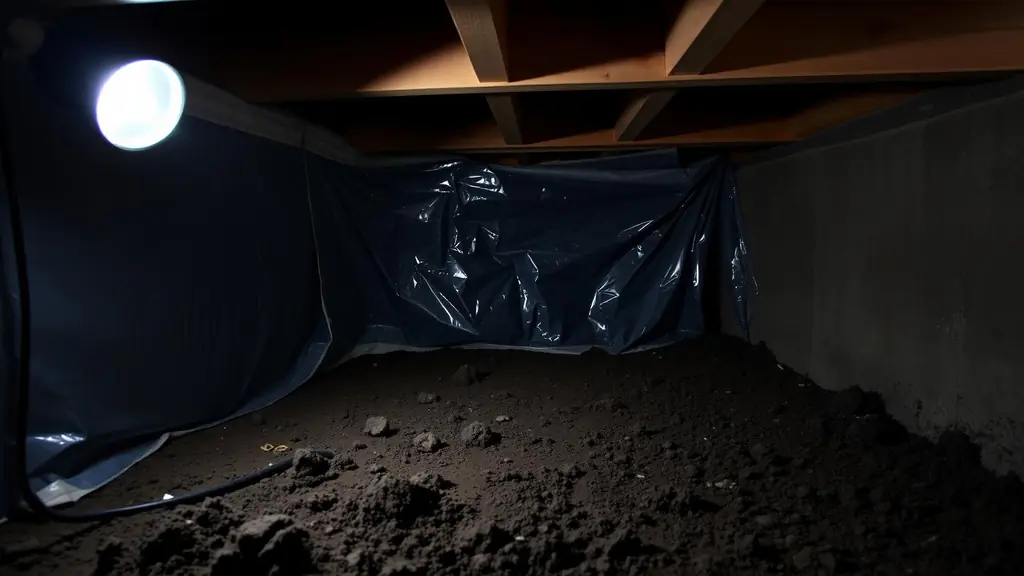
Bare dirt in a crawl space releases water vapor continuously through evaporation, and a single 1,000-square-foot crawl space can release many gallons of water into the air each week without a barrier. The IRC requires a minimum 6-mil polyethylene vapor barrier over exposed crawl space soil for exactly this reason.
10-minute self-test: Look for exposed dirt anywhere in the crawl space. If any barrier present is torn, overlapping poorly, or not sealed at the edges, ground moisture is still entering the air.
2. Humid outdoor air entering through foundation vents (summer condensation)
Very common in humid and mixed climates
Traditional foundation vents let warm, humid outdoor air into a crawl space that is naturally cooler because it sits below grade and is shaded. That humid air condenses on the cooler foundation walls, ductwork and floor joists, which is why many vented crawl spaces are wettest in mid-summer, not during rain.
10-minute self-test: Check for condensation droplets on ductwork, pipes, or the foundation wall itself on a hot humid day, even when it hasn't rained recently.
3. Groundwater or surface water entering through foundation walls or the dirt floor
Common in poorly graded or high water-table lots
The same grading and gutter issues that flood basements affect crawl spaces — water pools against the foundation and either seeps through the wall or rises through the dirt floor, especially after heavy rain.
10-minute self-test: Check the crawl space the day after a heavy rain for standing water or visibly wet soil, and compare downspout discharge points to the crawl space perimeter.
This cause is not a DIY repair — it needs a crawl space encapsulation contractor.
4. Plumbing leaks or condensation from ductwork inside the crawl space
Less common but persistent when present
A slow supply line leak or a poorly insulated cold-air return running through a humid crawl space can add a continuous, localized moisture source, often revealed by a wet or discolored patch of soil directly under a pipe or duct joint.
10-minute self-test: Trace visible plumbing and ductwork with a flashlight for drip marks, rust, or a wet spot in the soil beneath a specific joint.
This cause is not a DIY repair — it needs a crawl space encapsulation contractor.
5. Poor or blocked crawl space ventilation in an intentionally vented design
Less common as a root cause, common as an amplifier
In climates and code jurisdictions still using vented crawl space design, vents blocked by landscaping, debris or pest screens reduce the airflow that design depends on to dry the space between wet periods.
10-minute self-test: Confirm each foundation vent is unobstructed by mulch, plants or debris, and check that vent area matches roughly 1 square foot per 150 square feet of crawl space floor per common code guidance.
Your 10-minute check list for damp crawl space
- Look for exposed dirt without a vapor barrier
- Check for condensation on ducts, pipes or walls on a humid day
- Inspect the crawl space the day after heavy rain
- Trace plumbing and ductwork for wet spots underneath
- Confirm foundation vents are unobstructed
What it costs to fix damp crawl space
| Cause / repair | DIY cost | Professional cost |
|---|---|---|
| 6-mil vapor barrier installation (DIY) | $200–$500 | n/a |
| Professional vapor barrier + seams sealed | n/a | $1,500–$3,000 |
| Crawl space dehumidifier | $200–$400 | $1,200–$2,500 installed |
| French drain / interior perimeter drain in crawl space | n/a | $2,000–$5,500 |
| Full crawl space encapsulation | n/a | $5,000–$15,000 |
| Plumbing leak repair inside crawl space | n/a | $250–$1,200 |
See the full cost breakdown for this repair →
DIY fixes for damp crawl space
Lay a 6-mil poly vapor barrier over all exposed dirt
Overlap seams by at least 12 inches and run the barrier up the foundation wall a few inches, taping seams to meet the IRC's minimum standard.
Clear debris from foundation vents in a vented design
Ensure the full vent opening is unobstructed so seasonal airflow can dry the space as designed.
Redirect surface water away from the crawl space perimeter
Extend downspouts and regrade just as you would for a basement, since the same surface water causes both problems.
Add a standalone dehumidifier for a quick humidity fix
A crawl-space-rated dehumidifier set to maintain under 50% relative humidity buys time while a permanent barrier or encapsulation is planned.
Mistakes to avoid with damp crawl space
- Leaving fiberglass insulation in place once it has gotten wet — it loses R-value and holds moisture against the joists
- Assuming more vents will dry out a crawl space in a humid climate — it usually adds more moisture, not less
- Ignoring musty smells upstairs, since crawl space air is pulled into the living space through the stack effect
Where homeowners waste money on damp crawl space
- Adding more foundation vents to a humid-climate crawl space experiencing summer condensation — this typically worsens the problem
- A crawl space dehumidifier run without first installing a ground vapor barrier — it will run constantly and still lose the battle against evaporation from bare soil
When to call a crawl space encapsulation contractor about damp crawl space
Ask a contractor whether your climate and code jurisdiction favor a sealed, conditioned crawl space over the traditional vented design — DOE building science research supports sealing in most humid and mixed climates.
Get a wood-destroying organism inspection alongside any crawl space work; sustained dampness there is a leading cause of hidden termite and rot damage.
If joists show soft spots or sagging, bring in a structural contractor before or alongside the moisture fix.
What a crawl space encapsulation contractor actually does on this job →
How to prevent damp crawl space coming back
- Install and maintain a full ground vapor barrier
- Consider encapsulation with a conditioned crawl space in humid climates, per DOE building science guidance
- Keep gutters and grading directing water away from the crawl space perimeter
- Inspect crawl space plumbing annually
Why Is My House Getting a Damp Crawl Space — questions homeowners ask
Should my crawl space be vented or sealed?
Building science research from the Department of Energy generally favors sealed, conditioned crawl spaces in humid and mixed-humid climates, since vents let in humid air that condenses on cooler surfaces inside. Some code jurisdictions still require vents; check local code before sealing permanently.
Can a damp crawl space affect the air quality upstairs?
Yes. Air moves from the crawl space into the living area through the stack effect and duct leakage, so crawl space mold spores and musty odors are a documented contributor to whole-house indoor air quality problems.
Do I need a vapor barrier if my crawl space floor looks dry?
Yes. Soil that looks dry still releases water vapor continuously through evaporation. The IRC requires a 6-mil minimum vapor barrier over exposed crawl space soil regardless of how dry it appears.
How much does crawl space encapsulation cost?
Full encapsulation with a heavy-duty liner, sealed vents, and often a dedicated dehumidifier typically runs $5,000–$15,000 depending on square footage and whether drainage work is also needed.
Problems related to damp crawl space
- Why Is My House Getting Mold on the Walls?Often shows up alongside this problem. Mold on a wall means that section of drywall or framing has stayed damp for 24–48 hours or longer.Moisture, Water & Mold Get it inspected
- Why Is My House Smelling Musty?A musty smell is microbial volatile organic compounds — geosmin and 2-methylisoborneol — released by mold and bacteria digesting damp material.Smells & Odors Get it inspected
- Why Is My House So Humid?Your house is humid because moisture is entering faster than it leaves.Moisture, Water & Mold Get it inspected
- Why Is My House So Dusty?If you dust and it returns in two days, air is entering from somewhere unfiltered — usually leaking return ducts pulling dirty air from an attic or crawlspace.Heating, Cooling & Air Get it inspected
Sources used for damp crawl space
- U.S. Department of Energy — Building America Solution Center: Crawlspace Moisture Control
- International Residential Code (IRC) R408 — Under-Floor Space Ventilation and Vapor Retarders
- EPA — A Brief Guide to Mold, Moisture and Your Home