
Why Is My House Getting Mold on the Walls?
Reviewed 2026-07-30 · How we research
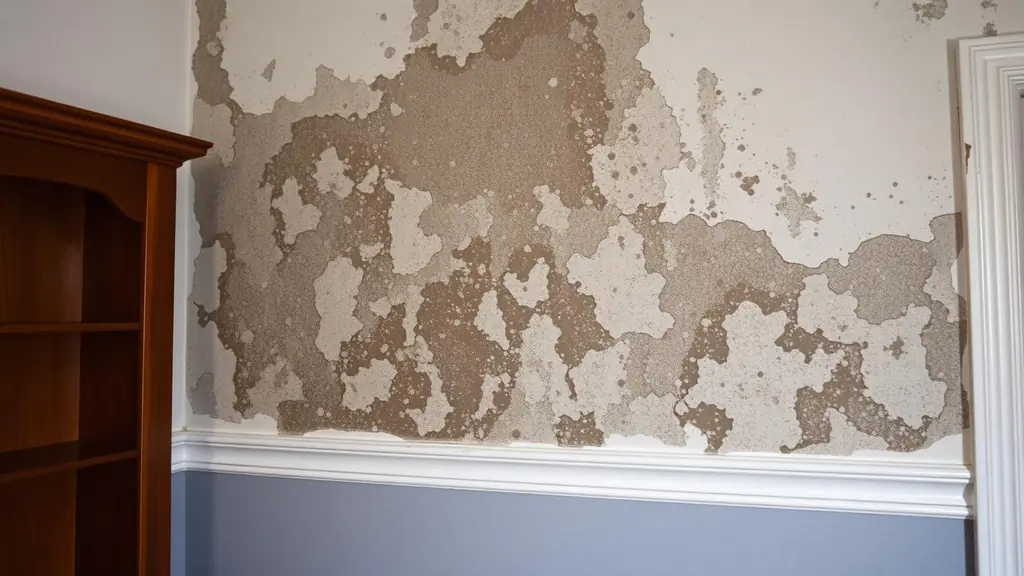
Quick answer: mold on the walls
Mold on a wall means that section of drywall or framing has stayed damp for 24–48 hours or longer. The mold itself is a symptom — a leak, condensation, or high humidity behind or on the wall is the actual cause you need to find.
Get it inspected
Mold on drywall indicates active moisture and can affect indoor air quality and materials. The EPA treats areas over 10 square feet as needing professional remediation rather than DIY cleaning.
Mold spores are present in virtually all indoor and outdoor air; what turns them into visible colonies is sustained moisture on an organic surface like drywall paper, wood or wallpaper paste. The EPA states mold requires only 24–48 hours of wetting to begin growing.
The location on the wall — a corner, along a baseboard, around a window, or behind furniture — narrows down the moisture source quickly, before you spend money on any remediation.
Warning signs of mold on the walls
- Black, green or white fuzzy or speckled patches on drywall
- A musty odor concentrated near the affected wall
- Peeling paint or bubbling drywall texture at the same spot
- Mold recurring in the same location after cleaning
Most likely causes of mold on the walls, ranked
1. Condensation from a cold exterior wall (thermal bridging)
Most common in corners and behind furniture
Exterior corners, areas over uninsulated headers, and walls behind furniture pushed tight to the surface run several degrees colder than the rest of the room. When indoor humidity is above roughly 50%, that cold surface reaches dew point and condenses, feeding mold growth in a corner or behind a couch even with no leak present.
10-minute self-test: Pull furniture away from the wall by at least 4 inches and feel the wall temperature with your hand compared to an interior wall. A noticeably colder spot lining up with the mold points to condensation, not a leak.
2. A slow plumbing leak inside the wall cavity
Common, especially near bathrooms and kitchens
Supply lines, drain lines and shower pans hidden in a wall cavity can leak slowly for months before staining appears on the finished side, feeding mold on the back of the drywall long before it is visible. Mold appearing on a wall that backs a bathroom, kitchen or laundry room is a strong indicator.
10-minute self-test: Check the water meter with all fixtures off for 30 minutes; movement indicates a leak somewhere in the system. Also press on the drywall near the mold — soft, spongy board suggests sustained wetting from behind.
This cause is not a DIY repair — it needs a mold remediation contractor.
3. Roof or window flashing leak tracking down inside the wall
Common after storms
Water entering at a roof valley, chimney flashing or window head flashing can travel along framing before showing as mold or staining on an interior wall well below or away from the actual entry point.
10-minute self-test: Check the attic and exterior flashing above the affected wall's location after the next rain, looking for staining on sheathing or rafters directly above where the mold appears inside.
This cause is not a DIY repair — it needs a mold remediation contractor.
4. Rising damp or wicking moisture from a wet foundation or slab
Less common, mainly older homes and basements
In homes without a proper capillary break, groundwater can wick up through masonry into the base of interior and exterior walls, producing mold and efflorescence concentrated in a band 12–24 inches above the floor.
10-minute self-test: Look for mold or staining that forms a horizontal band near the floor rather than a spot pattern, which is characteristic of wicking rather than a leak or condensation.
This cause is not a DIY repair — it needs a mold remediation contractor.
5. Whole-house humidity consistently above 60%
Common contributor, rarely the sole cause
Even without a specific leak, sustained indoor relative humidity above 60% — common in poorly ventilated homes or during humid summers without adequate AC dehumidification — raises every wall surface toward mold-supporting moisture levels, especially in closets and low-airflow rooms.
10-minute self-test: Check a hygrometer in the affected room over several days. Readings consistently above 60% support this as at least a contributing factor.
Your 10-minute check list for mold on the walls
- Check the water meter for movement with fixtures off
- Feel for temperature differences at exterior corners and behind furniture
- Inspect the attic above the affected wall after rain
- Measure room humidity with a hygrometer over several days
- Press on the drywall near the mold to check for softness
What it costs to fix mold on the walls
| Cause / repair | DIY cost | Professional cost |
|---|---|---|
| Detergent cleaning of mold under 10 sq ft | $15–$30 | n/a |
| Professional mold inspection | n/a | $300–$650 |
| Drywall replacement (per wall section) | $100–$300 | $500–$1,500 |
| Plumbing leak repair | n/a | $250–$1,500 |
| Roof/flashing leak repair | n/a | $300–$1,800 |
| Full mold remediation (100–500 sq ft) | n/a | $1,500–$6,500 |
| Whole-house dehumidifier | $200–$400 | $1,200–$2,800 (ducted) |
See the full cost breakdown for this repair →
DIY fixes for mold on the walls
Clean small areas with detergent and water, not bleach alone
The EPA notes mold on hard, non-porous surfaces under 10 square feet can typically be cleaned by the homeowner with water and detergent; bleach does not penetrate porous drywall paper.
Improve airflow around cold walls
Pull furniture at least 2–4 inches off exterior walls and use a small fan to keep air moving in corners prone to condensation.
Lower whole-house humidity below 50%
Run a dehumidifier or the AC's dehumidify mode during humid months, targeting the EPA-recommended 30–50% range.
Fix the moisture source before repainting
Repainting over mold without stopping the water supply guarantees it returns within one humid season.
Mistakes to avoid with mold on the walls
- Painting over mold with regular paint — it seals in moisture and the mold returns through or around it
- Using bleach on porous drywall as a permanent fix — it discolors the surface but does not kill mold embedded in paper fibers
- Sanding or dry-scraping mold without containment — this aerosolizes spores into the rest of the house
Where homeowners waste money on mold on the walls
- Air purifiers marketed as a mold fix — they do not address moisture or remove mold from surfaces
- Mold-killing paint applied without first identifying and stopping the moisture source
- Full-scale remediation contracts for isolated spots under 10 square feet with an obvious, already-fixed cause
When to call a mold remediation contractor about mold on the walls
Get an independent mold inspection before hiring a remediation company that also sells the repair, to avoid a conflict of interest in the diagnosis.
For mold larger than 10 square feet, EPA guidance recommends professional remediation with containment, not homeowner cleaning.
Ask any remediation contractor for their moisture source finding in writing — remediation without fixing the source is a repeat expense.
What a mold remediation contractor actually does on this job →
How to prevent mold on the walls coming back
- Keep indoor relative humidity below 50% year-round
- Insulate and air-seal exterior corners and headers to reduce cold-surface condensation
- Inspect attic and roof flashing annually, especially before rainy seasons
- Address any plumbing leak within days, not months
Why Is My House Getting Mold on the Walls — questions homeowners ask
Does the color of mold tell me how dangerous it is?
No. The EPA states that all indoor mold should be treated the same way regardless of species or color — remove it and fix the moisture source. Testing to identify species rarely changes the recommended remediation approach.
Can I remove wall mold myself?
For areas under 10 square feet on non-porous or lightly affected surfaces, yes, using detergent and water per EPA guidance. Larger areas, moldy insulation, or mold following a sewage-contaminated flood need professional remediation.
Will mold come back after I clean it if I don't find the source?
Yes, almost always within the next humid season or rain event. Mold is a moisture indicator; cleaning the visible growth without correcting the leak, condensation or humidity source just delays its return.
How do I know if mold is inside the wall, not just on the surface?
Soft or spongy drywall, a musty smell stronger than the visible spot suggests, and mold recurring quickly after cleaning all indicate growth inside the wall cavity, which usually requires opening the wall to fully remediate.
Problems related to mold on the walls
- Why Is My House Getting Mold Around the Windows?Same part of the house — Mold around windows almost always grows on trapped condensation, not a window leak.Moisture, Water & Mold Low urgency — monitor
- Why Is My House Getting a Damp Crawl Space?Often shows up alongside this problem. A damp crawl space almost always comes from ground moisture evaporating through exposed dirt, groundwater seeping in, or humid outside air condensing inside a vented crawl space during summer.Moisture, Water & Mold Get it inspected
- Why Is My House Smelling Musty?A musty smell is microbial volatile organic compounds — geosmin and 2-methylisoborneol — released by mold and bacteria digesting damp material.Smells & Odors Get it inspected
- Why Is My House So Humid?Your house is humid because moisture is entering faster than it leaves.Moisture, Water & Mold Get it inspected
Sources used for mold on the walls
- EPA — A Brief Guide to Mold, Moisture and Your Home
- CDC — Mold Basics and Health Effects
- American Industrial Hygiene Association — Mold Assessment and Remediation Guidelines