
Why Is My House Getting Mold Around the Windows?
Reviewed 2026-07-30 · How we research
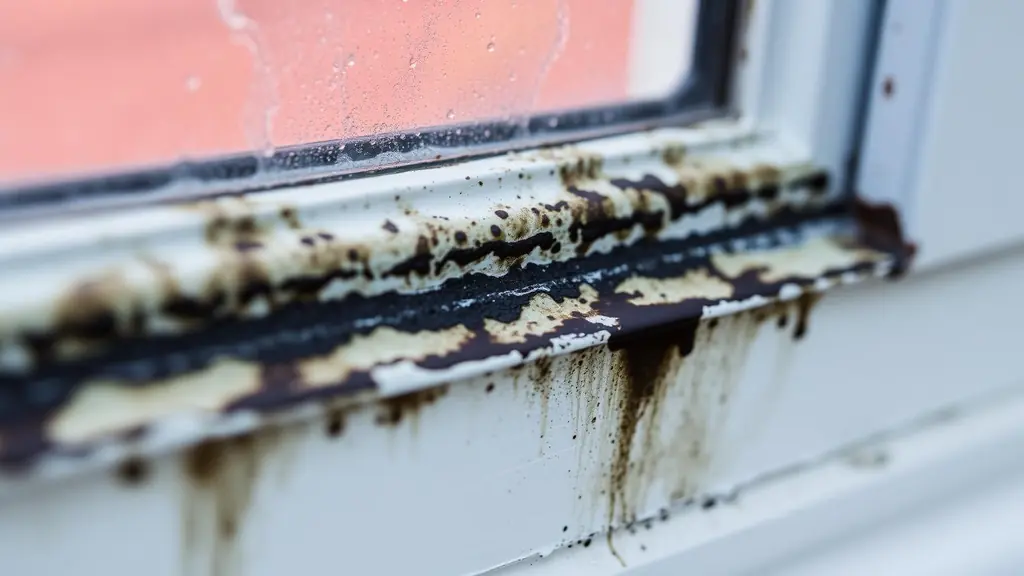
Quick answer: mold around the windows
Mold around windows almost always grows on trapped condensation, not a window leak. Cold glass and frame surfaces meet warm humid indoor air and reach the dew point, wetting the sill and caulk lines enough for mold to establish within a couple of days.
Low urgency — monitor
Mold confined to a window sill or frame is a low-urgency, localized problem usually caused by condensation. It should be cleaned and the moisture source addressed within a few weeks to prevent spread to surrounding drywall or wood rot.
Window frames and sills are consistently the coldest painted or wood surfaces in a room, second only to the glass itself, which is why mold shows up there before almost anywhere else in a house.
The distinction that matters is whether the moisture is condensation from indoor humidity or actual water intrusion from a failed seal or flashing — the fixes are completely different.
Warning signs of mold around the windows
- Black or pink speckled mold along the sill, corners, or rubber gasket of the window
- Water pooling on the sill most mornings
- Mold that returns within days of cleaning
- Soft or discolored wood at the sill or lower sash
Most likely causes of mold around the windows, ranked
1. Condensation pooling on the sill from indoor humidity
Most common — the majority of window-area mold cases
When indoor relative humidity exceeds roughly 40–50% during cold weather, the window glass and frame — the coldest surfaces in the room — reach dew point and condense water directly onto the sill. Wood or vinyl sills that stay wet daily provide the sustained moisture mold needs to establish within 24–48 hours, per EPA guidance.
10-minute self-test: Check the sill each morning for several days and measure room humidity with a hygrometer. Consistent pooling paired with readings above 40% during cold weather confirms condensation as the source.
2. Blocked airflow from curtains, blinds or window coverings
Common contributor
Heavy curtains or blinds closed tightly against the glass trap a layer of cold, humid air right at the window, increasing local condensation even when the rest of the room's humidity is reasonable.
10-minute self-test: Open curtains a few inches from the glass for a week and compare mold recurrence on that window to others left covered.
If that test is negative: If mold reappears equally whether curtains are open or closed, look at whole-house humidity or a seal failure instead.
3. Failed or deteriorated caulk and weatherstripping
Common in windows over 10 years old
Cracked exterior caulk or worn weatherstripping lets small amounts of humid outdoor air and occasionally wind-driven rain reach the frame's edges, adding moisture on top of any interior condensation and giving mold spores an easy foothold in the gap itself.
10-minute self-test: Run a hand around the interior and exterior frame perimeter for drafts on a windy day, and look for cracked, shrunken or missing caulk beads.
4. A leaking window seal or flashing allowing actual water intrusion
Less common but more serious
Unlike condensation, a true leak brings water in from outside, usually after wind-driven rain, and produces staining that extends beyond the sill into the wall below or beside the window, sometimes with visible efflorescence or drywall damage.
10-minute self-test: Check for mold or staining after a wind-driven rain specifically, versus a calm cold morning. Staining that extends onto the wall or below the sill, not just on it, points to a leak rather than condensation.
This cause is not a DIY repair — it needs a mold remediation contractor.
5. High humidity from an unvented source near the window
Situational
A humidifier, an aquarium, or houseplants placed directly near a window raise local humidity enough to condense on that window specifically while others in the house stay dry.
10-minute self-test: Note whether the moldy window is near a humidifier, fish tank or dense plant grouping, and move the source or add distance for two weeks to see if it resolves.
Your 10-minute check list for mold around the windows
- Check sills each morning for pooled water
- Measure room humidity with a hygrometer
- Inspect caulk and weatherstripping for gaps or cracks
- Compare mold appearance after calm cold mornings versus wind-driven rain
- Note proximity to humidifiers, aquariums or dense houseplants
What it costs to fix mold around the windows
| Cause / repair | DIY cost | Professional cost |
|---|---|---|
| Detergent cleaning of sill mold | $5–$15 | n/a |
| Re-caulking window exterior | $15–$40 | $100–$250 per window |
| Weatherstripping replacement | $10–$30 | $80–$200 per window |
| Portable dehumidifier | $150–$300 | n/a |
| Window reglazing or reseal | n/a | $150–$400 per window |
| Flashing repair for a leaking window | n/a | $300–$900 per window |
See the full cost breakdown for this repair →
DIY fixes for mold around the windows
Wipe sills dry every morning during cold weather
This single habit removes the water before mold has the 24–48 hours of contact it needs to establish, per EPA guidance.
Clean existing mold with detergent and water
For areas under 10 square feet, EPA guidance supports homeowner cleaning with water and a mild detergent, followed by thorough drying.
Lower indoor humidity below 45% in winter
A portable dehumidifier or the AC's dehumidify setting reduces condensation on all cold surfaces, not just windows.
Refresh exterior caulk annually on older windows
A tube of quality exterior caulk costs under $10 and prevents both drafts and moisture intrusion at the frame edge.
Mistakes to avoid with mold around the windows
- Painting over sill mold — trapped moisture will lift the paint and the mold returns underneath it
- Ignoring wood softness at the sill, since rot spreads into the frame and eventually the wall
- Using bleach repeatedly on wood without addressing the underlying condensation source
Where homeowners waste money on mold around the windows
- Full window replacement to solve condensation-driven sill mold when the actual fix is a $150 dehumidifier and a humidity habit change
- Mold-resistant paint applied over a sill that is still getting wet daily
When to call a mold remediation contractor about mold around the windows
If mold recurs after cleaning and humidity control, have a window contractor check for a failed seal or gasket rather than assuming it is still condensation.
Get a mold inspection if staining extends onto the wall below or beside the window, since that suggests water tracking further than a simple sill wipe can address.
A window contractor can confirm whether upgrading to a more efficient double- or triple-pane unit will meaningfully reduce condensation in a persistently cold room.
What a mold remediation contractor actually does on this job →
How to prevent mold around the windows coming back
- Keep indoor humidity in the EPA's 30–50% range
- Wipe condensation from sills during the coldest months
- Inspect and refresh window caulk and weatherstripping every 1–2 years
- Leave a small air gap between curtains and window glass
Why Is My House Getting Mold Around the Windows — questions homeowners ask
Is mold on a window sill dangerous?
Small amounts confined to a sill are a low-urgency issue that responds well to cleaning and humidity control. It becomes more concerning if it spreads into surrounding drywall or if anyone in the home has mold sensitivities or asthma, per CDC guidance on mold and respiratory health.
Why does mold keep coming back on my window sill after I clean it?
If the underlying condensation source — high indoor humidity, blocked airflow from curtains, or a cold frame — isn't addressed, the sill gets wet again within days and mold reestablishes. Cleaning without fixing the moisture source is a temporary measure.
How is condensation-related mold different from a window leak?
Condensation mold stays confined to the sill and frame and appears worst on calm, cold mornings. A true leak produces staining that extends onto the wall below or beside the window and tends to worsen specifically after wind-driven rain.
Can I just replace the window to stop the mold?
Only if a failed seal or damaged frame is the actual cause. If the mold is from indoor humidity condensing on cold glass, a new window will condense too, at a slightly lower humidity threshold, until whole-house humidity is controlled.
Problems related to mold around the windows
- Why Is My House Getting Condensation on the Windows?Often shows up alongside this problem. Window condensation happens when indoor air holds more moisture than the cold glass surface can support at that temperature — it is a humidity problem, not a window defect, unless it appears between the panes of a double-pane unit.Moisture, Water & Mold Low urgency — monitor
- Why Is My House Getting Mold on the Walls?Same part of the house — Mold on a wall means that section of drywall or framing has stayed damp for 24–48 hours or longer.Moisture, Water & Mold Get it inspected
- Why Is My House So Humid?Your house is humid because moisture is entering faster than it leaves.Moisture, Water & Mold Get it inspected
- Why Is My House Smelling Musty?A musty smell is microbial volatile organic compounds — geosmin and 2-methylisoborneol — released by mold and bacteria digesting damp material.Smells & Odors Get it inspected
Sources used for mold around the windows
- EPA — A Brief Guide to Mold, Moisture and Your Home
- CDC — Mold and Your Home: What You Need to Know
- ASHRAE 160 — Criteria for Moisture-Control Design Analysis in Buildings