
Why Is My House Covered in Ladybugs?
Reviewed 2026-08-01 · How we research
Quick answer: covered in ladybugs
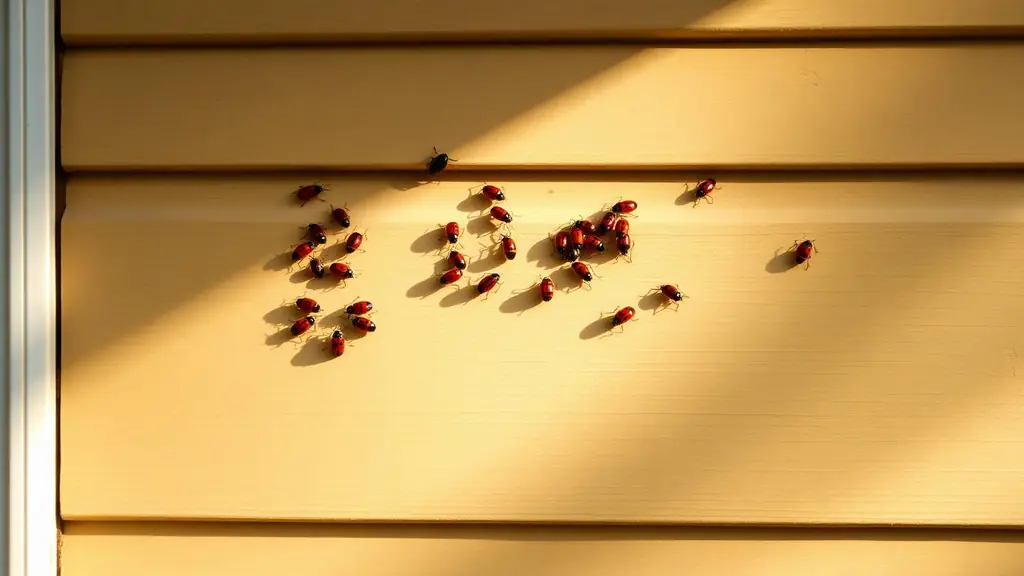
Large numbers of ladybugs covering exterior siding in fall are multicolored Asian lady beetles gathering on sun-warmed, light-colored walls before seeking cracks to overwinter in. Seal exterior gaps now, before they move into the walls — once they're inside, exclusion no longer keeps them out for the season.
Low urgency — monitor
Beetles massing on exterior siding are a seasonal nuisance, not a threat to the structure or your health. The timing matters, though — once they find a way inside, exclusion gets much harder, so acting while they're still outside is the effective window.
Seeing hundreds of ladybugs massed on the outside of your house — usually one particular wall, seemingly overnight — is a distinct event from finding them already inside. This is multicolored Asian lady beetles in their fall aggregation phase: a natural behavior where they gather in large groups on warm surfaces before searching for cracks to overwinter in.
What you do in the next few days matters. This swarm is still outside the structure. Sealing entry points now can keep most of them from ever making it into your walls; waiting until they're already inside means dealing with an indoor infestation instead.
Warning signs of covered in ladybugs
- A sudden mass of beetles on one particular exterior wall, often overnight
- Beetles concentrated on siding that's warm to the touch in the afternoon sun
- Heavier activity on light-colored siding compared to darker-colored sections
- Beetles crawling into cracks around window trim, siding laps, and rooflines
Most likely causes of covered in ladybugs, ranked
1. Fall temperature drop triggering aggregation behavior
The trigger behind virtually every exterior swarm event
As days shorten and nighttime temperatures fall in autumn, multicolored Asian lady beetles switch into a seeking behavior, gathering in large numbers on the warmest available surfaces as they search for cracks to overwinter in. This is a synchronized, weather-driven event rather than something specific to your house's condition.
10-minute self-test: Note the date and recent weather — a sudden mass appearance after the season's first sharp cool-down is a strong match for seasonal aggregation rather than an ongoing infestation.
2. South- and west-facing walls receiving the most afternoon sun
Explains why one wall is covered while others are nearly bare
Beetles are drawn to the warmest surfaces available, and south- and west-facing walls hold afternoon heat longest. It's common for one side of a house to be covered while the shaded north side has almost none.
10-minute self-test: Compare beetle density across all four sides of the house at the same time of day — a heavy skew toward the sunniest wall confirms this driver.
3. Light-colored siding standing out as more attractive than darker materials
A secondary factor influencing exactly where beetles cluster
Lady beetle behavior studies note a preference for light or white surfaces over dark ones, likely because light surfaces reflect more visible light. Houses with white or light beige siding tend to see denser aggregations than houses with dark brown or gray siding, even in the same neighborhood.
10-minute self-test: If neighboring houses with darker siding have noticeably fewer beetles under similar sun exposure, siding color is likely part of what's concentrating them on your walls.
4. Nearby agricultural fields or wooded edges supplying a large source population
A significant factor in how large the swarm gets
Multicolored Asian lady beetles are especially numerous near soybean fields and wood-line edges, where their prey is abundant during the growing season. Houses near this kind of land use see substantially larger fall swarms than houses in dense urban cores.
10-minute self-test: Consider what's within a half-mile of your house — cropland, orchards or wooded lots nearby correlate strongly with larger seasonal swarms.
5. Existing cracks and gaps around siding, windows, soffits and rooflines drawing the swarm toward specific entry points
The detail that determines whether the swarm stays outside or gets inside
Once gathered on a wall, beetles actively probe for cracks — around window and door trim, where siding laps overlap, at soffit and fascia joints, and around roofline flashing. Any gap large enough for a grain of rice is large enough for a beetle to use.
10-minute self-test: Where the swarm is thickest, look closely at trim edges, siding laps and soffit joints for beetles actively disappearing into small gaps — that's the specific spot to prioritize sealing first.
This cause is not a DIY repair — it needs a pest-control or pest-exclusion professional.
6. Warm, sunny fall afternoons following a cool morning intensifying the visible swarm
A short-term weather pattern that makes swarms look worse on some days than others
Beetle activity is highly temperature-dependent, so a swarm can look dramatically larger on a warm sunny afternoon than it did the same morning, simply because more individuals become active and move to the warmest surface as the day heats up.
10-minute self-test: Check the same wall in the early morning versus mid-afternoon on a sunny fall day — a big difference in visible numbers reflects activity level, not a change in total population.
Your 10-minute check list for covered in ladybugs
- Compare beetle density across all sides of the house to confirm sun exposure is driving the pattern
- Inspect trim, siding laps, soffits and roofline joints on the affected wall for active entry points
- Note the date of first appearance relative to the season's first cold snap
- Check whether neighboring houses with different siding colors show a similar or lighter swarm
What it costs to fix covered in ladybugs
| Cause / repair | DIY cost | Professional cost |
|---|---|---|
| Caulk for trim, siding laps and joints | $20–$60 | n/a |
| Fine-mesh screening for soffit and roofline vents | $30–$90 | n/a |
| Full exterior exclusion sealing (whole house) | n/a | $500–$1,500 |
| Late-summer perimeter pesticide treatment (temporary reduction) | n/a | $150–$350 per visit |
| Vacuum for physical removal from siding | $0 (existing vacuum) | n/a |
See the full cost breakdown for this repair →
DIY fixes for covered in ladybugs
Prioritize the wall where the swarm is worst
Start sealing on the specific wall showing the heaviest activity — that's where beetles are actively finding and using entry points right now, so it gives the fastest return on the effort.
Caulk every trim and siding-lap gap you can reach
Use an exterior-grade caulk on gaps around window and door trim and where siding overlaps trim boards. Beetles need only a very small gap, so thoroughness matters more than caulking a few obvious spots.
Add fine mesh behind soffit and roofline vents
Standard vent louvers don't stop beetles. Fitting 1/8-inch mesh behind soffit vents keeps them out while still allowing attic airflow.
Physically knock down or vacuum a heavy swarm before sealing
A strong jet of water from a hose, or a vacuum with an extension wand, can clear a heavy cluster off siding before you start caulking, making it easier to see and reach every gap.
Do this work while the swarm is still outside
Exclusion sealing is only effective at keeping beetles out if it's done before they've already found their way into the wall cavity. If you can already hear or see them inside, sealing the exterior now still helps for the following year.
Mistakes to avoid with covered in ladybugs
- Spraying the swarm with a strong pesticide as a first response — it doesn't address the crack that's letting them into the wall, so the swarm reforms
- Waiting until beetles are already emerging inside the house before sealing outside — the effective window for outdoor exclusion has passed
- Power-washing siding without also caulking, which knocks the swarm down temporarily but leaves the entry points open
Where homeowners waste money on covered in ladybugs
- Spraying visible swarms on siding repeatedly through the fall without ever sealing the gaps they're using to get in
- Power-washing alone as a long-term fix — it clears beetles temporarily but the crack remains open for the next wave
When to call a pest-control or pest-exclusion professional about covered in ladybugs
A pest-exclusion professional can seal a whole house more thoroughly and faster than DIY caulking, which matters most in the narrow fall window before beetles finish moving into wall voids.
A late-summer perimeter treatment, applied before beetles begin swarming, can reduce how many make it to your siding in the first place, but it's a supplement to exclusion sealing, not a replacement for it.
If the swarm is already moving into interior spaces through outlets or trim, treat the interior issue with vacuuming rather than pesticide, and schedule exterior sealing for late summer of the following year.
What a pest-control or pest-exclusion professional actually does on this job →
How to prevent covered in ladybugs coming back
- Do a full exterior gap-sealing pass in late summer, before the first cool snap of fall
- Focus extra attention on south- and west-facing walls, where aggregation is heaviest
- If siding is light-colored and the house is near fields or wooded areas, expect to repeat this maintenance annually
Why Is My House Covered in Ladybugs — questions homeowners ask
Why are the ladybugs only on one side of my house?
Multicolored Asian lady beetles gather on the warmest, sunniest surfaces available, so the south- or west-facing wall that gets the most afternoon sun typically sees far more activity than shaded walls.
Will they go away on their own?
The visible swarm outside will eventually move on — either into cracks to overwinter or elsewhere — but the underlying entry points remain, so the same swarm behavior will repeat next fall unless you seal them.
Is it too late to do anything once they're massed on the siding?
No — this is actually the best window. They're still outside the structure. Sealing cracks now can keep a large share of them from making it into wall voids, whereas waiting until they're already inside means dealing with an indoor infestation instead.
Does the color of my siding really matter?
Yes, to a degree. Lady beetles show a documented preference for light-colored surfaces over dark ones, so light or white siding tends to attract denser swarms than dark siding under similar sun exposure.
Should I power-wash them off?
It can clear a heavy swarm and make it easier to see and seal the gaps underneath, but power-washing alone doesn't stop them from returning — pair it with caulking the trim, siding laps and soffit joints while you're at it.
Why do I get way more ladybugs than my neighbor?
Proximity to fields, orchards or wooded edges, siding color, wall exposure to afternoon sun, and how many small cracks exist in trim and siding all vary house to house, which explains large differences between neighboring properties.
Do I need to worry about them once winter fully sets in?
Once temperatures drop and stay low, beetles that made it into wall voids go dormant and won't be active outside again until a warm spell or spring. The exterior swarm itself typically disperses within a couple of weeks of the season's first hard cold snap.
Problems related to covered in ladybugs
- Why Is My House Infested With Ladybugs?Same part of the house — Large numbers of ladybugs inside are almost always multicolored Asian lady beetles that entered in fall to overwinter in wall voids and attics, then emerge into living space on warm days.Pests & Wildlife Low urgency — monitor
- Why Is My House Full of Spiders?Same part of the house — Spiders are a symptom, not the problem.Pests & Wildlife Low urgency — monitor
- Why Is My House Getting Scratching Noises in the Attic?Scratching in the attic is most often squirrels or rats active at dawn and dusk, or raccoons moving heavily at night.Pests & Wildlife Get it inspected
- Why Is My House Infested With Flies?Same part of the house — A true fly infestation means flies are reproducing on the property, not just wandering in.Pests & Wildlife Get it inspected
Sources used for covered in ladybugs
- University of Kentucky Entomology — Asian Lady Beetle Infestation of Structures
- Ohio State University Extension — Multicolored Asian Lady Beetles
- Purdue Extension — Asian Lady Beetles
- U.S. EPA — Integrated Pest Management
- University of Minnesota Extension — Multicolored Asian Lady Beetles