
Why Is My House Getting Sweating Air Ducts?
Reviewed 2026-07-30 · How we research
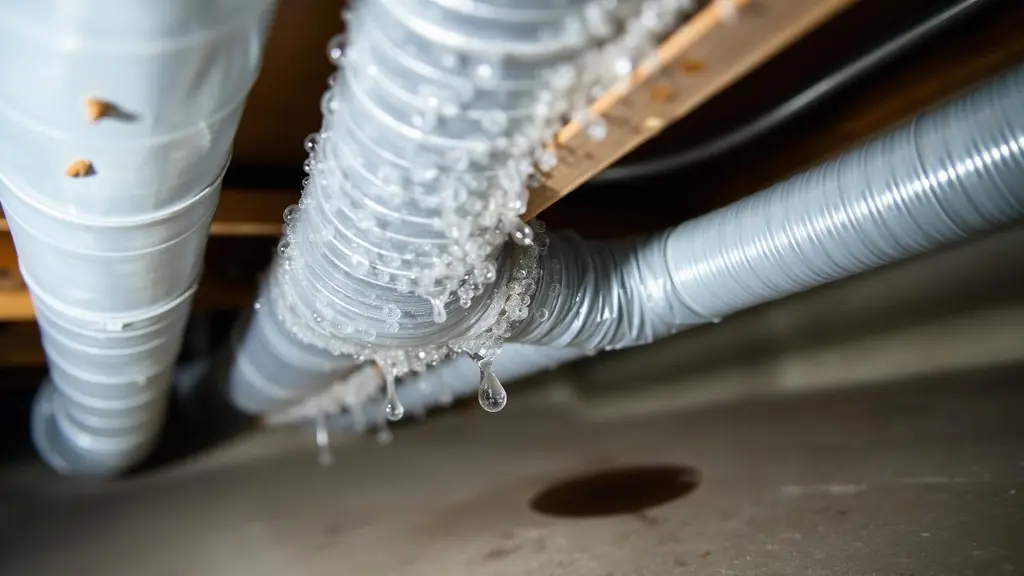
Quick answer: sweating air ducts
Air ducts sweat when cold air inside the duct chills the metal or duct board surface below the surrounding air's dew point, and insufficient or damaged duct insulation is the most common reason that surface stays cold enough to condense.
Get it inspected
Dripping condensation from ducts can saturate insulation, drywall and framing over weeks of AC season, supporting mold growth within 24–48 hours of sustained wetting. Address it within the current cooling season.
Supply ducts carrying 55°F cooled air through a hot, humid attic or an uninsulated basement create a textbook condensation setup: a cold surface in contact with warm, humid air. ASHRAE-recommended duct insulation exists specifically to keep the duct's exterior surface above the surrounding air's dew point.
The fix almost always involves either restoring proper insulation, sealing air leaks that let humid air reach the cold duct, or reducing ambient humidity in the space around the ducts.
Warning signs of sweating air ducts
- Visible water droplets or a wet sheen on ductwork, especially in an attic, crawl space or unconditioned basement
- Water stains on the ceiling directly below a duct run
- Sagging, wet or moldy duct insulation
- A musty smell near supply vents or the attic access
Most likely causes of sweating air ducts, ranked
1. Missing, thin, or damaged duct insulation
Most common cause
Ductwork carrying 55°F supply air through a 90°F+ attic needs adequate insulation — commonly R-6 or higher per regional energy code — to keep the exterior surface above the dew point of the surrounding air. Insulation that has fallen off, been compressed, or gotten wet loses most of its R-value and lets the metal duct surface reach ambient dew point quickly.
10-minute self-test: Visually inspect duct insulation in the attic or crawl space for gaps, compression, or missing sections, particularly near duct joints and where insulation has slipped down.
2. Torn or unsealed vapor barrier on duct insulation
Very common even when insulation itself looks intact
Duct insulation relies on an intact foil or plastic vapor barrier facing to keep humid air from reaching the cold duct surface underneath. Small tears, unsealed seams, or tape that has failed let humid air infiltrate directly to the metal, causing localized sweating even where the insulation thickness looks adequate.
10-minute self-test: Check insulation seams and any visible tape for gaps or peeling, especially at duct joints, elbows and where insulation was cut for access.
3. High humidity in the space surrounding the ducts
Common in attics and unconditioned spaces
A poorly ventilated attic or a damp basement raises the ambient dew point around the ductwork, meaning even properly insulated ducts sweat if the surrounding air is humid enough. This is common in mixed and humid climates during peak summer.
10-minute self-test: Check attic or basement humidity with a hygrometer; readings consistently above 60% in the space surrounding sweating ducts point to ambient humidity as a contributing factor.
4. Oversized AC system causing excessively low supply air temperature
Less common but a real contributor
An oversized air conditioner short-cycles and can produce supply air on the colder end of the normal range without adequately controlling humidity, since it satisfies the thermostat before running long enough to dehumidify effectively, which increases the temperature differential driving condensation on ducts.
10-minute self-test: Check the temperature split between return and supply air; a properly sized and charged system typically produces a 16–22°F split per ASHRAE guidance. A short duty cycle combined with high humidity supports oversizing as a factor.
This cause is not a DIY repair — it needs a hvac technician.
5. Uninsulated flex duct boots or plenum connections
Common at specific points, not whole runs
Metal duct boots, plenums and transitions are often less thoroughly insulated during installation than the straight duct runs, making these connection points the first and most persistent place sweating and dripping appears even on an otherwise well-insulated system.
10-minute self-test: Check specifically at boots, elbows and the main plenum near the air handler for concentrated moisture compared to straight duct sections.
This cause is not a DIY repair — it needs a hvac technician.
Your 10-minute check list for sweating air ducts
- Inspect visible duct insulation for gaps, compression or missing sections
- Check insulation seams and vapor barrier tape for tears
- Measure humidity in the attic or space surrounding the ducts
- Check the supply-return temperature split at a vent
- Look closely at duct boots and plenum connections
What it costs to fix sweating air ducts
| Cause / repair | DIY cost | Professional cost |
|---|---|---|
| Duct insulation wrap repair (per section) | $30–$80 | $100–$300 |
| Full attic duct re-insulation | n/a | $800–$2,500 |
| Duct sealing (mastic/tape at joints) | $20–$50 | $300–$800 |
| Attic ventilation improvement | $100–$300 | $500–$1,500 |
| AC sizing evaluation / load calculation | n/a | $150–$400 |
| Water-damaged drywall/insulation repair from drips | $100–$300 | $500–$1,500 |
See the full cost breakdown for this repair →
DIY fixes for sweating air ducts
Replace or reinforce damaged duct insulation
Use foil-faced duct wrap rated at least R-6 and seal all seams with foil tape rather than standard duct tape, which fails within a season.
Seal vapor barrier tears immediately
Even small gaps in the insulation's vapor barrier let humid air reach the cold duct surface; foil tape restores the barrier quickly.
Improve attic ventilation and reduce ambient humidity
Ensure soffit and ridge vents are unobstructed to the code baseline of roughly 1 square foot of net free vent area per 150 square feet of attic floor.
Insulate duct boots and plenum connections, not just straight runs
These transition points are commonly under-insulated during original installation and are frequently where dripping starts first.
Mistakes to avoid with sweating air ducts
- Ignoring dripping ducts because 'it's just condensation' — sustained dripping saturates insulation and drywall and leads to mold and rot
- Using standard cloth duct tape instead of foil tape or mastic — it degrades from heat and humidity within months
- Assuming a bigger, more powerful AC unit will fix condensation without addressing insulation or humidity
Where homeowners waste money on sweating air ducts
- Wrapping ducts with standard fabric duct tape instead of foil tape or mastic sealant, which fails from heat cycling within a season
- Replacing an entire HVAC system to solve localized condensation that is actually an insulation gap at a few duct boots
When to call a hvac technician about sweating air ducts
Ask an HVAC technician to check the supply-return temperature split and verify correct system sizing, since an oversized unit compounds condensation problems.
Get a contractor to inspect duct insulation at joints, boots and plenums specifically, not just the visible straight runs, since that's where failures concentrate.
If ducts run through an unconditioned attic in a humid climate, ask about a manual J load calculation and proper duct insulation R-value for your region's energy code.
What a hvac technician actually does on this job →
How to prevent sweating air ducts coming back
- Inspect attic and basement ductwork insulation annually before cooling season
- Maintain proper attic ventilation year-round
- Have an HVAC technician verify correct system sizing during any AC replacement
- Address ambient humidity in unconditioned spaces around ductwork
Why Is My House Getting Sweating Air Ducts — questions homeowners ask
Why are my air ducts dripping water?
Cold supply air inside the duct chills the duct's surface below the dew point of the surrounding attic or basement air, and water condenses on the outside just as it does on a cold glass of water. Missing or damaged duct insulation is the most common reason the surface stays cold enough to condense.
Can sweating ducts cause mold?
Yes. Insulation and surrounding materials that stay wet from dripping condensation can support mold growth within 24–48 hours of sustained wetting, per EPA guidance, particularly where insulation soaks and stays damp against wood framing.
Is duct sweating a sign my AC is undersized or oversized?
It's more often an oversizing issue. An oversized system cools quickly and shuts off before adequately dehumidifying, keeping ambient humidity around the ducts higher while still producing cold supply air — both factors that promote condensation.
How much duct insulation do I need to stop sweating?
Most residential energy codes and ASHRAE guidance call for at least R-6 insulation on supply ducts running through unconditioned spaces like attics, though some climate zones and code jurisdictions require higher. An HVAC technician can confirm the correct value for your region.
Problems related to sweating air ducts
- Why Is My House Getting Condensation on the Windows?Same part of the house — Window condensation happens when indoor air holds more moisture than the cold glass surface can support at that temperature — it is a humidity problem, not a window defect, unless it appears between the panes of a double-pane unit.Moisture, Water & Mold Low urgency — monitor
- Why Is My House So Humid?Your house is humid because moisture is entering faster than it leaves.Moisture, Water & Mold Get it inspected
- Why Is My House Getting Mold on the Walls?Mold on a wall means that section of drywall or framing has stayed damp for 24–48 hours or longer.Moisture, Water & Mold Get it inspected
- Why Is My House So Dusty?If you dust and it returns in two days, air is entering from somewhere unfiltered — usually leaking return ducts pulling dirty air from an attic or crawlspace.Heating, Cooling & Air Get it inspected
Sources used for sweating air ducts
- ASHRAE 90.2 — Energy Efficient Design of Low-Rise Residential Buildings
- U.S. Department of Energy — Duct Insulation and Sealing Guidance
- EPA — A Brief Guide to Mold, Moisture and Your Home