
Why Is My House Getting White Powder on Basement Walls?
Reviewed 2026-07-30 · How we research
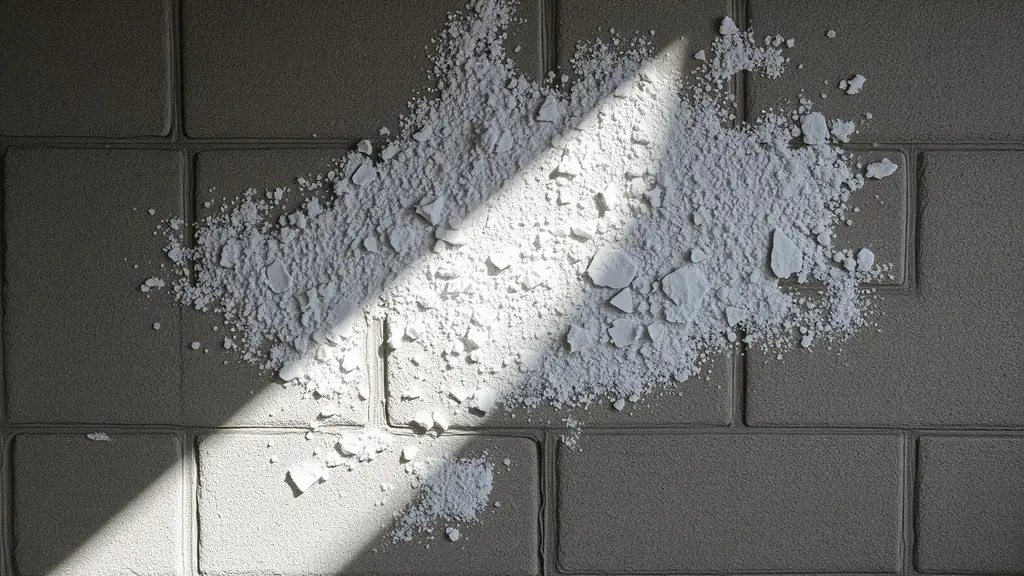
Quick answer: white powder on basement walls
White powdery deposits on basement walls are efflorescence: soluble mineral salts, mainly calcium carbonate, left behind after water travels through concrete or block and evaporates at the surface. It confirms moisture movement, not necessarily active flooding.
Low urgency — monitor
Efflorescence itself is a cosmetic mineral deposit, not structural damage, but it is a reliable indicator that moisture is moving through the wall and should prompt a drainage check within a season.
Efflorescence forms when water dissolves natural mineral salts inside concrete or masonry, migrates to the surface, and evaporates, leaving the minerals behind as a white or grayish crystalline residue.
It is common in basements built with poured concrete or concrete block because both are naturally porous, and it is one of the earliest visible signs of a moisture problem — worth catching before it progresses to mold, spalling or a wetter wall.
Warning signs of white powder on basement walls
- Chalky white or grayish powder that brushes off easily but returns after rain
- Powder concentrated near the floor or around visible hairline cracks
- A slightly damp feel to the wall beneath the deposits
- Deposits reappearing within days or weeks of being wiped away
Most likely causes of white powder on basement walls, ranked
1. Routine moisture vapor movement through porous concrete or block
Most common — present in the majority of unfinished basements to some degree
Concrete and concrete block are inherently porous, and some water vapor movement from the soil side to the interior is normal, especially in the first few years after a home is built while the concrete is still curing and releasing excess moisture. Light, evenly distributed efflorescence with no accompanying dampness often falls into this normal-but-worth-monitoring category.
10-minute self-test: Tape a clear plastic square (about 12 inches) tightly to the wall on all four sides and check after 24 hours. Moisture on the wall side of the plastic indicates vapor moving through the concrete itself; moisture on the room side indicates ambient humidity condensing instead.
2. Exterior grading or gutter issues driving water against the wall
Very common when efflorescence is heavy or recurring quickly
The same negative grading and downspout problems that cause active basement leaks also drive lower-volume water through the wall that evaporates before pooling, leaving behind efflorescence rather than visible seepage. Heavy or fast-returning deposits after cleaning usually mean more water is reaching the wall than normal curing or ambient vapor would explain.
10-minute self-test: Check downspout discharge points and grading near the affected wall section specifically; efflorescence concentrated on one wall often lines up with a specific downspout or low grading spot outside.
3. Missing or failed exterior waterproofing membrane or French drain
Common in older or DIY-built basements
Homes built without a dampproofing or waterproofing membrane on the exterior foundation wall, or with a failed one, allow more soil moisture to migrate through the wall than a properly waterproofed foundation would, producing persistent efflorescence even without visible cracks.
10-minute self-test: Check the home's age and any available records; foundations built before widespread use of modern dampproofing membranes, or ones with no visible membrane where exposed, are more prone to this.
This cause is not a DIY repair — it needs a basement waterproofing contractor.
4. High water table or poor soil drainage around the foundation
Common in clay soils or high water-table regions
Clay soil holds water against the foundation far longer than sandy or well-draining soil, keeping the wall's exterior face wet for extended periods and driving continuous mineral migration and efflorescence, particularly in spring and after prolonged rain.
10-minute self-test: Check whether efflorescence is worse seasonally, particularly in spring thaw or after multi-day rain events, which points toward water table or soil drainage as the driver.
Your 10-minute check list for white powder on basement walls
- Brush off the powder and note how quickly it returns
- Run the plastic-sheet moisture test to distinguish wall vapor from room humidity
- Check downspout and grading conditions near the affected wall
- Note whether deposits are worse seasonally
What it costs to fix white powder on basement walls
| Cause / repair | DIY cost | Professional cost |
|---|---|---|
| Brushing and cleaning efflorescence | $5–$15 | n/a |
| Diluted muriatic acid wash (for heavy buildup) | $20–$40 | $150–$300 |
| Downspout extension / regrading | $50–$400 | $300–$3,000 |
| Interior sealant/dampproofing coating | $50–$150 | $400–$1,200 |
| Exterior waterproofing membrane (excavation required) | n/a | $8,000–$20,000+ |
| Interior French drain and sump system | n/a | $2,500–$8,000 |
See the full cost breakdown for this repair →
DIY fixes for white powder on basement walls
Brush off deposits with a stiff bristle brush
Dry brushing removes most efflorescence without chemicals; do this before any coating or paint is applied to the wall.
Fix exterior drainage before treating the wall surface
Extending downspouts and correcting grading addresses the water supply feeding the mineral migration, not just the visible symptom.
Use a diluted white vinegar or mild acid wash for stubborn deposits
A 1:10 muriatic acid to water solution, used carefully with gloves and ventilation, dissolves heavier buildup that brushing alone won't remove.
Wait to paint or seal until the wall has stayed dry for several weeks
Sealing an actively wet wall traps moisture behind the coating and can worsen spalling.
Mistakes to avoid with white powder on basement walls
- Applying waterproof paint directly over efflorescence without addressing exterior drainage first — moisture will find another path or push through the coating
- Using full-strength muriatic acid without proper ventilation, gloves and eye protection
- Assuming efflorescence means the wall is failing structurally — it is a moisture indicator, not typically a structural one
Where homeowners waste money on white powder on basement walls
- Full exterior excavation and waterproofing membrane installation for light, stable efflorescence with no accompanying wetness
- Interior waterproof paint as a first step before checking and fixing exterior grading and downspouts
When to call a basement waterproofing contractor about white powder on basement walls
Get a waterproofing contractor to assess whether efflorescence is light and seasonal or heavy and worsening before recommending any excavation work.
Ask about a simple exterior drainage correction first — it resolves many efflorescence cases at a fraction of the cost of an exterior membrane.
If deposits are accompanied by visible spalling or flaking concrete, get a structural evaluation, since that combination indicates more advanced moisture damage.
What a basement waterproofing contractor actually does on this job →
How to prevent white powder on basement walls coming back
- Maintain gutters and downspout extensions year-round
- Keep grading sloped away from the foundation
- Monitor efflorescence for changes in volume or speed of return as an early warning system
- Consider a dehumidifier if ambient basement humidity also tests high
Why Is My House Getting White Powder on Basement Walls — questions homeowners ask
Is white powder on basement walls dangerous?
Efflorescence itself — mainly calcium carbonate — is not toxic or structurally dangerous. It is a reliable sign that moisture is moving through the wall, which is worth investigating before it contributes to mold growth or worsens over time.
How do I get rid of efflorescence permanently?
Brushing or acid-washing removes the current deposit, but it returns unless the moisture source feeding it — typically exterior grading, gutters, or a missing waterproofing membrane — is corrected.
Does efflorescence mean my basement will flood?
Not necessarily. Efflorescence can occur from routine vapor movement through porous concrete without ever producing standing water, but heavy or fast-recurring deposits do correlate with higher water volume reaching the wall and warrant a drainage check.
Can I paint over efflorescence?
Only after brushing it off completely and confirming the wall has stayed dry for several weeks. Painting over an actively wet wall traps moisture and can cause the coating to blister or the concrete to spall.
Problems related to white powder on basement walls
- Why Is My House Getting Water in the Basement?Same part of the house — Basement water almost always enters where hydrostatic pressure pushes groundwater through a wall or floor joint, or where surface water pools against the foundation because of clogged gutters or negative grading.Moisture, Water & Mold Get it inspected
- Why Is My House Getting a Sump Pump That Runs Constantly?Same part of the house — A sump pump running nonstop usually means either genuinely high groundwater constantly refilling the pit, a stuck or miswired float switch keeping it triggered, or another water source — like a sump discharge line looping back, a broken pipe, or condensate lines — feeding the pit directly.Moisture, Water & Mold Get it inspected
- Why Is My House Smelling Musty?A musty smell is microbial volatile organic compounds — geosmin and 2-methylisoborneol — released by mold and bacteria digesting damp material.Smells & Odors Get it inspected
- Why Is My House So Humid?Your house is humid because moisture is entering faster than it leaves.Moisture, Water & Mold Get it inspected
Sources used for white powder on basement walls
- Portland Cement Association — Causes and Prevention of Efflorescence on Concrete
- EPA — A Brief Guide to Mold, Moisture and Your Home
- American Concrete Institute (ACI 302) — Guide for Concrete Floor and Slab Construction