
Why Is My House Getting Banging Pipes?
Reviewed 2026-07-30 · How we research
Quick answer: banging pipes
Banging pipes, known as water hammer, happen when a fast-closing valve — a washing machine solenoid or a quick-close faucet — stops moving water abruptly, sending a pressure shockwave through unrestrained or unsupported pipe.
Low urgency — monitor
Banging pipes are usually a nuisance and pressure issue rather than an immediate hazard, but prolonged water hammer can loosen joints and cause leaks over time.
Water moving through a pipe has momentum. When a valve closes quickly, that moving column of water stops almost instantly, and the resulting pressure spike (sometimes several times static line pressure) makes the pipe jump against joists, studs or other pipes, producing the bang.
Older homes relied on air chambers — short vertical pipe stubs that cushion the shock — but these waterlog over time and lose their cushioning effect, which is why banging often appears years after a house was built without any change in the plumbing itself.
Warning signs of banging pipes
- Loud bang or thud immediately after a faucet or washing machine valve shuts off
- Banging concentrated near one appliance, such as the washing machine or dishwasher
- Pipes visibly shaking or vibrating against framing
- Bang that occurs on both hot and cold lines at multiple fixtures
Most likely causes of banging pipes, ranked
1. Waterlogged or missing air chambers
Most common — roughly 4 in 10 cases
Air chambers are supposed to hold a cushion of compressed air that absorbs the shockwave when a valve closes. Over years, that trapped air dissolves into the water, leaving the chamber waterlogged and useless, which lets the full pressure spike transmit directly into the pipe and framing.
10-minute self-test: Shut off the main water supply, open the highest and lowest faucets in the house to drain the lines completely, then turn the water back on. This often re-establishes air in the chambers and stops the banging for months.
2. Unsecured or loosely strapped pipe against framing
Very common in houses with exposed pipe runs
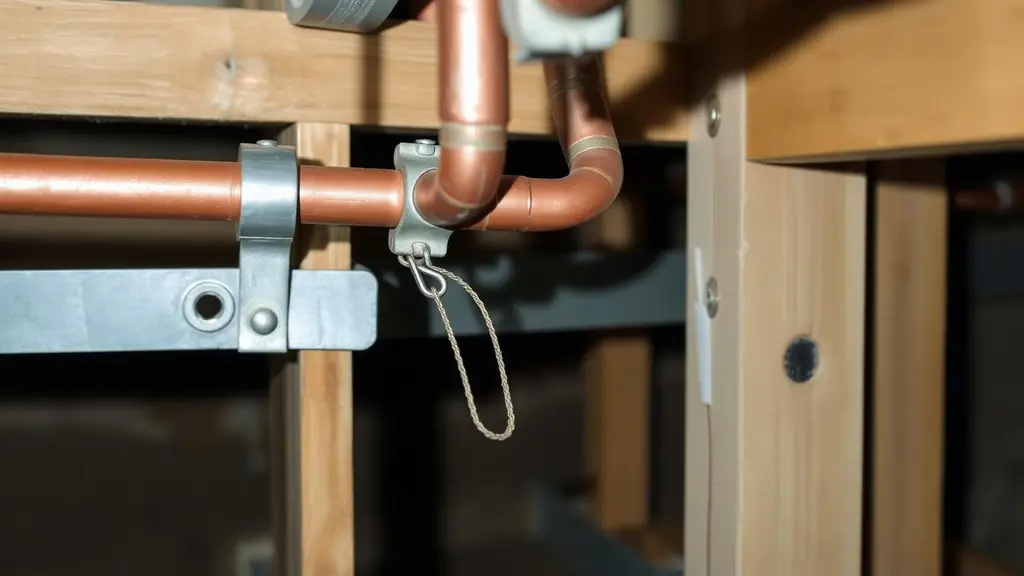
Pipe straps loosen over time due to house settling and temperature-cycling expansion and contraction. A loose section of pipe has room to move when the pressure spike hits, so it slaps against a joist or stud and amplifies what would otherwise be a minor vibration into a loud bang.
10-minute self-test: If you can access the pipe run in a basement or crawlspace, watch it during a flush or faucet shutoff to see if it visibly jumps or vibrates against a framing member.
3. Fast-closing solenoid valves on washing machines and dishwashers
Common trigger even when the rest of the system is fine
Washing machine and dishwasher solenoid valves close in a fraction of a second, far faster than a manual faucet, which produces the strongest water hammer shockwave in most homes. Banging that occurs specifically at the end of a wash cycle almost always traces to this appliance's valve.
10-minute self-test: Note whether the banging occurs exclusively when the washing machine or dishwasher shuts off water, which isolates the trigger to that appliance rather than the whole system.
4. Excessive static water pressure
Common in homes without a pressure-reducing valve
The IPC recommends a pressure-reducing valve when static supply pressure exceeds 80 psi, since higher pressure amplifies every hammer event and stresses fixtures, supply lines and the water heater. Homes on municipal systems with naturally high street pressure are especially prone to this.
10-minute self-test: Attach a $10 pressure gauge to an outdoor hose bibb; a reading above 80 psi confirms excess static pressure contributing to the banging.
Your 10-minute check list for banging pipes
- Drain the system by shutting off the main and opening high/low faucets
- Test static water pressure at a hose bibb with a gauge
- Observe pipe runs in the basement or crawlspace during a flush
- Note which appliance or fixture triggers the bang
What it costs to fix banging pipes
| Cause / repair | DIY cost | Professional cost |
|---|---|---|
| Drain and re-air the system | $0 | n/a |
| Pipe strap tightening/adding | $15–$40 | $100–$250 |
| Water hammer arrestor installation | $20–$40 per unit | $150–$400 |
| Pressure-reducing valve installation | n/a | $250–$600 |
See the full cost breakdown for this repair →
DIY fixes for banging pipes
Drain the pipes to restore air cushioning
Shut off the main supply valve, open the highest and lowest faucets in the house until they run dry, then close them and restore water. This resets air pockets in old-style air chambers.
Secure loose pipe with new straps
Add or tighten pipe straps or cushioned clamps at any point where pipe touches framing directly, using rubber-lined straps to reduce future vibration transfer.
Install a water hammer arrestor near noisy appliances
A mechanical arrestor with a sealed air cushion (unlike an old air chamber) installs at the supply line to a washing machine or dishwasher and absorbs the shockwave permanently.
Mistakes to avoid with banging pipes
- Ignoring persistent water hammer, since repeated shockwaves can loosen soldered joints over years
- Running static pressure above 80 psi without a pressure-reducing valve
Where homeowners waste money on banging pipes
- Repeatedly draining the system for air chambers that are old and no longer holding air reliably instead of upgrading to modern arrestors
- Replacing entire pipe runs when the actual issue is a single loose strap or one appliance's fast-closing valve
When to call a licensed plumber about banging pipes
Ask a plumber to install mechanical water hammer arrestors rather than relying on air chambers, since arrestors use a sealed diaphragm that does not waterlog over time.
If pressure at the hose bibb tests above 80 psi, prioritize installing a pressure-reducing valve, which also protects your water heater and fixtures long-term.
What a licensed plumber actually does on this job →
How to prevent banging pipes coming back
- Install mechanical water hammer arrestors at washing machine and dishwasher connections
- Have static water pressure tested annually and maintain a pressure-reducing valve if above 80 psi
- Inspect and tighten pipe straps during any remodel that exposes plumbing
Why Is My House Getting Banging Pipes — questions homeowners ask
Is water hammer dangerous?
It is not an immediate safety hazard, but the repeated pressure shockwaves can loosen pipe joints and connections over months or years, eventually leading to leaks at weak points.
Why does my washing machine cause banging but nothing else does?
Washing machine solenoid valves close in a fraction of a second, far faster than a manual faucet, generating the strongest hammer shockwave in a typical home's plumbing system.
Can I fix banging pipes myself?
Yes in many cases — draining the system to restore air cushioning or installing a water hammer arrestor at an appliance connection are straightforward DIY fixes that resolve most banging.
What water pressure is too high?
The IPC recommends a pressure-reducing valve once static pressure exceeds 80 psi, since pressure above that level accelerates fixture wear and worsens water hammer intensity.
Problems related to banging pipes
- Why Is My House Water Pressure Low?Same part of the house — The first question is whether one fixture is weak or the whole house is weak.Plumbing, Drains & Sewer Get it inspected
- Why Is My House Getting a High Water Bill?Same part of the house — A high water bill without a change in usage habits usually means a running toilet, an underground leak between the meter and the house, an irrigation system malfunction, or a fixture leak that has gone unnoticed.Plumbing, Drains & Sewer Get it inspected
- Why Is My House Getting Frozen Pipes?Same part of the house — Pipes freeze when water inside them drops below 32°F for long enough to form ice, which most often happens in unheated or poorly insulated spaces like exterior walls, crawlspaces, attics and garages during sustained cold snaps.Plumbing, Drains & Sewer Urgent — act now
- Why Is My House Getting a Toilet That Keeps Running?The same licensed plumber handles this one. A running toilet is almost always caused by a worn flapper that fails to seal, a float set too high, or a fill valve that will not fully shut off, letting water continuously leak from the tank into the bowl.Plumbing, Drains & Sewer Low urgency — monitor
Sources used for banging pipes
- International Code Council — International Plumbing Code (IPC), Section 604.9: Water Hammer
- American Society of Plumbing Engineers — Water Hammer Arrestor Sizing Guidance