
Why Is My House Getting Brown Water?
Reviewed 2026-07-30 · How we research
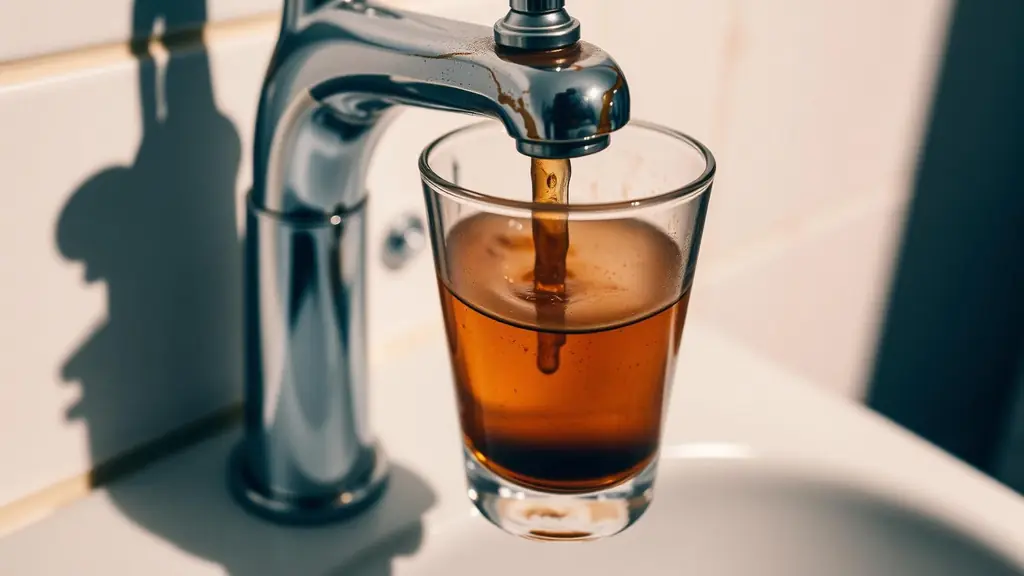
Quick answer: brown water
Brown water is almost always iron oxide (rust) or sediment. It comes from corroding galvanized steel pipe, sediment breaking loose inside an aging water heater, or a municipal main disturbance stirring up sediment in the supply.
Get it inspected
Brown water is not usually an immediate health emergency, but it can indicate serious pipe corrosion or a water heater near failure, and should be assessed within days.
Brown or reddish-brown water gets its color from iron oxide, either from corroding pipe inside your home or from iron-rich sediment disturbed somewhere in the water supply chain. Where the discoloration shows up first — one fixture, only hot water, or the whole house — narrows down the source quickly.
Isolating hot-versus-cold and one-fixture-versus-whole-house is the fastest diagnostic step, and it takes under five minutes at your own tap.
Warning signs of brown water
- Water that is brown, orange or rust-colored from one or more taps
- Discoloration appears only in hot water, not cold
- Brown water follows a period of municipal water main work nearby
- Rust-colored staining in tubs, toilets or on laundry
Most likely causes of brown water, ranked
1. Corroding galvanized steel supply pipe
Most common in homes built before 1960 with original piping
Galvanized steel pipe has a zinc coating that erodes over 40–60 years, exposing the steel underneath to corrosion. Rust flakes off the interior pipe wall and travels directly into tap water, and this affects both hot and cold lines fed from the same corroding section.
10-minute self-test: Run cold water from an outdoor hose bibb, which is often closest to the street supply, for two minutes; if it runs brown too, corrosion is likely in the main supply piping rather than isolated to the water heater.
This cause is not a DIY repair — it needs a licensed plumber.
2. Sediment buildup inside an aging water heater tank
Very common — affects hot water only
Rust and mineral sediment collect on the tank floor over years, and when the anode rod inside a steel tank depletes, corrosion accelerates and rust particles enter the hot water supply. This shows up exclusively in hot water taps while cold water runs clear.
10-minute self-test: Run only hot water at a sink for one minute. If it is brown while cold water from the same tap runs clear, the water heater is the source.
This cause is not a DIY repair — it needs a licensed plumber.
3. Municipal water main break or flushing nearby
Common and temporary
When a water main breaks or the utility performs hydrant flushing, sediment that has settled in the distribution pipes over years gets stirred up and pushed into homes on that section of the system. This typically resolves within hours to a day as the utility flushes the line.
10-minute self-test: Check your water utility's website or call their customer service line to ask about recent main work or flushing in your area, which confirms this as the cause.
4. High iron or manganese content in well water
Common for homes on private wells
Groundwater naturally high in dissolved iron or manganese turns brown or orange as it contacts air and oxidizes, a process the EPA notes is a common aesthetic (not typically health-based) well water issue. This tends to be a persistent, recurring pattern rather than a one-time event.
10-minute self-test: Fill a clear glass with water and let it sit for 30 minutes; iron-laden well water often develops visible rust-colored sediment or a film as it oxidizes.
This cause is not a DIY repair — it needs a licensed plumber.
5. Recently disturbed plumbing after repair work
Less common, situational
Any recent plumbing repair, valve replacement or fixture installation can dislodge rust and sediment that had settled in the pipe over years, sending a temporary slug of discolored water through the lines closest to the work.
10-minute self-test: If brown water started immediately after a plumber worked on the system, it likely clears within a day as the disturbed sediment flushes through.
Your 10-minute check list for brown water
- Compare hot versus cold water color from the same tap
- Check an outdoor hose bibb to isolate house piping from the water heater
- Contact your water utility about recent main work
- Let a glass of water sit to check for settling sediment
What it costs to fix brown water
| Cause / repair | DIY cost | Professional cost |
|---|---|---|
| Water utility main flush wait-out | $0 | n/a |
| Water heater flush | $0 | $100–$200 |
| Anode rod replacement | $20–$50 (parts) | $150–$300 |
| Whole-house sediment filter installation | $100–$300 | $300–$700 |
| Iron filtration system for well water | n/a | $1,500–$4,500 |
| Galvanized pipe repiping (partial) | n/a | $2,000–$6,000 |
| Full house repipe | n/a | $4,000–$15,000 |
See the full cost breakdown for this repair →
DIY fixes for brown water
Flush cold taps for a few minutes
If brown water follows municipal main work, running cold taps for several minutes often clears sediment that entered from the street side of the supply.
Flush the water heater tank
Attach a hose to the drain valve and flush several gallons after shutting off the cold supply, which removes loose sediment causing hot-water-only discoloration.
Install a whole-house sediment filter
A 5-micron sediment filter at the main supply line catches rust particles before they reach fixtures, which is a reasonable interim fix while planning pipe repair or replacement.
Mistakes to avoid with brown water
- Drinking or cooking with visibly brown water until the source is identified
- Ignoring persistent brown water from galvanized pipe, since ongoing internal corrosion can eventually cause pinhole leaks
- Delaying anode rod replacement on a steel water heater tank, which accelerates tank failure
Where homeowners waste money on brown water
- Buying a whole-house filtration system before confirming whether the source is the water heater alone, which a $150 flush might resolve
- Replacing the entire water heater when only the anode rod needs replacement
When to call a licensed plumber about brown water
Ask a plumber to test a sample from an outdoor bibb versus an indoor tap to definitively separate a water heater problem from a whole-house piping problem before authorizing repairs.
For well water iron issues, get a water test from a certified lab before purchasing a filtration system, since the right system depends on iron concentration and form (dissolved vs. oxidized).
What a licensed plumber actually does on this job →
How to prevent brown water coming back
- Replace galvanized steel supply piping proactively once it reaches 40–50 years of age
- Flush the water heater tank annually to prevent sediment accumulation
- Test well water annually for iron and manganese content
- Sign up for utility notifications about planned main work in your area
Why Is My House Getting Brown Water — questions homeowners ask
Is brown water safe to drink?
Brown water from rust or sediment is generally not an acute health hazard from iron alone, but the EPA recommends avoiding consumption until the source is identified, since it can also indicate broader pipe integrity issues.
Why is only my hot water brown?
This pattern points directly to the water heater tank, where rust and sediment accumulate on the tank floor and enter the hot water supply as the anode rod depletes over years of use.
How long does brown water from a main break last?
Typically a few hours to one day as the utility flushes the affected section of the distribution system; if it persists longer than 24 hours, the source is more likely inside your home's own plumbing.
Should I repipe my whole house for brown water?
Only if galvanized steel pipe is confirmed as the source and is approaching or past its 40–60 year service life; a plumber can inspect accessible sections to gauge overall corrosion severity first.
Problems related to brown water
- Why Is My House Getting No Hot Water?Often shows up alongside this problem. No hot water usually traces to a tripped high-limit switch, a burned-out electric heating element, an extinguished gas pilot, or a tank so sediment-clogged that it can no longer heat efficiently.Plumbing, Drains & Sewer Get it inspected
- Why Is My House Getting a Water Heater That Leaks?Often shows up alongside this problem. A leaking water heater is caused by internal tank corrosion, a loose or failed drain valve, a discharging temperature and pressure relief valve, or loose fittings on the inlet and outlet connections.Plumbing, Drains & Sewer Get it inspected
- Why Is My House Water Pressure Low?Often shows up alongside this problem. The first question is whether one fixture is weak or the whole house is weak.Plumbing, Drains & Sewer Get it inspected
- Why Is My House Getting a Toilet That Keeps Running?The same licensed plumber handles this one. A running toilet is almost always caused by a worn flapper that fails to seal, a float set too high, or a fill valve that will not fully shut off, letting water continuously leak from the tank into the bowl.Plumbing, Drains & Sewer Low urgency — monitor
Sources used for brown water
- EPA — Secondary Drinking Water Standards for Iron and Manganese
- American Water Works Association — Main Flushing and Water Quality Guidance
- U.S. Department of Housing and Urban Development — Galvanized Pipe Lifespan Reference