
Why Is My House Getting Bubbling Paint on the Wall?
Reviewed 2026-07-30 · How we research
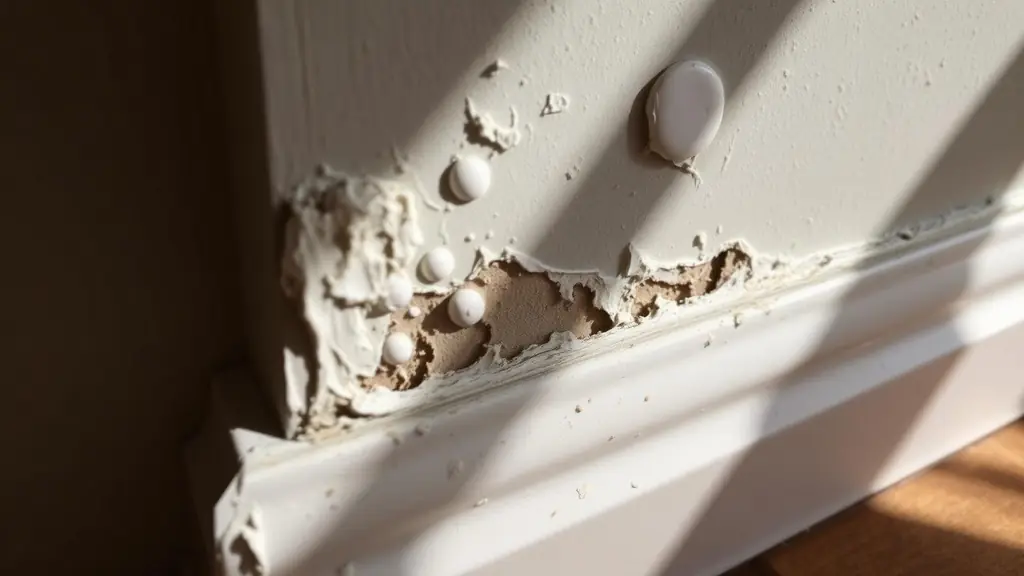
Quick answer: bubbling paint on the wall
Paint bubbles or blisters when moisture gets trapped between the paint film and the wall surface, breaking the paint's adhesion. The location and pattern of the bubbling — near a ceiling, at the baseboard, or around a window — usually points directly to the moisture source.
Get it inspected
Bubbling paint indicates moisture already trapped behind the surface, which can support mold growth within 24–48 hours and lead to drywall or plaster damage if left. Investigate the source within a couple of weeks.
Paint bubbling is a mechanical failure caused by moisture, not a paint quality issue in the majority of cases. Water vapor trapped behind the paint film expands and pushes the film away from the substrate, especially with lower-permeability paints like enamels that don't let trapped moisture escape.
Tracking where the bubbling starts and how it's shaped tells you whether you're dealing with a leak, condensation, or moisture wicking up from below — three very different fixes.
Warning signs of bubbling paint on the wall
- Paint bubbles concentrated near a ceiling corner or under a roof valley
- Blistering along the baseboard or lower 12 inches of a wall
- Bubbles that feel soft or squishy, or that leave the drywall paper visibly damp when popped
- A musty smell accompanying the bubbled area
Most likely causes of bubbling paint on the wall, ranked
1. An active roof, plumbing or window leak behind the wall
Most common when bubbling appears suddenly and near the ceiling or a specific fixture
A leak introduces liquid water directly behind the drywall or plaster, which then pushes through as vapor pressure builds behind the paint film. Bubbling that appears within days after a storm, or that's located directly below a bathroom, roof valley or window head, points strongly to an active leak rather than gradual moisture buildup.
10-minute self-test: Press gently on the bubbled area; if it feels wet, soft or springs back slowly, active moisture is present now, not just historically. Check the space above (attic, upstairs bathroom) or beside (exterior wall, window) for a source.
This cause is not a DIY repair — it needs a water damage restoration contractor.
2. Rising damp or moisture wicking up through a slab or masonry wall
Common in older homes and basements without a capillary break
Without a proper vapor barrier or capillary break at the base of a wall, groundwater can wick upward through concrete or masonry, and paint applied over that wicking moisture blisters in a band typically 6–24 inches above the floor, often paired with efflorescence.
10-minute self-test: Check whether bubbling forms a horizontal band low on the wall rather than a spot pattern, and look for white mineral deposits nearby, which together indicate wicking rather than a leak.
3. Painting over a damp or improperly dried surface
Common after a repair or new construction
Concrete, plaster, and drywall mud all need adequate cure and dry time before painting — typically several weeks for new concrete and 24–48 hours for drywall mud in normal conditions. Paint applied over residual moisture traps it, and it works its way through the film within days to weeks as a fresh set of bubbles.
10-minute self-test: Check the timeline: if bubbling appeared within a few weeks of a paint job following new construction, a repair, or a recent leak repair, incomplete drying before painting is the likely cause.
4. Interior condensation on an exterior wall behind low-permeability paint
Less common, occurs mainly on cold exterior walls
On poorly insulated exterior walls, interior humidity can condense within the wall assembly or right behind non-breathable paint, particularly oil-based or high-sheen enamel, which traps vapor rather than letting it diffuse through.
10-minute self-test: Check if the bubbled wall is an exterior wall and feel its surface temperature compared to interior walls; a noticeably colder exterior wall supports condensation as a contributing factor.
5. A slow, hidden plumbing leak inside the wall cavity
Common, especially near bathrooms and kitchens
A pinhole supply line leak or a failing drain connection inside a wall can wet the back of the drywall for weeks before enough moisture accumulates to bubble the paint on the visible side, meaning the leak is often more advanced than the paint damage alone suggests.
10-minute self-test: Check the water meter with all fixtures off for movement, and note whether the affected wall backs a bathroom, kitchen, or laundry area.
This cause is not a DIY repair — it needs a water damage restoration contractor.
Your 10-minute check list for bubbling paint on the wall
- Press on the bubble to check if it's soft, wet or dry
- Check the water meter for movement with fixtures off
- Note whether the pattern is a spot (leak) or a low horizontal band (wicking)
- Check the timeline against any recent paint job, repair or storm
- Feel the wall temperature if it's an exterior wall
What it costs to fix bubbling paint on the wall
| Cause / repair | DIY cost | Professional cost |
|---|---|---|
| Scraping and repainting a small area | $20–$60 | $150–$400 |
| Plumbing leak repair inside wall | n/a | $250–$1,500 |
| Roof or window flashing repair | n/a | $300–$1,800 |
| Drywall/plaster patch after water damage | $50–$200 | $300–$1,200 |
| Capillary break / damp-proofing at wall base | n/a | $1,000–$4,000 |
| Full mold remediation if growth is present | n/a | $1,500–$6,500 |
See the full cost breakdown for this repair →
DIY fixes for bubbling paint on the wall
Scrape, sand and let the wall dry fully before repainting
Never repaint over an active bubble; scrape it back to solid, dry substrate and allow at least 48–72 hours of drying, using a fan if needed, before applying new paint.
Use a moisture-permeable or masonry paint on problem walls
For walls prone to condensation or minor wicking, a breathable paint lets residual vapor escape rather than trapping it under the film again.
Confirm the source is fixed before repainting, not after
Repainting first and investigating later just hides the next round of bubbling until it reappears.
Improve ventilation near condensation-prone exterior walls
A small fan or improved air circulation reduces the local humidity that drives condensation-related blistering.
Mistakes to avoid with bubbling paint on the wall
- Repainting over bubbled paint without finding and fixing the moisture source — it will bubble again within weeks to months
- Using a thick oil-based enamel on a wall with a known moisture issue, since it traps vapor rather than letting it diffuse
- Popping and ignoring a bubble that reveals soft, dark or moldy drywall underneath — that needs remediation, not just a patch
Where homeowners waste money on bubbling paint on the wall
- Repeated repainting of the same bubbled spot without ever finding the moisture source
- Premium paint products marketed as moisture-resistant used as a substitute for actually fixing a leak or wicking issue
When to call a water damage restoration contractor about bubbling paint on the wall
Get a plumber to check for a hidden leak if the bubbling wall backs a bathroom, kitchen or laundry area, even without an obvious water stain.
Ask a restoration contractor to check moisture content in the drywall with a meter before any repaint — surface-dry does not mean the cavity is dry.
For low-band bubbling with efflorescence, get a waterproofing contractor to evaluate a capillary break or damp-proofing rather than repeatedly repainting.
What a water damage restoration contractor actually does on this job →
How to prevent bubbling paint on the wall coming back
- Allow full cure time for new concrete, plaster and drywall mud before painting
- Fix leaks and confirm dryness before any repaint
- Use breathable or masonry-appropriate paint on below-grade and exterior walls
- Check the water meter periodically for unexplained movement
Why Is My House Getting Bubbling Paint on the Wall — questions homeowners ask
Does bubbling paint always mean there's a leak?
Not always. It can also result from painting over an insufficiently dried surface, condensation on a cold exterior wall, or moisture wicking up through a slab. An active leak is more likely when the bubble feels wet or appears suddenly near a ceiling, window or plumbing wall.
Can I just repaint over bubbled paint?
Only after scraping it back to a dry, solid substrate and confirming the underlying moisture source is fixed. Repainting over a still-damp or unresolved leak area causes the new paint to bubble again within weeks.
What does it mean if the bubbling is only near the floor?
A low horizontal band of bubbling, especially paired with white mineral deposits, typically indicates rising damp or capillary wicking through a slab or masonry wall rather than a leak from above.
Is bubbling paint a sign of mold?
Bubbling paint means moisture is trapped behind it, which creates conditions where mold can begin growing within 24–48 hours per EPA guidance. Popping the bubble and checking for dark staining or a musty smell on the drywall underneath will confirm whether mold has already started.
Problems related to bubbling paint on the wall
- Why Is My House Getting Water After Heavy Rain?Same part of the house — Water appearing specifically during or after heavy rain, but not other times, means the entry point is directly tied to storm-volume water: roof flashing, gutters overflowing, poor grading, or a foundation crack under hydrostatic pressure.Moisture, Water & Mold Get it inspected
- Why Is My House Getting Mold on the Walls?Mold on a wall means that section of drywall or framing has stayed damp for 24–48 hours or longer.Moisture, Water & Mold Get it inspected
- Why Is My House Smelling Musty?A musty smell is microbial volatile organic compounds — geosmin and 2-methylisoborneol — released by mold and bacteria digesting damp material.Smells & Odors Get it inspected
- Why Is My House Getting Water in the Basement?Basement water almost always enters where hydrostatic pressure pushes groundwater through a wall or floor joint, or where surface water pools against the foundation because of clogged gutters or negative grading.Moisture, Water & Mold Get it inspected
Sources used for bubbling paint on the wall
- EPA — A Brief Guide to Mold, Moisture and Your Home
- Paint Quality Institute / ASTM D714 — Standard Test Method for Evaluating Degree of Blistering of Paints
- International Residential Code (IRC) R406 — Foundation Waterproofing and Dampproofing