
Why Is My House Getting Sloping Floors?
Reviewed 2026-07-30 · How we research
Quick answer: sloping floors
Sloping floors usually come from settling foundation footings, undersized or rotted floor joists, or a failed support post or beam in the crawl space or basement. A slope under 1 inch over 20 feet is common in older homes; more than that, or a slope that's getting worse, needs a structural evaluation.
Get it inspected
A slope under 1 inch over 20 feet is generally within normal tolerance for older homes. A slope over that, especially if new or worsening, or paired with wall cracks and sticking doors, needs a structural engineer.
Almost no floor is perfectly level, and older homes settle slightly and permanently as soils compress under their weight. The distinction that matters is between a stable, old, gentle slope and one that is new, localized or actively worsening.
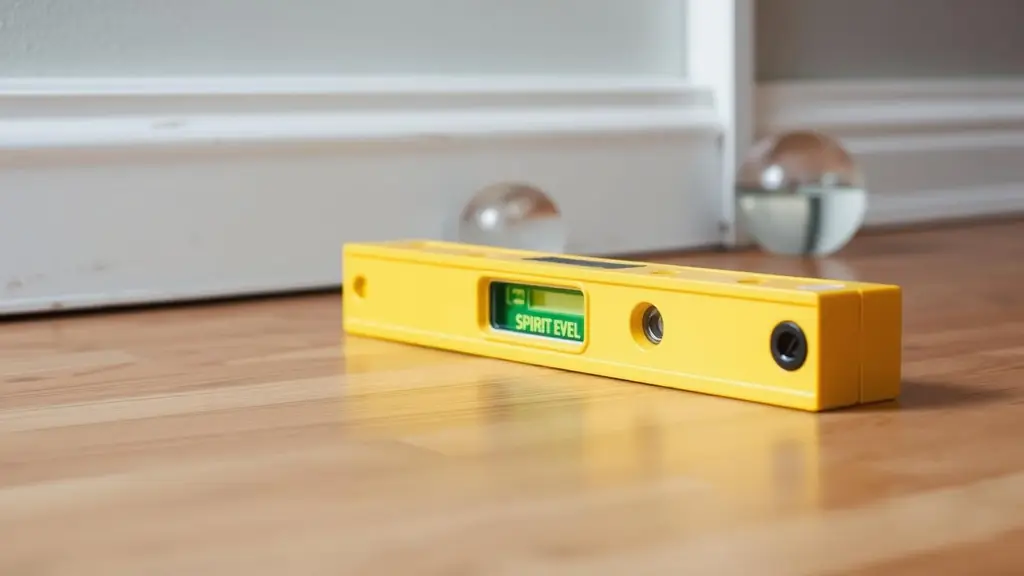
A slope test with a marble and a level, done in a few rooms, tells you which situation you're in.
Warning signs of sloping floors
- A slope exceeding roughly 1 inch over 20 feet
- A slope concentrated at one corner or one side of the house rather than gradual across the whole floor
- Bounce or springiness when walking across the sloped area
- New cracks in walls or a door that has begun sticking at the same time
- Visible sagging or dipping when viewed from a low angle across the room
Most likely causes of sloping floors, ranked
1. Normal historic settlement in an older home
Most common in homes over 40 years old
Soil under a foundation compresses gradually over decades, especially where footings were shallow by modern standards or fill soil wasn't fully compacted during construction. This produces a gentle, whole-house slope that has been stable for years and isn't actively worsening.
10-minute self-test: Use a 4-foot level or a marble test across several rooms. If the slope is under about 1 inch over 20 feet and consistent throughout the house, and doors and windows still operate normally, it's likely old and stable.
If that test is negative: A slope confined to one room or corner rules out whole-house settlement as the sole cause.
2. Undersized, rotted or insect-damaged floor joists
Common in homes with crawl spaces or older basements
Floor joists exposed to moisture from a crawl space, a past plumbing leak, or termite activity lose strength and sag under load, most often in the center of a span or near an exterior wall where moisture collects. IRC span tables set minimum joist sizes; joists in older homes were sometimes undersized even by the standards of their time.
10-minute self-test: In the crawl space or basement, inspect joists beneath the sloped area with a flashlight and an awl, pressing gently into the wood — soft, spongy wood indicates rot.
This cause is not a DIY repair — it needs a structural engineer.
3. A failed, undersized or missing support post or beam
Common in basements and crawl spaces with adjustable steel posts
Many houses rely on steel jack posts or wood posts resting on small concrete footings to support a center beam. If a footing settles, a post rusts through at the base, or a post was never properly set, the beam above it drops and the floor slopes toward that point.
10-minute self-test: In the basement or crawl space, check whether support posts sit firmly on their footing with no visible gap, rust-through at the base, or tilt.
This cause is not a DIY repair — it needs a structural engineer.
4. Foundation wall settlement from expansive soil or poor drainage
Less common but a serious structural cause
Water pooling against a foundation, or expansive clay soil cycling wet and dry, can cause an exterior foundation wall or footing to settle unevenly, tilting the floor toward the affected wall. This often shows up first as a slope near an exterior wall paired with cracks in that wall.
10-minute self-test: Check whether the sloped floor is concentrated near one exterior wall, and inspect that wall from outside for cracks, and the grading for water pooling.
This cause is not a DIY repair — it needs a structural engineer.
5. Water damage to a slab or subfloor from a plumbing leak
Uncommon but common enough near bathrooms and kitchens
A slow leak under a slab or subfloor can soften the substrate or corrode structural elements beneath tile or hardwood, creating a localized dip near the fixture rather than a general house-wide slope.
10-minute self-test: Check whether the low spot is near a bathroom, kitchen, or laundry area, and look for staining, warped flooring, or a musty smell nearby.
This cause is not a DIY repair — it needs a structural engineer.
Your 10-minute check list for sloping floors
- Run a marble across the floor in several rooms and note direction and speed of roll.
- Use a 4-foot level to measure slope over a known distance and calculate inches per 20 feet.
- Inspect exposed joists and support posts in the basement or crawl space with a flashlight.
- Check whether doors and windows near the sloped area still operate correctly.
What it costs to fix sloping floors
| Cause / repair | DIY cost | Professional cost |
|---|---|---|
| Slope measurement and documentation | $0 | n/a |
| Structural engineer inspection | n/a | $400–$900 |
| Sistering a damaged joist | n/a | $500–$1,500 per joist |
| Replacing a support post/footing | n/a | $500–$2,000 per post |
| Installing additional support beams (sistering multiple joists) | n/a | $2,000–$8,000 |
| Foundation piering for wall settlement | n/a | $6,000–$30,000 |
| Crawl space moisture correction | $200–$600 | $1,500–$5,000 |
See the full cost breakdown for this repair →
DIY fixes for sloping floors
Document the slope
Measure and photograph the slope with a level and note the date — this baseline is exactly what a structural engineer needs and lets you track any change.
Improve crawl space ventilation and moisture control
A vapor barrier over exposed crawl space soil and improved ventilation slows joist rot, though it won't reverse existing damage.
Fix exterior drainage first
Extend downspouts and correct negative grading near any exterior wall associated with the sloped area before paying for structural repair — it may be driving the movement.
Mistakes to avoid with sloping floors
- Leveling flooring cosmetically (self-leveling compound, shims) over an area with an active structural cause without first identifying that cause.
- Adjusting screw jack posts yourself without engineering guidance — raising a settled beam too quickly can crack drywall and finishes throughout the house.
- Ignoring a slope near an exterior wall that's paired with new cracking outside.
Where homeowners waste money on sloping floors
- Self-leveling compound applied over an actively worsening structural slope.
- Full foundation piering for a stable, decades-old, whole-house settlement pattern that engineers confirm has stopped moving.
When to call a structural engineer about sloping floors
Get an independent structural engineer's opinion before hiring anyone to jack, pier, or level a floor — the diagnosis determines whether the fix is a $600 post or a $20,000 foundation project.
Never let a foundation-repair salesperson also be your only diagnostician; their inspection and their repair quote have a built-in conflict of interest.
If joists show rot, get the moisture source fixed at the same time as the structural repair or the new lumber will fail too.
What a structural engineer actually does on this job →
How to prevent sloping floors coming back
- Keep crawl spaces dry with a vapor barrier and adequate ventilation per IRC crawl space requirements.
- Maintain grading and downspout extensions around the full perimeter.
- Have support posts and beams checked during any basement or crawl space inspection.
- Address plumbing leaks near kitchens and bathrooms immediately.
Why Is My House Getting Sloping Floors — questions homeowners ask
How much floor slope is normal in an old house?
A slope of up to about 1 inch over 20 feet is generally accepted as normal in older homes with historic, stabilized settlement. Beyond that, or if the slope is new or localized, it warrants a structural evaluation.
Can I fix a sloping floor myself?
You can safely diagnose and document it yourself with a level and marble, and you can improve crawl space moisture. Actually correcting the slope — sistering joists, resetting posts, piering — requires a professional because incorrect jacking can crack finishes throughout the house.
Why does my floor slope only in one room?
A localized slope usually points to a specific cause under that room: a failed support post, a rotted joist, or a plumbing leak, rather than whole-house foundation settlement, which tends to affect a broader area.
Will sloping floors get worse over time?
If caused by an active moisture source, ongoing soil movement, or a deteriorating support, yes. If caused by decades-old stabilized settlement, it typically will not, which is why tracking it over 60–90 days is useful before spending on repairs.
Problems related to sloping floors
- Why Is My House Developing Wall Cracks?Often shows up alongside this problem. Wall cracks usually come from drywall shrinkage, truss uplift or minor seasonal movement, and most are cosmetic.Foundation & Structure Get it inspected
- Why Is My House Getting Doors That Stick?Often shows up alongside this problem. Doors stick most often because of seasonal wood swelling, loose hinge screws, or paint buildup on the frame — all easy fixes.Foundation & Structure Low urgency — monitor
- Why Is My House Getting Water Pooled Near the Foundation?Often shows up alongside this problem. Water pools near the foundation most often because the soil grade slopes toward the house instead of away, downspouts discharge too close to the wall, or the soil is naturally slow-draining clay.Yard, Drainage & Property Get it inspected
- Why Is My House Making Creaking Noises at Night?The same structural engineer handles this one. Houses creak at night because framing cools and contracts after sunset.Foundation & Structure Low urgency — monitor
- Why Is My House Smelling Musty?A musty smell is microbial volatile organic compounds — geosmin and 2-methylisoborneol — released by mold and bacteria digesting damp material.Smells & Odors Get it inspected
Sources used for sloping floors
- InterNACHI — structural inspection standards for floors and framing
- IRC Chapter 5 — floor joist span tables and framing requirements
- ASCE — residential foundation performance guidance
- US DOE Building America — crawl space moisture control guidance