
Why Is My House Getting Doors That Stick?
Reviewed 2026-07-30 · How we research
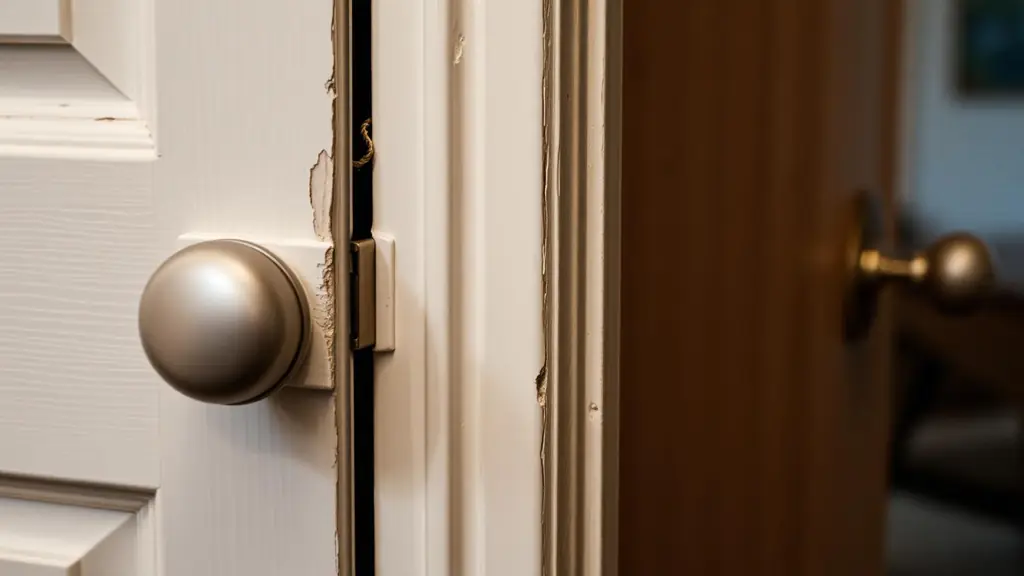
Quick answer: doors that stick
Doors stick most often because of seasonal wood swelling, loose hinge screws, or paint buildup on the frame — all easy fixes. A door that suddenly binds diagonally at one corner, especially with new cracks nearby, can indicate the house frame has shifted and deserves a structural check.
Low urgency — monitor
A door that sticks seasonally with humidity is a low-urgency nuisance. A door that suddenly starts binding at one corner, especially with new wall cracks, is worth a closer structural look.
A sticking door is one of the most common home complaints and, in the vast majority of cases, is caused by moisture-driven wood movement or a loose hinge rather than anything structural. The pattern of the stick — where on the door it binds and whether it changes with the seasons — tells you which situation you have.
Most sticking doors can be fixed in an afternoon with a screwdriver, a plane, or a bar of soap on the hinge.
Warning signs of doors that stick
- A door that used to close fine and now suddenly binds at the top or bottom corner
- A visible diagonal gap between the door and frame on one side
- Multiple doors on the same floor sticking at the same time, all leaning the same direction
- New cracks in nearby walls appearing alongside the sticking
Most likely causes of doors that stick, ranked
1. Seasonal wood swelling from humidity
Most common — the answer for the large majority of sticking doors
Wood doors and jambs absorb moisture from humid summer air and swell across the grain, tightening the fit in the frame. This reverses in winter as heated indoor air dries the wood back out, which is why many doors stick only during humid months.
10-minute self-test: Note whether the sticking is worse in summer and largely resolves in winter — that seasonal pattern confirms humidity is the cause, not structural movement.
If that test is negative: A stick that persists year-round or worsens continuously rules out simple seasonal swelling.
2. Loose hinge screws or worn hinge pins
Very common, especially on frequently used doors
Repeated use loosens hinge screws in their pilot holes over years, letting the door sag slightly and drag on the frame or floor at the bottom corner opposite the hinges.
10-minute self-test: Open the door and lift the outer edge slightly — visible play at the hinges confirms loose screws. Check if screws spin freely without tightening.
3. Built-up paint or old weatherstripping on the frame
Common in older homes with multiple repaint layers
Decades of repainting a door jamb without stripping old layers first gradually narrows the opening, and old compressed weatherstripping can also bind against the door edge.
10-minute self-test: Look for uneven, thick paint buildup on the strike side of the jamb where the door contacts it.
4. A settled or slightly out-of-square door frame (minor, stable)
Common in homes over 15–20 years old
Minor, long-stabilized settlement can leave a door frame slightly out of square permanently, causing a consistent stick that doesn't change with the seasons but also isn't getting worse.
10-minute self-test: Check whether the gap between door and frame is a consistent wedge shape that hasn't changed in the time you've lived there.
5. Active foundation or framing movement
Uncommon, but the cause worth ruling out
When a foundation settles or heaves unevenly, the wall framing around a door opening racks out of square, and the door frame distorts with it — producing a new, worsening diagonal gap. This is usually accompanied by cracks radiating from the door corner and, often, a sloped floor nearby.
10-minute self-test: Check for new drywall cracks at the corners of the door frame and use a level to see if the floor near the door slopes noticeably.
This cause is not a DIY repair — it needs a carpenter or structural engineer.
Your 10-minute check list for doors that stick
- Note whether the sticking is seasonal or year-round.
- Check for loose hinge screws by lifting the door slightly at the outer edge.
- Look for uneven paint buildup on the door jamb.
- Check for new wall cracks near the door frame.
- Use a level to check for floor slope near the doorway.
What it costs to fix doors that stick
| Cause / repair | DIY cost | Professional cost |
|---|---|---|
| Tightening or replacing hinge screws | $3–$10 | $80–$150 |
| Planing a sticking door edge | $15–$30 | $100–$250 |
| Stripping and repainting a jamb | $20–$50 | $150–$400 |
| Replacing weatherstripping | $15–$40 | $100–$200 |
| Rehanging a door in an out-of-square frame | n/a | $200–$500 |
| Structural engineer inspection (if movement suspected) | n/a | $400–$900 |
See the full cost breakdown for this repair →
DIY fixes for doors that stick
Tighten or replace hinge screws
Use longer 3-inch screws in at least one hole per hinge so they bite into the framing stud, not just the thin jamb, to stop sagging for good.
Plane the binding edge
Mark the exact contact point with chalk or carbon paper, remove the door, and plane only that spot rather than the whole edge.
Strip old paint from the jamb
A heat gun and scraper on the strike-side jamb often restores enough clearance without touching the door itself.
Rub candle wax or soap on hinge pins
For a temporary quiet fix on squeaky, sticky hinges, a bar of soap or paraffin on the hinge pin reduces friction immediately.
Mistakes to avoid with doors that stick
- Repeatedly planing a door every season instead of fixing the humidity source or hinge issue causing the swelling.
- Ignoring a new diagonal stick paired with wall cracks — that combination is worth a professional look, not just a plane.
Where homeowners waste money on doors that stick
- Replacing an entire door and frame for a problem that's just loose hinges or paint buildup.
- Repeated seasonal planing instead of controlling indoor humidity.
When to call a carpenter or structural engineer about doors that stick
Call a structural engineer, not a handyman, if a door has recently started sticking diagonally and you also see new cracks near the frame.
A carpenter can fix hinge, paint and planing issues in under an hour for most doors — no need to replace the door itself.
What a carpenter or structural engineer actually does on this job →
How to prevent doors that stick coming back
- Control indoor humidity between 30–50% with a dehumidifier or ventilation to reduce seasonal wood swelling.
- Check hinge screws annually on frequently used doors.
- Strip old paint fully before repainting door jambs rather than adding another coat.
Why Is My House Getting Doors That Stick — questions homeowners ask
Why does my door only stick in summer?
Humid summer air causes wood doors and jambs to absorb moisture and swell across the grain, tightening the fit. This is normal and typically resolves on its own as humidity drops in winter.
When is a sticking door a sign of a structural problem?
When the sticking is new, worsening, diagonal rather than uniform, and accompanied by new wall cracks or a sloping floor nearby. Isolated, seasonal or long-stable sticking is not a structural red flag.
Can I fix a sticking door without removing it?
Yes, for hinge and paint-buildup causes. Tightening screws or stripping jamb paint can be done with the door in place. Planing usually requires removing the door for a clean, even cut.
Will fixing the humidity in my house stop doors from sticking?
For humidity-driven sticking, yes — keeping indoor relative humidity in the 30–50% range reduces the wood movement that causes seasonal binding.
Problems related to doors that stick
- Why Is My House Developing Wall Cracks?Often shows up alongside this problem. Wall cracks usually come from drywall shrinkage, truss uplift or minor seasonal movement, and most are cosmetic.Foundation & Structure Get it inspected
- Why Is My House Getting Sloping Floors?Often shows up alongside this problem. Sloping floors usually come from settling foundation footings, undersized or rotted floor joists, or a failed support post or beam in the crawl space or basement.Foundation & Structure Get it inspected
- Why Is My House Getting Drafty Windows?Often shows up alongside this problem. Windows feel drafty most often because of worn weatherstripping, gaps in the frame's air-sealing caulk, or old single-pane glass with no insulating value.Windows, Doors & Exterior Low urgency — monitor
- Why Is My House So Cold?Most cold houses lose heat through air leaks and thin attic insulation, not through a weak furnace.Heating, Cooling & Air Get it inspected
Sources used for doors that stick
- InterNACHI — door and window inspection standards
- US DOE Building America — indoor humidity and wood movement guidance
- IRC — door and rough-opening framing tolerances