
Why Is My House Getting Water Pooled Near the Foundation?
Reviewed 2026-07-30 · How we research
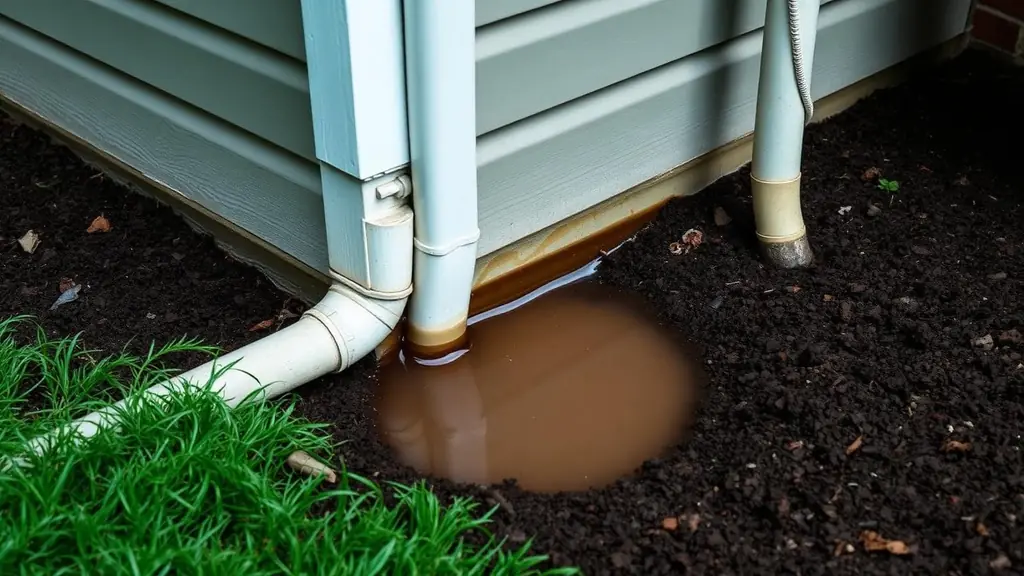
Quick answer: water pooled near the foundation
Water pools near the foundation most often because the soil grade slopes toward the house instead of away, downspouts discharge too close to the wall, or the soil is naturally slow-draining clay. IRC R401.3 requires at least 6 inches of fall in the first 10 feet away from the foundation, which is the benchmark to check first.
Get it inspected
Water that drains away within a few hours after rain is a lower-urgency fix. Standing water that lasts a day or more, or that coincides with basement dampness or new foundation cracks, needs correction soon to prevent structural and water-intrusion damage.
Water pooling against a foundation is a drainage problem before it's a foundation problem, and fixing the grading and downspouts is almost always cheaper and more effective than any foundation repair. Left alone, pooled water increases hydrostatic pressure against the wall and drives seasonal soil movement that cracks concrete and settles footings.
A simple grade check with a level after the next rain will usually show exactly where water is coming from and where it's failing to drain.
Warning signs of water pooled near the foundation
- Standing water within 10 feet of the foundation more than a few hours after rain stops
- Soil visibly sloping toward the house rather than away from it
- Efflorescence (white mineral staining) or dampness on basement walls after rain
- Mulch or landscaping beds built up higher than the foundation sill
- New or widening foundation cracks appearing near a pooling area
Most likely causes of water pooled near the foundation, ranked
1. Negative or flat grading sloping toward the foundation
Most common cause of foundation-area pooling
Over years, soil settles, mulch beds get built up, and landscaping changes can leave the ground sloping toward the house instead of away from it. IRC R401.3 requires the ground to fall at least 6 inches over the first 10 feet away from the foundation; anything flatter than that lets rainwater sit and soak in right where you don't want it.
10-minute self-test: Place a 4-foot level or a hose level at the foundation and check the slope over the first 10 feet — if it's flat or sloping back toward the house, that's the primary cause.
2. Downspouts discharging too close to the foundation
Very common even with correct grading elsewhere
A downspout that dumps directly at the base of the wall, or with only a short 1–2 foot splash block, concentrates a large volume of roof runoff in one spot regardless of how well the rest of the yard is graded — a single roof section can shed hundreds of gallons during one storm.
10-minute self-test: During rain, watch where downspout discharge lands and whether it's creating a visible puddle or erosion channel right at the foundation.
3. Slow-draining clay soil around the foundation
Common in regions with heavy clay subsoil
Clay soil has very low permeability and can hold surface water for a day or more after rain even with reasonably good grading, especially in the compacted backfill zone immediately around a foundation where original excavation soil was returned.
10-minute self-test: Dig a small test hole about 12 inches deep near the pooling area, fill it with water, and time how long it takes to drain — clay commonly takes many hours to fully absorb even a small volume.
4. No gutters, or a gutter system that's overflowing along the whole roof edge
Common on older homes or after gutter failure
Without functioning gutters, the entire roof's rainwater sheets off directly along the foundation perimeter instead of being collected and directed away through downspouts, dramatically increasing the water load right at the wall.
10-minute self-test: Check whether gutters are present, clear, and properly sloped, and whether water is visibly sheeting off the roof edge during rain rather than draining through downspouts.
5. High water table or a hardscape (patio, driveway) draining toward the house
Less common but requires more than regrading to fix
A naturally high seasonal water table, or a poured patio, driveway or walkway that was built with a slope back toward the foundation, can keep water pooling regardless of soil-level grading corrections, sometimes requiring a French drain or catch basin to solve.
10-minute self-test: Check whether pooling persists even during dry spells (suggesting a high water table) or specifically follows the slope of an adjacent hardscape surface.
This cause is not a DIY repair — it needs a drainage contractor.
Your 10-minute check list for water pooled near the foundation
- Check grading slope with a level over the first 10 feet from the foundation.
- Watch downspout discharge points during rain.
- Run a simple percolation test in a small hole near the pooling area.
- Inspect gutters for function and overflow.
- Check basement walls for staining or dampness after a rain event.
What it costs to fix water pooled near the foundation
| Cause / repair | DIY cost | Professional cost |
|---|---|---|
| Downspout extensions | $15–$40 each | $100–$250 each |
| Regrading soil near foundation (small area) | $50–$200 | $500–$2,000 |
| Full perimeter regrading | n/a | $2,000–$6,000 |
| Gutter cleaning/repair | $0–$30 | $120–$400 |
| French drain installation | $300–$800 (short run) | $3,000–$10,000 |
| Surface swale/catch basin | $200–$500 | $1,500–$4,500 |
| Sump pump installation (if water table related) | n/a | $1,200–$3,500 |
See the full cost breakdown for this repair →
DIY fixes for water pooled near the foundation
Extend downspouts 5+ feet from the foundation
Add rigid or flexible downspout extensions to carry roof runoff well past the foundation soil zone — one of the highest-value, lowest-cost fixes available.
Add or build up soil to restore proper grade
Bring in clean fill soil (not more mulch) to restore a 6-inch fall over the first 10 feet from the foundation, tamping and compacting as you go per IRC R401.3.
Clear and adjust gutters
Ensure gutters are clean and correctly sloped so the full roof load is actually being captured and routed to downspouts instead of sheeting off the edge.
Regrade mulch beds away from the sill
Pull mulch and soil back at least 6 inches below the foundation sill plate and slope beds away from the house rather than up against it.
Mistakes to avoid with water pooled near the foundation
- Piling mulch or soil up against the foundation sill — it holds moisture against wood framing and invites pests.
- Relying on a sump pump as a substitute for fixing surface grading and downspout discharge.
- Paving over a drainage problem with a patio or walkway that isn't sloped away from the house.
Where homeowners waste money on water pooled near the foundation
- Installing a French drain before correcting obvious grading and downspout problems that may solve the issue for a fraction of the cost.
- A sump pump installed as the first response to surface pooling rather than fixing the exterior drainage causing it.
When to call a drainage contractor about water pooled near the foundation
Fix grading and downspouts first — a drainage contractor should assess and correct surface drainage before recommending a French drain or sump pump, which address a different, deeper problem.
Get a percolation test done if clay soil is suspected, since it determines whether surface regrading alone will be enough or a subsurface drain is needed.
If pooling persists after grading and downspout fixes, have a professional evaluate for a high water table before investing in more surface work.
What a drainage contractor actually does on this job →
How to prevent water pooled near the foundation coming back
- Maintain at least 6 inches of fall over the first 10 feet from the foundation per IRC R401.3.
- Extend all downspouts a minimum of 5 feet from the foundation.
- Clean gutters at least twice a year to keep the full roof drainage system functional.
- Re-check grading every few years, since soil settles and landscaping changes over time.
Why Is My House Getting Water Pooled Near the Foundation — questions homeowners ask
How far should downspouts discharge from the foundation?
At least 5 feet, and ideally further if the yard allows. A downspout discharging right at the wall or with only a short splash block concentrates a large volume of water exactly where you don't want it.
What slope should the ground have near my foundation?
IRC R401.3 requires a minimum of 6 inches of fall over the first 10 feet away from the foundation. Flatter than that, water sits and soaks in rather than draining away.
Will pooled water near my foundation cause basement leaks?
Yes, over time. Standing water increases hydrostatic pressure against the foundation wall and can force its way through hairline cracks, cold joints, or porous block, especially during heavy or prolonged rain.
Do I need a French drain or just better grading?
Try grading and downspout correction first — it's cheaper and solves most surface pooling. A French drain is appropriate when regrading isn't possible (flat lot, hardscape constraints) or when a high water table is contributing to the problem.
Problems related to water pooled near the foundation
- Why Is My House Getting Overflowing Gutters?Often shows up alongside this problem. Gutters overflow most often because of clogged debris blocking flow to the downspout, insufficient slope toward the outlet, undersized gutters or downspouts for the roof area, or gutters pulling away from the fascia.Roof, Attic & Gutters Low urgency — monitor
- Why Is My House Developing Wall Cracks?Often shows up alongside this problem. Wall cracks usually come from drywall shrinkage, truss uplift or minor seasonal movement, and most are cosmetic.Foundation & Structure Get it inspected
- Why Is My House Getting Sloping Floors?Often shows up alongside this problem. Sloping floors usually come from settling foundation footings, undersized or rotted floor joists, or a failed support post or beam in the crawl space or basement.Foundation & Structure Get it inspected
- Why Is My House Smelling Musty?A musty smell is microbial volatile organic compounds — geosmin and 2-methylisoborneol — released by mold and bacteria digesting damp material.Smells & Odors Get it inspected
Sources used for water pooled near the foundation
- IRC R401.3 — foundation drainage and grading requirements
- US EPA — foundation drainage and stormwater management guidance
- InterNACHI — foundation and drainage inspection standards
- ASCE — residential foundation performance and soil-moisture guidance