
Why Is My House Getting Overflowing Gutters?
Reviewed 2026-07-30 · How we research
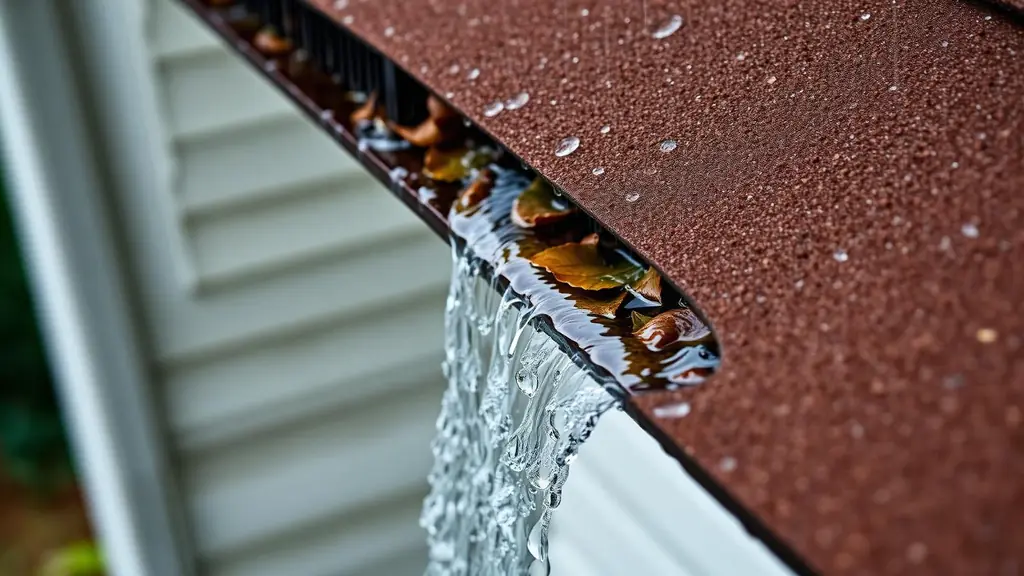
Quick answer: overflowing gutters
Gutters overflow most often because of clogged debris blocking flow to the downspout, insufficient slope toward the outlet, undersized gutters or downspouts for the roof area, or gutters pulling away from the fascia. A standard 5-inch K-style gutter is sized for roughly 6,000–7,500 square feet of roof area per downspout depending on rainfall intensity.
Low urgency — monitor
Occasional overflow during an extreme downpour beyond the gutter's rated capacity isn't unusual. Overflow during normal rain, or overflow that's soaking the foundation, should be fixed soon to prevent water damage.
Overflowing gutters are rarely a manufacturing defect — they're almost always a maintenance, slope or sizing issue. Water needs a clear, sloped, adequately sized path from the roof edge to a downspout that discharges well away from the foundation.
A quick check during rain will usually show you exactly where the water is escaping and why.
Warning signs of overflowing gutters
- Water sheeting over the gutter's front edge during rain
- Water pooling or splashing near the foundation below a downspout
- Visible sagging sections of gutter or gutters pulling away from the fascia
- Leaves, granules or debris visible in the gutter trough
- Staining or erosion in the mulch or soil below overflow points
Most likely causes of overflowing gutters, ranked
1. Debris clogging the gutter trough or downspout
Most common cause by far
Leaves, roof granules, and seed pods accumulate in the trough and especially at the downspout outlet, where they form a plug that backs water up and over the front edge even in moderate rain. Homes under trees need cleaning twice a year at minimum; gutter guards reduce but don't eliminate this.
10-minute self-test: Check the gutter trough and downspout opening for visible debris buildup, ideally after a dry stretch when you can safely inspect from a ladder.
If that test is negative: A clean, debris-free gutter that still overflows points to a slope or sizing issue instead.
2. Incorrect gutter slope toward the downspout
Common, especially with DIY installations or settled fascia
Gutters need a slope of roughly 1/4 to 1/2 inch per 10 feet toward the downspout. Without enough slope, water sits in the trough instead of draining, and any additional volume during rain overflows before it reaches the outlet.
10-minute self-test: During a light rain, watch whether water flows steadily toward the downspout or pools and sits flat in sections of the trough.
This cause is not a DIY repair — it needs a gutter contractor.
3. Undersized gutters or too few downspouts for the roof area
Common on additions and steep or large roof sections
A standard 5-inch K-style gutter with a 2x3 downspout is generally sized for about 5,000–7,500 square feet of roof, depending on local rainfall intensity; larger or steeper roofs, or roof sections combined onto too few downspouts, can exceed that capacity during heavy storms.
10-minute self-test: Estimate the roof area draining to each downspout and compare against the manufacturer's capacity rating, or note whether overflow only happens during the heaviest storms rather than routine rain.
This cause is not a DIY repair — it needs a gutter contractor.
4. Gutters pulling away from the fascia or sagging
Common in gutters over 15–20 years old
Loose or corroded hangers let a gutter section sag or tilt outward, creating a low spot where water pools and overflows instead of reaching the downspout, and eventually causing the gutter to separate from the roofline entirely.
10-minute self-test: Sight along the gutter line from the ground for visible sagging, dips, or a gap between the gutter and the fascia board.
This cause is not a DIY repair — it needs a gutter contractor.
5. Roof valley or steep-slope roof concentrating water at one point
Less common but a frequent local overflow cause
A roof valley funnels water from two roof planes into a single gutter section, delivering far more volume there than elsewhere, which can overwhelm a standard-size gutter run at exactly that spot even when the rest of the system drains fine.
10-minute self-test: Check whether overflow is consistently isolated to the section directly below a roof valley rather than happening uniformly around the house.
This cause is not a DIY repair — it needs a gutter contractor.
Your 10-minute check list for overflowing gutters
- Inspect the gutter trough and downspout opening for debris.
- Watch water flow during light rain to check slope and movement toward the downspout.
- Sight along the gutter line for sagging or gaps from the fascia.
- Note whether overflow is isolated to one section (like below a valley) or happens throughout.
What it costs to fix overflowing gutters
| Cause / repair | DIY cost | Professional cost |
|---|---|---|
| Gutter cleaning | $0–$30 (tools) | $120–$300 |
| Gutter guards installation | $150–$400 | $700–$2,500 |
| Re-hanging/re-sloping gutter sections | $30–$80 | $200–$600 |
| Adding a downspout | n/a | $250–$600 each |
| Upsizing gutters (6-inch K-style) | n/a | $2,500–$6,000 whole house |
| Full gutter replacement | n/a | $1,800–$5,500 |
See the full cost breakdown for this repair →
DIY fixes for overflowing gutters
Clean gutters twice a year minimum
Spring and fall cleaning, more often under heavy tree cover, prevents the majority of overflow complaints for free.
Check and adjust hangers
Tighten or replace loose spike-and-ferrule or bracket hangers so the gutter sits firmly and level against the fascia — sagging sections are an easy DIY fix with a ladder and screwdriver.
Extend downspouts away from the foundation
Add a downspout extension to carry discharge at least 5 feet from the foundation, reducing the chance overflow or discharge saturates the soil against the wall.
Install gutter guards if under heavy tree cover
Mesh or reverse-curve guards dramatically reduce debris clogging, though they still need occasional cleaning for fine debris.
Mistakes to avoid with overflowing gutters
- Ignoring recurring overflow at the same spot every storm — it usually indicates a fixable slope, sizing, or clog issue, not just bad luck with weather.
- Cleaning gutters from a ladder in wet or icy conditions.
- Assuming gutter guards eliminate the need for any maintenance.
Where homeowners waste money on overflowing gutters
- Gutter guards installed over gutters that are already improperly sloped — the guard won't fix the underlying drainage problem.
- Repeated cleaning-only service calls when the real issue is undersized gutters for the roof area.
When to call a gutter contractor about overflowing gutters
Have a contractor check gutter slope and sizing if cleaning alone doesn't stop the overflow — a persistent problem after cleaning usually means a capacity or slope issue, not debris.
Consider a larger 6-inch gutter and 3x4 downspouts on steep or large roof sections and below valleys, where standard 5-inch systems are commonly undersized.
Ask about seamless aluminum gutters with hidden hangers, which hold slope better long-term than older spike-and-ferrule systems.
What a gutter contractor actually does on this job →
How to prevent overflowing gutters coming back
- Clean gutters at least twice a year, more with heavy tree cover.
- Trim overhanging branches that drop debris directly into gutters.
- Check gutter slope and hanger condition annually.
- Extend all downspouts at least 5 feet from the foundation.
Why Is My House Getting Overflowing Gutters — questions homeowners ask
How often should gutters be cleaned to prevent overflow?
Twice a year at minimum — spring and fall — and more often if the house is under heavy tree cover. Clogged downspout outlets are the single most common cause of overflow.
Why do my gutters overflow only in one spot?
A localized overflow point usually means a sagging section, a clog concentrated near that downspout, or a roof valley dumping extra water into that section specifically — check that spot first before assuming a system-wide problem.
Are gutter guards worth it?
They significantly reduce leaf and debris clogging, especially under trees, but don't eliminate maintenance entirely and won't fix a slope or sizing problem underneath them.
Can overflowing gutters damage my foundation?
Yes. Water sheeting off the gutter edge repeatedly saturates the soil right against the foundation wall, which over time contributes to hydrostatic pressure, basement leaks, and soil movement that can crack the foundation.
Problems related to overflowing gutters
- Why Is My House Getting Ice Dams on the Roof?Often shows up alongside this problem. Ice dams form when heat escaping into the attic melts snow on the upper roof, and the meltwater refreezes at the colder, unheated eave, building a ridge of ice that backs water up under the shingles.Roof, Attic & Gutters Get it inspected
- Why Is My House Getting Water Pooled Near the Foundation?Often shows up alongside this problem. Water pools near the foundation most often because the soil grade slopes toward the house instead of away, downspouts discharge too close to the wall, or the soil is naturally slow-draining clay.Yard, Drainage & Property Get it inspected
- Why Is My House Getting a Ceiling Stain?Often shows up alongside this problem. Ceiling stains almost always come from water tracking along roof sheathing or rafters from a leak at flashing, a valley or a vent boot, or from a plumbing leak in a bathroom or HVAC line above.Roof, Attic & Gutters Get it inspected
- Why Is My House Smelling Musty?A musty smell is microbial volatile organic compounds — geosmin and 2-methylisoborneol — released by mold and bacteria digesting damp material.Smells & Odors Get it inspected
Sources used for overflowing gutters
- InterNACHI — gutter and downspout inspection standards
- SMACNA — gutter sizing and slope guidance
- IRC — roof drainage requirements
- US EPA — foundation drainage and gutter maintenance guidance