
Why Is My House Getting a Ceiling Stain?
Reviewed 2026-07-30 · How we research
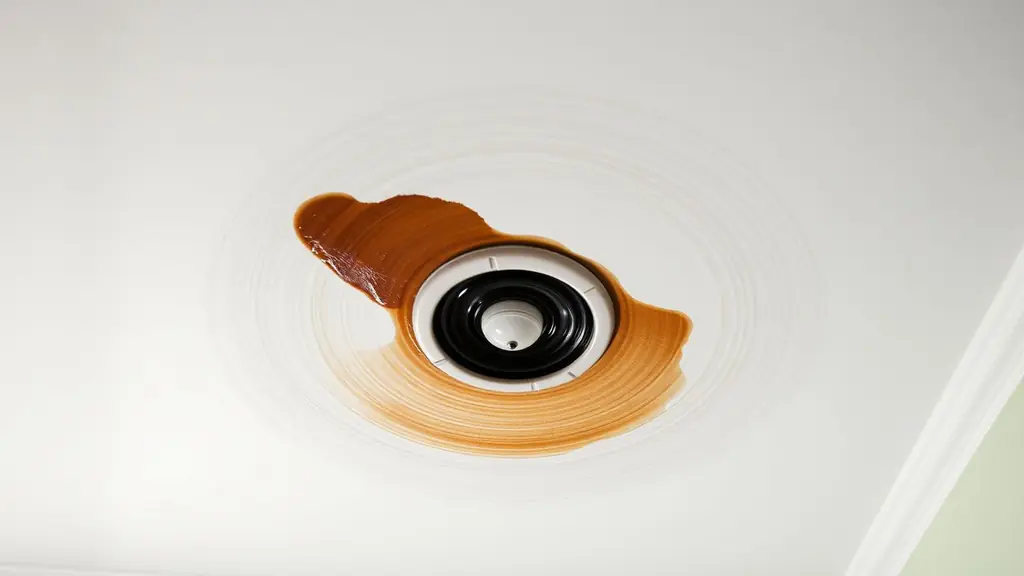
Quick answer: ceiling stain
Ceiling stains almost always come from water tracking along roof sheathing or rafters from a leak at flashing, a valley or a vent boot, or from a plumbing leak in a bathroom or HVAC line above. Water can travel 10 feet along a rafter before dripping, so the stain rarely sits directly under the entry point.
Get it inspected
A dry, old stain with no growth in size is lower urgency but should still be traced. A new, spreading, or soft-to-the-touch stain means an active leak and needs prompt attention.
A ceiling stain is evidence, not the leak itself — water has already traveled from its entry point along roof sheathing, rafters or joists before saturating the drywall enough to show a mark. Finding the true source usually means going into the attic and looking uphill from the stain.
Most residential roof leaks originate at penetrations and transitions — flashing, valleys, chimneys, vent boots — rather than in the open field of shingles.
Warning signs of ceiling stain
- A brown or yellow ring-shaped stain, often with a darker outer edge
- A stain that grows larger after rain
- Soft or sagging drywall at the stain
- A musty smell in the room
- Peeling paint or bubbling around the stained area
Most likely causes of ceiling stain, ranked
1. Roof flashing failure at a penetration or transition
Most common source of ceiling stains
Flashing around chimneys, skylights, vent pipes and roof valleys is the most common failure point on a roof because it relies on overlapping metal and sealant rather than a continuous shingle course. Cracked sealant, rusted-through flashing, or flashing installed without proper step-and-counter overlap lets water in during wind-driven rain, and it tracks down the rafter to drip well away from the actual penetration.
10-minute self-test: On a dry day, go into the attic with a flashlight and look uphill from the stain for dark water tracks, rust streaks on nails, or daylight visible at a penetration.
This cause is not a DIY repair — it needs a roofing contractor.
2. Missing, cracked or wind-lifted shingles
Common, especially after storms
Shingles that have lost granules, curled, cracked, or blown off entirely expose the underlayment directly to rain. A single compromised shingle upslope of the stain is often enough to cause a slow, intermittent leak that only shows during wind-driven storms.
10-minute self-test: From the ground with binoculars, look for shingles that appear discolored, curled, missing, or out of alignment with their neighbors, especially above the stain's location.
This cause is not a DIY repair — it needs a roofing contractor.
3. Ice dam backup at the eave (cold-climate seasonal)
Common in cold climates during winter
Melting snow refreezing at a cold overhang forms a dam that backs meltwater up under the shingles, past the water-resistive layer, and into the attic — producing a stain that appears specifically after a freeze-thaw cycle rather than during summer rain.
10-minute self-test: Note whether the stain appeared in winter after snow and ice at the eaves, rather than during a summer storm.
This cause is not a DIY repair — it needs a roofing contractor.
4. A plumbing or HVAC line leaking above the ceiling
Common when the stain is not under an exterior roof plane
A stain under an upstairs bathroom, near an HVAC condensate line, or below a second-floor kitchen usually traces to a supply line, drain, or AC condensate drain rather than the roof, especially in single-story sections of a house with no roof directly above.
10-minute self-test: Check what's directly above the stain — if it's an interior room like a bathroom or laundry rather than exterior roof, suspect plumbing or HVAC first.
This cause is not a DIY repair — it needs a roofing contractor.
5. Condensation from poor attic ventilation
Less common but often misdiagnosed as a leak
Warm, moist indoor air leaking into an under-ventilated attic condenses on the cold underside of the roof deck and drips onto insulation and drywall, producing a stain with no obvious flashing or shingle failure. Code baseline is roughly 1 square foot of net free vent area per 150 square feet of attic floor.
10-minute self-test: Check the attic for frost or condensation on the underside of the roof deck or nail tips on a cold morning, and confirm whether soffit and ridge vents are actually open and unobstructed by insulation.
This cause is not a DIY repair — it needs a roofing contractor.
Your 10-minute check list for ceiling stain
- Go into the attic on a dry day and look uphill from the stain for water tracks or daylight.
- Check what room or space is directly above the stain — roof, bathroom, or HVAC line.
- Note whether the stain appeared after a storm, after a freeze-thaw cycle, or gradually.
- Look for frost or condensation on the roof deck underside during cold weather.
What it costs to fix ceiling stain
| Cause / repair | DIY cost | Professional cost |
|---|---|---|
| Ceiling patch and repaint | $30–$80 | $300–$800 |
| Flashing repair | n/a | $300–$800 |
| Shingle replacement (small area) | $100–$250 | $400–$1,200 |
| Roof leak diagnosis/inspection | n/a | $150–$450 |
| Plumbing leak repair | n/a | $250–$1,200 |
| Attic ventilation correction | $200–$500 | $800–$2,500 |
| Full roof replacement (if widespread failure) | n/a | $8,500–$22,000 |
See the full cost breakdown for this repair →
DIY fixes for ceiling stain
Trace the source in the attic first
Before patching drywall, spend 15 minutes in the attic on a dry day tracing water stains and tracks uphill — patching without finding the source guarantees a repeat stain.
Catch active drips safely
During an active leak, place a bucket under the drip and, if the ceiling is bulging, carefully puncture the lowest point from below into the bucket to relieve pressure and prevent a larger collapse.
Let the area dry fully before repainting
Use a fan to dry the drywall and framing completely, and check with a moisture meter if available, before patching and repainting — trapping moisture invites mold.
Mistakes to avoid with ceiling stain
- Repainting a stain without finding and fixing the leak source.
- Assuming an old, dry-looking stain is fully resolved without checking the attic — slow leaks recur seasonally.
- Getting on a wet or steep roof yourself to inspect flashing.
Where homeowners waste money on ceiling stain
- Ceiling patch and paint without a leak-source diagnosis.
- Roof coating or sealant products applied broadly instead of fixing the specific flashing or shingle failure.
When to call a roofing contractor about ceiling stain
Get a roof leak diagnosis, not just a repair quote — a good roofer traces the actual entry point rather than guessing based on the stain's location.
If the source is plumbing rather than roofing, a plumber should be brought in before any drywall repair to avoid paying twice.
Ask whether the leak is isolated or a symptom of broader roof age and wear that justifies a full replacement estimate alongside the repair quote.
What a roofing contractor actually does on this job →
How to prevent ceiling stain coming back
- Have the roof inspected annually and after major storms, especially flashing at penetrations.
- Maintain proper attic ventilation at roughly 1:150 net free vent area.
- Address any new ceiling stain within days rather than months.
- Keep gutters clear so water doesn't back up under the roof edge.
Why Is My House Getting a Ceiling Stain — questions homeowners ask
Why is the stain not directly under where the roof is leaking?
Water tracks along the roof sheathing and rafters, sometimes traveling 10 feet or more, before it saturates drywall enough to show a stain. The true entry point is usually uphill from the visible mark.
Can a ceiling stain be from something other than the roof?
Yes. If the stain is under an upstairs bathroom, kitchen, or HVAC line rather than directly under the roof, a plumbing leak or AC condensate line is more likely than a roof leak.
Is an old, dry ceiling stain still a problem?
It's worth tracing even if dry, since many leaks are seasonal (storm-driven or ice-dam related) and can recur. A dry stain also doesn't rule out ongoing minor moisture feeding mold inside the wall or attic.
How fast should I address a ceiling stain?
Within days. Even a slow leak can degrade framing, insulation and drywall strength, and prompt attention avoids a small $300 flashing repair turning into a $2,500 sheathing replacement.
Problems related to ceiling stain
- Why Is My House Getting a Sagging Ceiling?Often shows up alongside this problem. A sagging ceiling is most often caused by water damage from a roof or plumbing leak soaking the drywall, failed drywall fasteners, or an overloaded or damaged joist above.Foundation & Structure Urgent — act now
- Why Is My House Getting Ice Dams on the Roof?Often shows up alongside this problem. Ice dams form when heat escaping into the attic melts snow on the upper roof, and the meltwater refreezes at the colder, unheated eave, building a ridge of ice that backs water up under the shingles.Roof, Attic & Gutters Get it inspected
- Why Is My House Getting Overflowing Gutters?Often shows up alongside this problem. Gutters overflow most often because of clogged debris blocking flow to the downspout, insufficient slope toward the outlet, undersized gutters or downspouts for the roof area, or gutters pulling away from the fascia.Roof, Attic & Gutters Low urgency — monitor
- Why Is My House Smelling Musty?A musty smell is microbial volatile organic compounds — geosmin and 2-methylisoborneol — released by mold and bacteria digesting damp material.Smells & Odors Get it inspected
Sources used for ceiling stain
- InterNACHI — roof and attic inspection standards
- IRC — roof flashing and ventilation requirements
- NRCA — flashing failure and roof leak diagnosis guidance
- US DOE — attic ventilation and condensation control