
Why Is My House Heater Blowing Cold Air?
Reviewed 2026-08-01 · How we research
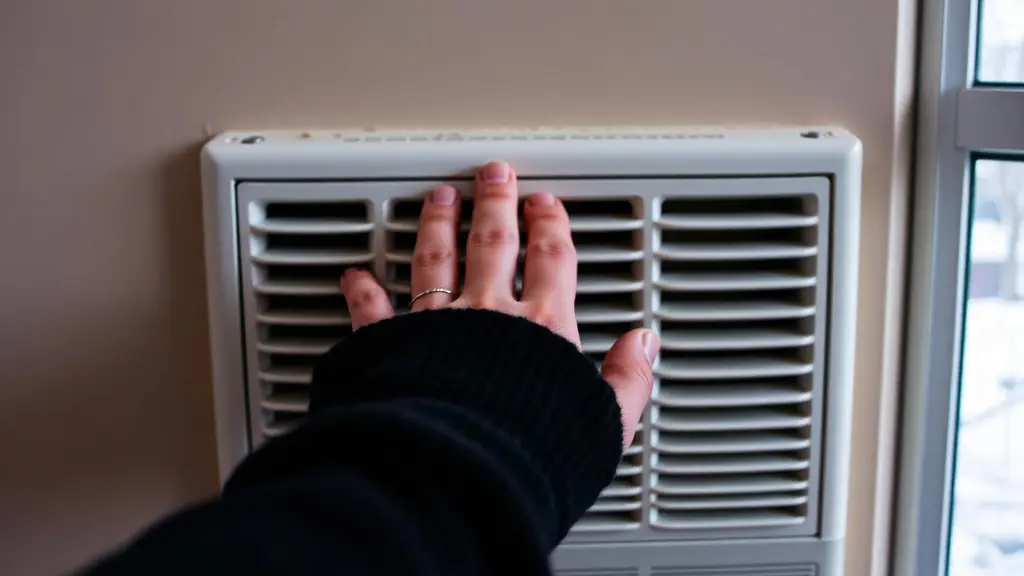
Quick answer: heater blowing cold air
Air coming out cold usually starts with the fan switch set to ON instead of AUTO, or the thermostat set to Cool instead of Heat. On heat pumps, mildly cool supply air is often normal, especially during a defrost cycle. On furnaces, cold air points to an ignition failure or a safety shutdown.
Urgent — act now
Cold air from vents in cold weather needs attention within a day or two, and any burning smell or repeated ignition attempts should prompt an immediate professional call.
Before diagnosing anything else, it helps to know that furnace air and heat pump air are supposed to feel different. Furnace supply air typically feels distinctly warm to the touch, often well above body temperature, because it's heated by combustion or electric resistance. Heat pump supply air is warm relative to room temperature but often feels only mildly warm or even neutral to the hand, because it's moving a smaller temperature rise across a larger volume of air.
With that distinction in mind, work through simple settings first, then move to system-specific causes for whichever type of equipment you have.
Warning signs of heater blowing cold air
- Vents blow air that feels distinctly cold, not just mild
- Furnace clicks repeatedly trying to ignite without producing warm air
- Heat pump blows cool air for more than 10-15 minutes at a stretch
- A burning smell accompanies the cold air
Most likely causes of heater blowing cold air, ranked
1. Fan set to ON instead of AUTO
Most common
With the fan switch set to ON, the blower runs continuously, including in the minutes between heating cycles when there's no active heat source, pushing room-temperature or cool air through the vents. Setting it to AUTO means the blower only runs while the furnace or heat pump is actively producing heat.
10-minute self-test: Check the thermostat's fan setting. If it says ON, switch it to AUTO and see whether the cold-air sensation stops within one cycle.
2. Thermostat mode set to Cool or Fan-only
Very common
It's an easy mistake, especially with programmable schedules, for the system to be set to Cool or Fan-only mode rather than Heat, which will circulate air without producing warmth.
10-minute self-test: Confirm the mode explicitly says Heat, not Cool or Fan Only, and that the setpoint is above the current room temperature.
3. Normal heat pump defrost cycle
Common and often mistaken for a malfunction
Heat pumps periodically reverse into cooling mode for a few minutes to melt frost off the outdoor coil, and during that time the indoor air handler can blow noticeably cool air. This is normal operation and typically lasts under 15 minutes, after which the system returns to heating.
10-minute self-test: Time how long the cool air lasts. If it resolves within about 10-15 minutes and the outdoor unit was frosted beforehand, this is a normal defrost cycle, not a fault.
4. Dirty filter limiting furnace heat output
Common
A clogged filter can starve airflow enough that the little heat being produced gets diluted by the volume of air moving past the heat exchanger, making supply air feel cooler than it should even when the burner is working.
10-minute self-test: Check the filter for visible dust buildup and replace it if light doesn't pass through it easily.
5. Ignition failure on a gas furnace
Common
If the igniter or pilot fails to light the burners, the blower may still run on its own timer and push unheated air through the ducts. This is a job for a technician — never attempt to manually light or bypass a furnace's ignition system.
10-minute self-test: Listen for a click or hum followed by silence rather than a whoosh of ignition. Repeated attempts without ignition mean the burners aren't lighting.
This cause is not a DIY repair — it needs a hvac technician.
6. High-limit switch shutting off the burners
Less common
If airflow is severely restricted, the furnace can overheat internally and trip a high-limit safety switch that shuts off the burners while the blower keeps running to cool the unit, resulting in cold air from the vents.
10-minute self-test: This typically follows a period of the furnace running normally before switching to blowing cold; it needs a technician to diagnose the airflow restriction and reset the control safely.
This cause is not a DIY repair — it needs a hvac technician.
7. Fouled flame sensor causing intermittent shutdowns
Less common
A flame sensor coated in residue can cause the furnace to light briefly and then shut the gas valve off within seconds, appearing to run while producing little or no sustained heat.
10-minute self-test: Note whether the furnace seems to light and then quickly go quiet in a repeating pattern; that pattern points to a flame-sensing issue for a technician to clean or replace, never a homeowner task.
This cause is not a DIY repair — it needs a hvac technician.
8. Reversing valve stuck on a heat pump
Less common
If the reversing valve that switches between heating and cooling modes sticks in the cooling position, the system will run continuously in Heat mode while actually cooling the air.
10-minute self-test: Feel the two refrigerant lines at the outdoor unit; if the pattern doesn't match what's expected for heating mode, or the system never leaves what feels like a defrost-like state, call a technician.
This cause is not a DIY repair — it needs a hvac technician.
9. Low refrigerant or blower/control board fault
Least common but possible
Low refrigerant charge reduces a heat pump's ability to move heat, and a failing control board can mis-time when the blower or heat source turns on, both producing air that feels cooler than expected.
10-minute self-test: These require gauges and electrical testing; if the simpler causes above are ruled out, this is squarely a technician diagnosis.
This cause is not a DIY repair — it needs a hvac technician.
What it costs to fix heater blowing cold air
| Cause / repair | DIY cost | Professional cost |
|---|---|---|
| Thermostat fan/mode setting | $0 | n/a |
| Filter replacement | $8–$25 | n/a |
| Ignition system repair | not safe to DIY | $150–$500 |
| High-limit switch replacement | not safe to DIY | $150–$400 |
| Flame sensor cleaning/replacement | not safe to DIY | $125–$300 |
| Reversing valve replacement | not safe to DIY | $450–$1,600 |
| Refrigerant leak repair and recharge | not safe to DIY | $400–$2,000 |
See the full cost breakdown for this repair →
DIY fixes for heater blowing cold air
Switch the fan setting to AUTO
This alone resolves the sensation of cold air between heating cycles for many households.
Confirm the thermostat mode and setpoint
Make sure Heat mode is selected and the setpoint is meaningfully above the current room temperature.
Replace the filter
A clean filter restores airflow and helps the heat exchanger transfer heat efficiently into the air stream.
Time defrost cycles on a heat pump before assuming a fault
If cool air resolves within about 15 minutes and matches a frosted outdoor unit, no repair is needed.
Mistakes to avoid with heater blowing cold air
- Never attempt to light, adjust, or bypass a furnace's gas valve or igniter yourself
- Never clean or touch a flame sensor with anything other than the manufacturer-approved method performed by a technician
- Do not keep resetting a furnace that fails to ignite repeatedly
Where homeowners waste money on heater blowing cold air
- Replacing a thermostat before checking whether the fan is simply set to ON
- Assuming a heat pump defrost cycle is a system failure and paying for an emergency call during it
- Replacing a whole furnace for a flame-sensor issue that costs a fraction of that to clean or replace
When to call a hvac technician about heater blowing cold air
Describe the pattern precisely — constant cold air, intermittent, or only between cycles — since that narrows the diagnosis before the technician arrives.
Mention whether you have a furnace or heat pump; the likely causes and tools needed differ substantially.
Ask whether the flame sensor was cleaned as part of the visit, since that alone resolves a large share of intermittent ignition complaints.
What a hvac technician actually does on this job →
How to prevent heater blowing cold air coming back
- Leave the fan on AUTO rather than ON during heating season
- Replace filters every 60–90 days
- Schedule annual maintenance so flame sensors and ignition components are cleaned before they fail
Why Is My House Heater Blowing Cold Air — questions homeowners ask
Is it normal for a heat pump to feel cool at the vent while heating?
Some heat pump supply air feels only mildly warm compared to a furnace's noticeably hot air, and that alone doesn't indicate a problem. Distinctly cold air, or cool air lasting well beyond a defrost cycle, is not normal.
Why does my furnace blow cold air for a minute before warming up?
A short period of cooler air right at startup, before the heat exchanger reaches temperature, can be normal on some furnaces. Cold air that continues for many minutes is not.
Can a dirty filter really make the air feel cold?
Yes — restricted airflow can dilute the heat produced enough that supply air feels noticeably cooler than it should, even with the burner working.
Should I try to clean the flame sensor myself?
It's better left to a technician; disassembling burner components carries real safety risk from gas exposure, and it's an inexpensive service call.
How long should a heat pump defrost cycle last?
Typically well under 15 minutes. If cool air continues much longer or happens very frequently, have the defrost control and outdoor coil checked.
Why does the air feel cold even though the thermostat says Heat?
That combination usually points to the fan being set to ON, a failed ignition attempt, or a high-limit shutdown rather than a thermostat setting issue.
Problems related to heater blowing cold air
- Why Is My House Not Heating Up?Same part of the house — A house with zero heat is usually a thermostat set wrong, a tripped breaker, a clogged filter, or an interrupted fuel supply — propane out, gas shut off, or a furnace safety lockout.Heating, Cooling & Air Urgent — act now
- Why Is My House So Cold Even With the Heating On?Same part of the house — When heat runs constantly but the house stays cold, airflow is usually restricted by a dirty filter or leaky ducts, or the heat pump is struggling in cold weather without backup heat engaging.Heating, Cooling & Air Urgent — act now
- Why Is My House Getting a Furnace That Blows Cold Air?Same part of the house — A furnace blowing cold air is most often the thermostat fan set to ON instead of AUTO, which circulates air between heating cycles.Heating, Cooling & Air Get it inspected
- Why Is My House Getting Weak Airflow From the Vents?The same hvac technician handles this one. Weak vent airflow is most often caused by a clogged air filter restricting the blower, followed by duct leaks, closed or blocked registers, and undersized or crushed ductwork.Heating, Cooling & Air Get it inspected
Sources used for heater blowing cold air
- U.S. Department of Energy — Heating Systems
- Carrier — technical resources
- ACCA — HVAC service standards
- ENERGY STAR — heating equipment guidance
- CPSC — Carbon Monoxide Information Center