
Why Is My House Hotter Than the Thermostat Setting?
Reviewed 2026-08-01 · How we research
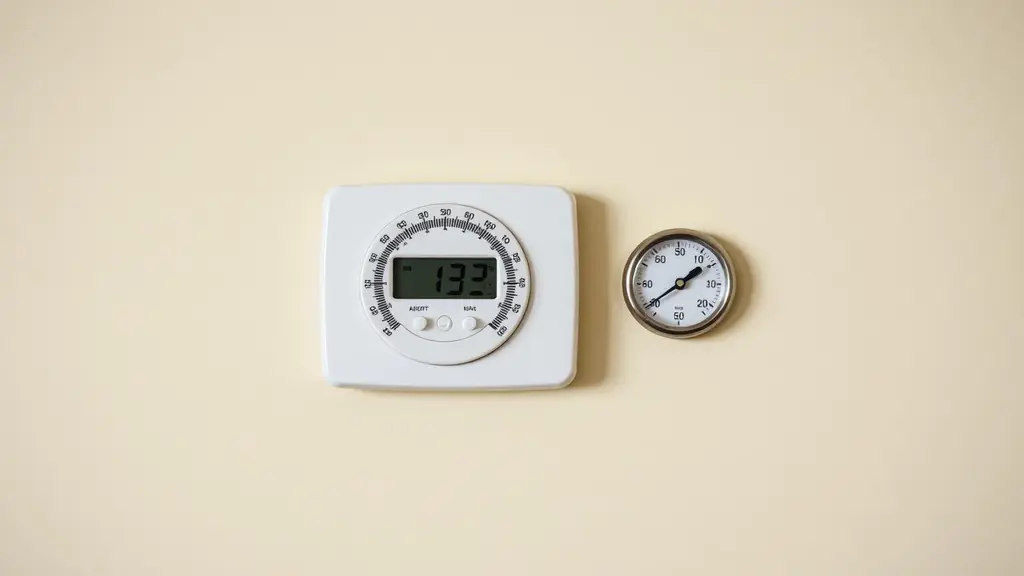
Quick answer: hotter than the thermostat setting
If the room feels hotter than the number on the thermostat, the thermostat is either reading the wrong temperature due to its location, or the AC is running but can't remove heat fast enough to reach that setpoint. Check thermostat placement and airflow before assuming equipment failure.
Get it inspected
Usually a comfort and efficiency issue. Treat it as urgent if indoor temperature climbs into unsafe territory (above roughly 85–90°F) or the AC stops cooling entirely — at that point, get same-day HVAC help, especially with vulnerable occupants in the home.
This is a specific and diagnosable mismatch: the thermostat display says 72°F, but the room clearly isn't 72°F. That gap can come from two very different places — the thermostat itself is measuring the wrong air, or the air conditioner is genuinely unable to bring the house down to the number it's being told to reach.
Start with the thermostat itself, since it's the fastest and cheapest thing to rule out, then work through airflow and equipment capacity if the sensor checks out.
Warning signs of hotter than the thermostat setting
- A room thermometer consistently reads several degrees above the thermostat's displayed temperature
- The thermostat shows the setpoint reached but the room clearly doesn't feel like it
- The mismatch is worse in rooms far from the thermostat
- The gap grows during the hottest part of the day and shrinks in the evening
Most likely causes of hotter than the thermostat setting, ranked
1. Thermostat location causing a false reading
Most common — the first thing to rule out
A thermostat mounted near a supply vent reads artificially cool air blowing directly on it and shuts the system off early. One on an exterior wall, in direct sun, near a lamp or TV, or above a heat-generating appliance reads artificially warm or cool depending on the source, in either case not representing the room as a whole.
10-minute self-test: Place a separate accurate thermometer directly next to the thermostat for 30 minutes. If it matches the thermostat's display, the sensor itself is fine and the mismatch is elsewhere in the house. If it doesn't match, placement or a failing sensor is the cause.
2. Thermostat schedule or programming not matching actual occupancy
Common and easy to overlook
A programmed schedule can put the system into an eco or setback mode during hours the house is actually occupied, or a temporary hold from a prior adjustment can silently override the intended setpoint, making it look like the AC 'isn't reaching' a temperature it was never actually told to reach.
10-minute self-test: Check the thermostat's current mode, hold status and schedule. Confirm it isn't in a scheduled setback or a leftover temporary hold from a previous setting.
3. Thermostat not calling for cooling correctly
Occasional
A miscalibrated or aging thermostat can fail to send a consistent call to the outdoor unit, causing short or infrequent cooling cycles that never bring the room down to the displayed setpoint even though the equipment itself is capable.
10-minute self-test: Listen or watch for whether the outdoor condenser actually turns on when you lower the setpoint by several degrees. If it doesn't start promptly, the thermostat's call signal is suspect.
4. AC unable to meet the house's cooling load
Common on hot days or in undersized systems
Even a properly calling, well-placed thermostat can't make the AC produce more cooling than the equipment has capacity for. On the hottest days, or in a house with a marginal system, the unit may run continuously and still leave the room several degrees above setpoint.
10-minute self-test: Feel the air at the nearest supply register. If it's genuinely cold (16–22°F below room temperature) but the room still won't drop, capacity or delivery — not the thermostat — is the bottleneck.
5. Blocked or restricted airflow reducing delivered cooling
Common
A dirty filter, closed or blocked registers, or furniture over a return grille all reduce the volume of cooled air actually reaching the room, even when the equipment itself is functioning normally.
10-minute self-test: Check the filter for buildup and confirm no vents are closed or blocked by furniture, rugs or curtains.
6. Duct leakage losing cooled air before it arrives
Common in homes with attic or crawlspace ductwork
Leaky supply ducts in an unconditioned attic lose cooled air — and pick up heat — before it reaches the register, so the air conditioner can be working correctly while delivering far less cooling than it's producing.
10-minute self-test: Compare register temperature at a vent close to the equipment versus one far away. A large gap points to duct losses.
7. Refrigerant issue reducing cooling capacity
Less common but significant when present
Low refrigerant charge from a leak reduces the system's ability to absorb heat, so it may run continuously without ever bringing the house to setpoint. This always needs a licensed technician — refrigerant systems are sealed and require certification to service.
10-minute self-test: Check for ice on the outdoor refrigerant lines or indoor coil, which often accompanies low charge. Do not attempt to open refrigerant lines yourself.
This cause is not a DIY repair — it needs a hvac technician.
8. Compressor weakening or failing to keep pace
Less common, more likely in older systems
An aging compressor can lose capacity gradually, still running and producing some cooling but no longer able to bring the house all the way down to setpoint, especially on hot days.
10-minute self-test: Note whether the problem has worsened gradually over one or more cooling seasons rather than appearing suddenly, which points toward gradual compressor wear.
This cause is not a DIY repair — it needs a hvac technician.
9. Solar heat gain or insulation gaps overwhelming the setpoint
Common contributor rather than a standalone cause
Even a fully healthy, correctly reading system can be outpaced by heavy solar gain through unshaded windows or heat conducting through thin attic insulation, especially in the room farthest from the thermostat.
10-minute self-test: Check whether the gap between actual and set temperature is worse in rooms with more window exposure or under a poorly insulated roof section.
Your 10-minute check list for hotter than the thermostat setting
- Place a separate thermometer next to the thermostat to confirm its reading
- Review the thermostat's schedule and hold status
- Check filter condition and confirm registers aren't blocked
- Feel supply air temperature at a nearby register
- Compare temperature in the room with the complaint to the room where the thermostat is located
What it costs to fix hotter than the thermostat setting
| Cause / repair | DIY cost | Professional cost |
|---|---|---|
| Thermostat relocation | $0–$50 (if wiring allows) | $150–$350 |
| Smart thermostat with remote room sensors | $120–$250 | $250–$450 installed |
| Filter replacement | $8–$25 | n/a |
| Duct sealing | $30–$80 | $900–$3,000 |
| Refrigerant leak diagnosis and repair | not safe/possible | $400–$2,500 |
| Compressor replacement | not safe/possible | $1,800–$3,000 |
| Manual J load calculation / system evaluation | n/a | $150–$400 |
See the full cost breakdown for this repair →
DIY fixes for hotter than the thermostat setting
Verify and correct the thermostat's schedule and holds
Clear any temporary holds and confirm the schedule matches when the house is actually occupied, so the system is being asked to cool when you need it.
Add a remote room sensor if your thermostat supports it
Many smart thermostats accept additional sensors placed in the room that runs hottest, letting the system respond to actual living-space temperature instead of the hallway near the thermostat.
Replace the filter and open all supply registers
Restoring airflow is free or cheap and immediately improves the volume of cooled air delivered to every room.
Relocate a thermostat that's clearly in a bad spot
If it's mounted in direct sun, above a heat vent, or right next to a supply register, moving it a few feet to a representative interior wall can solve the mismatch entirely — but have a technician handle the wiring if it's not a simple battery-powered unit.
Mistakes to avoid with hotter than the thermostat setting
- Repeatedly lowering the setpoint further when the room won't reach the current one — it won't cool faster and can lead to a frozen coil
- Assuming the thermostat is broken before checking its physical location and schedule
- Ignoring a growing gap between setpoint and actual temperature, since it often signals a developing refrigerant or compressor issue
Where homeowners waste money on hotter than the thermostat setting
- Buying a new thermostat when the room-vs-display test shows the existing one reads accurately — the problem lies elsewhere
- Repeatedly adjusting the setpoint lower instead of diagnosing why the current one isn't being reached
When to call a hvac technician about hotter than the thermostat setting
Ask a technician to check the temperature split across the coil (return air temperature minus supply air temperature) — a healthy system should show 16–22°F, which quickly tells you whether the thermostat or the equipment is the real issue.
If the thermostat location is clearly poor but rewiring isn't practical, ask about a wireless remote sensor compatible with your existing thermostat before replacing the whole unit.
What a hvac technician actually does on this job →
How to prevent hotter than the thermostat setting coming back
- Choose a thermostat location on an interior wall, away from vents, sun and heat sources, during any renovation or replacement
- Have refrigerant charge and airflow checked during an annual AC tune-up
- Use a smart thermostat with a remote sensor in problem rooms rather than relying on a single fixed location
Why Is My House Hotter Than the Thermostat Setting — questions homeowners ask
Why does my thermostat say 72 but the room feels much hotter?
Most often the thermostat is reading a spot that isn't representative of the room — near a vent, in sun, or on an exterior wall — or the AC genuinely can't deliver enough cooling to reach that number on a hot day.
Can a bad thermostat sensor cause this by itself?
Yes. Thermostat sensors can drift or fail over time, causing the display to show a temperature that no longer matches the room even when placement is fine.
Should I lower the setpoint further if the house won't reach it?
No. The system will run the same amount of cooling regardless of how low you set it; setting it lower won't make it cool faster and increases the risk of icing the coil from continuous run time.
How do I know if it's the thermostat or the AC itself?
Check supply air temperature at a register. If it's cold but the room won't drop, the AC is working and delivery or capacity is the issue. If the air isn't cold, the equipment needs service.
When does this become an emergency?
If indoor temperature climbs into unsafe territory, generally above 85–90°F, or the AC stops producing any cooling at all, treat it as urgent and call for same-day HVAC service, particularly with infants, elderly residents, or anyone with a heat-sensitive medical condition in the home.
Can a smart thermostat fix this problem?
Often, yes — particularly models that support remote room sensors, which let the system respond to the actual temperature in the room that complains most instead of just the thermostat's own location.
Problems related to hotter than the thermostat setting
- Why Is My House Not Cooling Down?Same part of the house — A house that won't cool down usually has more heat coming in — through the roof, walls, windows and leaky ducts — than the air conditioner can remove, rather than a broken unit.Heating, Cooling & Air Get it inspected
- Why Is My House Not Cooling Down With AC?Same part of the house — If your AC is running and the supply air even feels cold, but the house temperature won't fall, the most likely causes are restricted airflow, a dirty condenser, a partially frozen coil, or a system that's undersized or losing cooled air through leaky ducts before it reaches the rooms.Heating, Cooling & Air Urgent — act now
- Why Is My House Getting an AC That Runs Constantly?Same part of the house — An AC that runs constantly without reaching the thermostat setpoint is usually low on refrigerant, has a dirty condenser or evaporator coil restricting heat exchange, or is undersized for the house.Heating, Cooling & Air Get it inspected
- Why Is My House AC Not Blowing Cold Air?Same part of the house — Air blowing but not cold usually means the fan is set to ON instead of AUTO, the filter or coil is blocked and frozen, the outdoor condenser can't reject heat, or refrigerant has leaked out.Heating, Cooling & Air Urgent — act now
- Why Is My House Getting Hot Upstairs?The same hvac technician handles this one. Upstairs rooms run hotter mainly because heat naturally rises (the stack effect) and because attic heat radiates down through the ceiling.Heating, Cooling & Air Get it inspected
Sources used for hotter than the thermostat setting
- ENERGY STAR — Heating and Cooling Guide
- U.S. Department of Energy — Cooling Systems
- ASHRAE — Residential Load Calculation Standards
- Carrier — technical resources
- Trane — technical resources