
Why Is My House Not Cooling Down With AC?
Reviewed 2026-08-01 · How we research
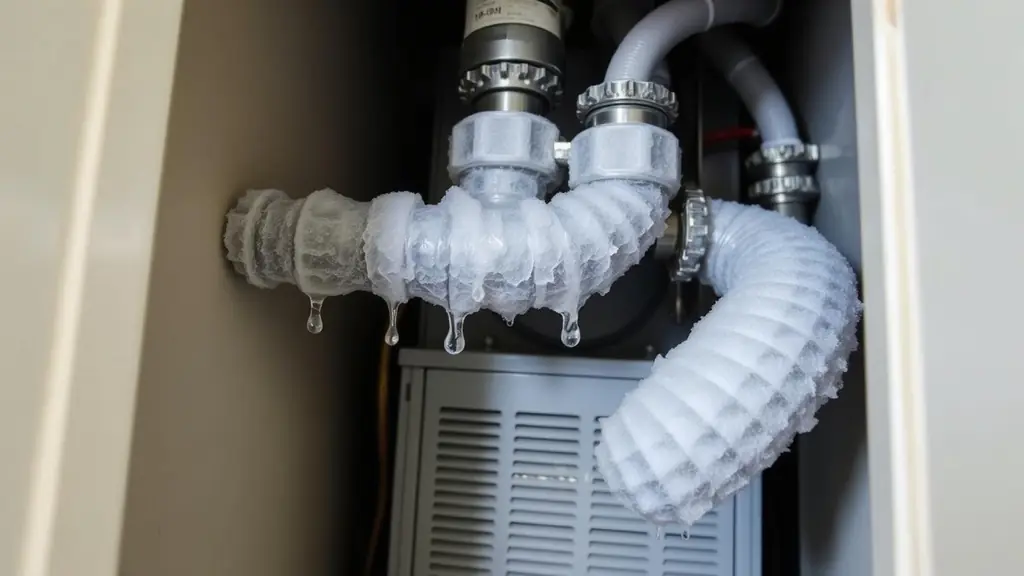
Quick answer: not cooling down with AC
If your AC is running and the supply air even feels cold, but the house temperature won't fall, the most likely causes are restricted airflow, a dirty condenser, a partially frozen coil, or a system that's undersized or losing cooled air through leaky ducts before it reaches the rooms.
Urgent — act now
If supply air is actually cold but the house still won't cool after several hours of runtime, schedule prompt service — continuing to run a struggling system risks a frozen coil or compressor damage, and delays finding equipment or sizing problems before the next heat wave.
This is a narrower problem than a general 'won't cool down' complaint: here the air conditioner is clearly operating, and the air coming out of the vents may genuinely feel cool, but the thermostat number and how the house actually feels aren't moving. That points at how much cooling capacity is being delivered and sustained over time, rather than whether the system works at all.
The self-test that separates the causes here is simple: measure the temperature of the air going into the return grille and the air coming out of a supply register. A healthy system should show a 16–22°F drop between the two. A smaller split points to a mechanical or airflow problem at the equipment; a normal split with a house that still won't cool points at losses or capacity happening after the air leaves the equipment.
Warning signs of not cooling down with AC
- AC runs continuously (or nearly so) without the thermostat ever reading setpoint
- Air at the register feels cool but not cold
- Indoor temperature falls very slowly, a degree or two over hours
- Higher-than-normal energy bills alongside the AC running longer than usual
Most likely causes of not cooling down with AC, ranked
1. Dirty filter or restricted airflow reducing capacity
Most common — the first and cheapest check
A clogged filter, blocked return grille, or closed supply registers all reduce the volume of air moving across the coil. Less airflow means less heat is being removed per minute even if the refrigerant side is perfectly healthy, so the house cools far more slowly than it should.
10-minute self-test: Check and replace the filter, confirm no furniture blocks return grilles, and make sure supply registers throughout the house are open.
2. Blocked or dirty outdoor condenser coil
Very common
The outdoor unit has to dump the heat pulled from inside the house into the outdoor air. A coil caked with dirt, pollen or grass clippings, or a unit crowded by plants, loses much of its ability to reject that heat, which throttles the whole system's real-world cooling output even though it's running.
10-minute self-test: Look at the outdoor unit's fins for visible buildup and confirm at least 2 feet of clearance around all sides.
3. Partially frozen evaporator coil
Common
A coil that's starting to ice over, from reduced airflow or low refrigerant, still moves some air but can't transfer heat efficiently. The system may run for hours moving barely-cool air without making real progress on the room temperature.
10-minute self-test: Check the indoor coil access panel or the refrigerant lines outside for visible frost, which often builds gradually rather than appearing all at once.
4. Low refrigerant charge
Common cause of a system that runs constantly but underperforms
A system low on refrigerant, due to a leak, can still produce noticeably cool air at the register while operating at a fraction of its rated capacity, which is exactly the pattern of 'the AC seems to be working but the house won't cool.' This must be diagnosed and repaired by a licensed technician.
10-minute self-test: Measure the temperature split between return and supply air. A split well under 16°F, especially alongside any coil icing, points strongly to low refrigerant.
This cause is not a DIY repair — it needs a hvac technician.
5. Weakening compressor
Less common, more likely in older systems
The compressor is what pressurizes refrigerant to actually move heat out of the house. A compressor that's losing efficiency with age can still run and produce some cooling while delivering only a portion of its original capacity, especially noticeable during the hottest weeks of summer.
10-minute self-test: Note whether the problem has developed gradually over more than one season, and whether cooling has always seemed to take unusually long even in mild weather — both point toward gradual compressor wear.
This cause is not a DIY repair — it needs a hvac technician.
6. Duct leakage or losses in a hot attic
Common in homes with attic ductwork
Even air leaving the equipment cold can arrive at the register warmer, or in reduced volume, if ducts running through a hot attic are leaking or poorly insulated. This produces exactly the 'air feels cold but house won't cool' symptom pattern.
10-minute self-test: Compare the temperature split near the equipment (return vs. the nearest supply register) to the split at a distant register. A big drop-off at distant vents points to duct losses along the way.
7. Equipment undersized for the home's actual cooling load
Common, especially after additions, more windows, or a warmer climate shift
A correctly functioning but undersized system will run continuously on hot days and still lose ground, because it simply doesn't have enough capacity for the house's real heat gain — separate from any mechanical fault.
10-minute self-test: Confirm the temperature split is normal (16–22°F) and there's no ice or dirty coil, yet the house still can't keep pace on the hottest days specifically — that pattern points to capacity, not a fault.
8. Extreme outdoor heat exceeding the system's rated capacity
Occasional, weather-driven
Air conditioners are rated to perform at a specific outdoor design temperature. On days well above that, especially combined with high humidity, even a correctly sized, well-maintained system will fall behind and take longer than usual to reach setpoint.
10-minute self-test: Compare performance today to a similarly hot day earlier in the season. If it's noticeably worse only on days with record or near-record heat, extreme load rather than a fault is the likely explanation.
9. Poorly insulated envelope adding continuous heat gain
Common contributing factor
Thin attic insulation and air leakage let heat in as fast as the AC removes it, meaning the system can be working at full, healthy capacity and still barely make progress against the house's own losses.
10-minute self-test: Check attic insulation depth; less than 10–12 inches suggests the envelope, not just the equipment, is limiting how fast the house can cool.
10. Thermostat issue masking real progress
Less common
A thermostat reading inaccurately, due to placement or a failing sensor, can make it look like the temperature isn't dropping when it actually is in most of the house, just not where the thermostat happens to be.
10-minute self-test: Place a separate thermometer in the room that feels hottest and compare its trend over a few hours to what the thermostat display shows.
Your 10-minute check list for not cooling down with AC
- Measure supply air temperature at the register nearest the equipment and at the return grille to calculate the temperature split
- Check and replace the filter
- Inspect the outdoor condenser for dirt or blocked airflow
- Look for ice on the indoor coil or outdoor refrigerant lines
- Compare today's performance to a similarly hot day earlier this season
What it costs to fix not cooling down with AC
| Cause / repair | DIY cost | Professional cost |
|---|---|---|
| Filter replacement | $8–$25 | n/a |
| Outdoor coil cleaning | $0–$20 | $100–$250 |
| Duct sealing | $30–$80 | $900–$3,000 |
| Refrigerant leak diagnosis and repair | not safe/possible | $400–$2,500 |
| Compressor replacement | not safe/possible | $1,800–$3,000 |
| Manual J load calculation | n/a | $150–$400 |
| AC replacement sized to actual load | n/a | $5,500–$14,000 |
See the full cost breakdown for this repair →
DIY fixes for not cooling down with AC
Run the return-vs-supply temperature test
With a $15 infrared thermometer, measure air at the return grille and at the nearest supply register. A 16–22°F drop means the equipment itself is healthy and the problem is downstream (ducts, envelope, or capacity); a smaller split points to a problem at the equipment.
Replace the filter and open all registers
This restores airflow across the coil immediately and costs very little, and is the single most common fix for reduced cooling capacity.
Hose off the outdoor condenser coil
With the power off at the disconnect, gently rinse the outdoor unit's fins from the inside out with a garden hose to remove dirt and debris buildup, restoring its ability to reject heat.
Clear plant growth and debris from around the outdoor unit
Maintain at least 2 feet of clearance on all sides so the condenser can move enough air across the coil.
Mistakes to avoid with not cooling down with AC
- Letting the system run around the clock for days assuming it will eventually catch up — if the temperature split is abnormal, it's a mechanical issue that needs service, not more run time
- Setting the thermostat drastically lower to 'force' faster cooling — it doesn't increase capacity and raises the risk of icing the coil
- Delaying service on a partially frozen coil, since continued operation worsens the ice buildup
Where homeowners waste money on not cooling down with AC
- Adding refrigerant without confirming and repairing a leak first
- Replacing the whole system before a proper load calculation confirms it's actually undersized rather than simply dirty or leaking ducts
When to call a hvac technician about not cooling down with AC
Ask the technician to measure and report the actual temperature split and refrigerant pressures rather than just saying the system 'checks out' — those two numbers are what actually distinguish a capacity problem from a mechanical fault.
If duct losses are suspected, request a duct blaster test to quantify leakage rather than a visual inspection alone.
What a hvac technician actually does on this job →
How to prevent not cooling down with AC coming back
- Clean the outdoor condenser coil at the start of each cooling season
- Replace filters on schedule year-round, not just in summer
- Have refrigerant charge and duct condition checked during an annual tune-up
- Keep landscaping trimmed back from the outdoor unit
Why Is My House Not Cooling Down With AC — questions homeowners ask
The air feels cold but my house still isn't cooling — what's wrong?
This usually means the equipment itself is producing cold air but losing capacity somewhere else — restricted airflow, a dirty condenser, duct leakage, or a house that gains heat as fast as the AC removes it.
What is a normal temperature split for central air?
A correctly operating system typically drops supply air 16–22°F below return air temperature. Readings well outside that range point to an airflow or refrigerant problem.
Could my ductwork be the reason the house won't cool even though the AC runs fine?
Yes. Ducts leaking into a hot attic can lose or warm a significant share of the cooled air before it reaches the rooms, even when the equipment itself is performing normally.
Is it normal for the AC to run all day during a heat wave?
Longer runtimes during extreme heat are normal, but the house should still gradually approach setpoint. If it makes essentially no progress over several hours, something beyond just outdoor temperature is limiting capacity.
How do I know if my AC is just too small for my house?
If the temperature split is normal and there's no ice or dirty coil, but the house still can't keep up specifically on the hottest days, undersized capacity relative to the home's heat gain is the likely explanation.
Can a dirty outdoor unit really slow down cooling that much?
Yes — the outdoor coil has to reject all the heat pulled from inside the house, and a dirt-caked or crowded coil can measurably reduce a system's effective cooling capacity.
Problems related to not cooling down with AC
- Why Is My House Not Cooling Down?Same part of the house — A house that won't cool down usually has more heat coming in — through the roof, walls, windows and leaky ducts — than the air conditioner can remove, rather than a broken unit.Heating, Cooling & Air Get it inspected
- Why Is My House AC Not Blowing Cold Air?Same part of the house — Air blowing but not cold usually means the fan is set to ON instead of AUTO, the filter or coil is blocked and frozen, the outdoor condenser can't reject heat, or refrigerant has leaked out.Heating, Cooling & Air Urgent — act now
- Why Is My House Hotter Than the Thermostat Setting?Same part of the house — If the room feels hotter than the number on the thermostat, the thermostat is either reading the wrong temperature due to its location, or the AC is running but can't remove heat fast enough to reach that setpoint.Heating, Cooling & Air Get it inspected
- Why Is My House Getting an AC That Runs Constantly?Same part of the house — An AC that runs constantly without reaching the thermostat setpoint is usually low on refrigerant, has a dirty condenser or evaporator coil restricting heat exchange, or is undersized for the house.Heating, Cooling & Air Get it inspected
- Why Is My House So Humid With the AC On?The same hvac technician handles this one. If your AC keeps the temperature comfortable but the air still feels damp, the system is very likely short-cycling — running in bursts too brief to pull humidity out of the air — or its fan setting, drainage or airflow is undermining its dehumidification even while it cools normally.Moisture, Water & Mold Get it inspected
Sources used for not cooling down with AC
- ENERGY STAR — Heating and Cooling Guide
- U.S. Department of Energy — Cooling Systems
- ASHRAE — Residential Load Calculation Standards
- Carrier — technical resources
- Trane — technical resources