
Why Is My House Water Pressure Low?
Reviewed 2026-08-01 · How we research
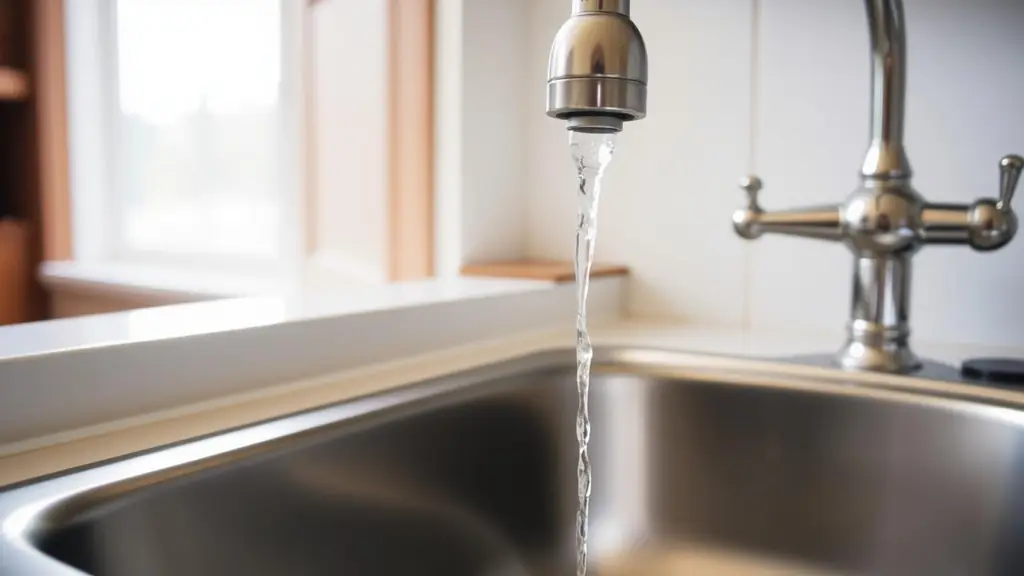
Quick answer: water pressure low
The first question is whether one fixture is weak or the whole house is weak. One fixture points to a clogged aerator or cartridge; the whole house points to a valve, pressure-reducing valve, supply pipe, or — for well systems — the pressure tank or pump.
Get it inspected
Low pressure is usually an inconvenience, not a hazard, but a sudden whole-house drop can signal a hidden leak or supply failure that needs prompt attention.
Low water pressure safety warning: check for a hidden leak
If whole-house pressure drops suddenly and you also see unexplained wet spots, hear running water with everything off, or notice the water meter spinning with all fixtures closed, shut off the water at the main if you can do so safely and call a plumber promptly.
Before chasing any specific cause, run this test: turn on a full-flow fixture like a tub spout at every point in the house, including hose bibbs. If only one fixture is weak, the problem is local to that fixture. If everything is weak, the problem is upstream — in the main supply, the pressure-reducing valve, the meter, or (for well systems) the tank and pump.
The EPA's WaterSense program points to incoming pressure in the roughly 45–60 psi range as the sweet spot for good fixture performance without excess wear on plumbing and appliances. Pressure meaningfully below that range will feel weak at showers and upper-floor fixtures even when nothing is actually broken.
Warning signs of water pressure low
- One faucet or showerhead noticeably weaker than the rest of the house
- Pressure that dropped gradually over weeks or months
- Pressure that dropped suddenly, in a single day
- Hot water pressure weak while cold pressure is normal, or the reverse
- Pressure that fluctuates or surges rather than staying steady
Most likely causes of water pressure low, ranked
1. Clogged faucet aerator or showerhead
Most common — affects a single fixture
Mineral scale and sediment collect in the small screen inside an aerator or showerhead, narrowing the opening water has to pass through. This is by far the most common cause of a single weak fixture and has nothing to do with the rest of the house's supply.
10-minute self-test: Unscrew the aerator or showerhead and run water directly from the pipe. If pressure returns to normal, the aerator or showerhead was the restriction.
If that test is negative: If pressure is still weak with the aerator removed, or if more than one fixture is affected, look further upstream.
2. Worn or clogged fixture cartridge or valve
Common — affects a single fixture
Faucet and shower cartridges contain small internal passages that collect mineral deposits over years of use, or the rubber seats and springs wear out and restrict flow even when the fixture is fully open. This is common in fixtures over 8–10 years old and in homes with hard water.
10-minute self-test: Compare pressure at the fixture's hot and cold sides separately. If one side is weak and the other is normal, the cartridge or the supply line to that side is the likely culprit.
This cause is not a DIY repair — it needs a licensed plumber (or well professional where applicable).
3. Partially closed shutoff valve or meter valve
Common after any recent plumbing work
Shutoff valves under sinks, at the water heater, at the main, or at the street-side meter valve are sometimes left partially closed after repairs, renovations, or a meter reading. A valve that isn't fully open restricts flow to everything downstream of it.
10-minute self-test: Locate the main shutoff and any valve near the meter and confirm each is turned fully to the open position.
4. Failing pressure-reducing valve (PRV)
Common in homes on municipal supply with a PRV installed
A PRV steps down high street pressure to a safer level for household plumbing. When the internal diaphragm or spring wears out, a PRV can fail toward too little pressure (or too much), affecting every fixture in the house at once.
10-minute self-test: If your home has a PRV (usually a bell-shaped valve near the main shutoff), note the pressure gauge reading if one is installed; a reading well under 45 psi with a PRV present points to PRV failure.
This cause is not a DIY repair — it needs a licensed plumber (or well professional where applicable).
5. Hidden leak in the supply piping
Less common but important to rule out
A leak anywhere in the supply line — inside a wall, under a slab, or underground between the meter and the house — diverts water away from fixtures and drops pressure throughout the house. Leaks often show up as an unexplained rise in the water bill or a meter dial that keeps moving with everything off.
10-minute self-test: Turn off every fixture and appliance, then watch the water meter's leak indicator (a small triangle or dial) for two minutes. Any movement means water is flowing somewhere in the system.
This cause is not a DIY repair — it needs a licensed plumber (or well professional where applicable).
6. Corroded or restricted galvanized piping
Common in homes built before the 1960s with original galvanized pipe
Galvanized steel pipe rusts from the inside over decades, and mineral scale builds up on the corroded surface until the internal diameter is a fraction of its original size. This causes a slow, whole-house pressure decline over years rather than a sudden drop.
10-minute self-test: Check an exposed section of pipe near the water heater or in a basement for a dull gray color and a magnet that sticks to it — galvanized pipe is magnetic, copper and PEX are not.
This cause is not a DIY repair — it needs a licensed plumber (or well professional where applicable).
7. Municipal supply issue
Occasional, usually temporary
Water main repairs, high-demand periods, nearby fire hydrant use, or utility maintenance can temporarily reduce street-side pressure to every home on that section of main. This affects neighbors on the same line at the same time.
10-minute self-test: Ask a neighbor on the same street whether their pressure is also low, or check your utility's website or service alerts for planned main work.
8. Failing well pressure tank (well systems only)
Common cause on private well systems
The pressure tank stores a cushion of pressurized water and air so the pump doesn't run continuously. When the internal bladder fails or the air charge leaks out, the tank can no longer hold pressure between pump cycles, so pressure sags noticeably as water is used.
10-minute self-test: Listen for the well pump cycling on and off much more frequently than usual, which is a classic sign of a waterlogged or failed pressure tank.
This cause is not a DIY repair — it needs a licensed plumber (or well professional where applicable).
9. Failing well pump (well systems only)
Less common but serious when it occurs
A worn pump, a failing pressure switch, or a pump that can no longer keep up with household demand produces steadily declining pressure across the whole house, sometimes accompanied by air sputtering from faucets.
10-minute self-test: Note whether pressure is weak from the moment you turn on a fixture, rather than starting normal and then fading, which points more toward the pump itself than the tank.
This cause is not a DIY repair — it needs a licensed plumber (or well professional where applicable).
Your 10-minute check list for water pressure low
- Test full-flow fixtures at multiple points in the house to isolate local versus whole-house pressure loss
- Remove and inspect aerators and showerheads for mineral buildup
- Confirm the main shutoff and any meter-side valve are fully open
- Watch the water meter's leak indicator with everything off
- Compare hot-side and cold-side pressure separately at the same fixture
- For well systems, listen for unusually frequent pump cycling
What it costs to fix water pressure low
| Cause / repair | DIY cost | Professional cost |
|---|---|---|
| Clean or replace an aerator or showerhead | $5–$20 | n/a |
| Replace a fixture cartridge | $15–$40 | $150–$300 |
| Fully open a shutoff or meter valve | $0 | n/a |
| Replace a pressure-reducing valve | n/a | $300–$600 |
| Leak detection and repair | n/a | $250–$1,500+ |
| Repipe galvanized supply lines | n/a | $4,000–$15,000+ |
| Replace a well pressure tank | n/a | $500–$1,500 |
See the full cost breakdown for this repair →
DIY fixes for water pressure low
Clean or replace aerators and showerheads
Soak the screen in vinegar overnight or replace it outright; this resolves the majority of single-fixture pressure complaints.
Fully open all shutoff valves
Check the main shutoff, the meter valve if accessible, and any valve under sinks or at the water heater that could have been left partially closed after work.
Run the meter leak check
With everything off, watch the meter's leak indicator for two minutes; if it moves, stop troubleshooting fixtures and call a plumber for leak detection.
Note the pattern before calling a pro
Write down whether it's one fixture or the whole house, sudden or gradual, and hot side or cold side — this saves diagnostic time and cost.
Mistakes to avoid with water pressure low
- Replacing multiple fixtures before confirming whether the issue is local or house-wide
- Ignoring a sudden whole-house pressure drop, which can indicate an active leak
- Assuming a PRV failure without checking the simpler causes first
Where homeowners waste money on water pressure low
- Replacing a water heater to fix a hot-water-only pressure complaint without first checking the cartridge and supply line to that fixture
- Installing a booster pump before confirming the actual incoming psi with a gauge
When to call a licensed plumber (or well professional where applicable) about water pressure low
Tell the plumber upfront whether the problem is one fixture or the whole house — it changes the entire diagnostic path and can save a service call.
Ask for an actual psi reading with a gauge rather than a subjective 'feels weak' assessment before authorizing any repair.
What a licensed plumber (or well professional where applicable) actually does on this job →
How to prevent water pressure low coming back
- Clean aerators and showerheads every 6–12 months, more often with hard water
- Have a PRV tested during any plumbing service call if the home is on municipal supply
- Monitor the water bill for unexplained increases, an early leak indicator
- Have well pressure tanks checked annually for correct air charge
Why Is My House Water Pressure Low — questions homeowners ask
Can low water pressure mean there is a leak?
Yes. A hidden leak diverts water away from fixtures and can cause a sudden, whole-house pressure drop. Check the water meter's leak indicator with everything off; any movement means water is flowing somewhere in the system and warrants a professional leak detection.
What water pressure is normal for a house?
The EPA's WaterSense program points to roughly 45–60 psi at the point of entry as the range that supports good fixture performance without excess wear on plumbing and appliances.
Why is my pressure low in the shower but fine at the sink?
This usually points to a clogged showerhead or a worn shower cartridge rather than a whole-house supply problem, since the rest of the house is unaffected.
Why is my hot water pressure low but cold water is fine?
This pattern usually points to a restriction on the hot side only — commonly sediment in the water heater tank, a partially closed hot-side shutoff, or a worn hot-side cartridge.
Can a water softener or filter cause low pressure?
Yes. A clogged sediment filter or a softener resin bed overdue for cleaning restricts flow to the entire house and should be checked before assuming a supply-side problem.
Do I need a whole-house pressure booster?
Only after confirming with a gauge that incoming pressure is genuinely below the 45–60 psi target and that no simpler cause — clogged aerator, closed valve, failing PRV — explains the symptom.
Is low pressure worse in the morning?
In some neighborhoods, high simultaneous demand during morning routines temporarily lowers municipal pressure; if it's isolated to certain hours and affects neighbors too, it's a supply-timing issue rather than a plumbing defect.
Problems related to water pressure low
- Why Is My House Getting Banging Pipes?Same part of the house — Banging pipes, known as water hammer, happen when a fast-closing valve — a washing machine solenoid or a quick-close faucet — stops moving water abruptly, sending a pressure shockwave through unrestrained or unsupported pipe.Plumbing, Drains & Sewer Low urgency — monitor
- Why Is My House Getting Brown Water?Often shows up alongside this problem. Brown water is almost always iron oxide (rust) or sediment.Plumbing, Drains & Sewer Get it inspected
- Why Is My House Getting No Hot Water?Often shows up alongside this problem. No hot water usually traces to a tripped high-limit switch, a burned-out electric heating element, an extinguished gas pilot, or a tank so sediment-clogged that it can no longer heat efficiently.Plumbing, Drains & Sewer Get it inspected
- Why Is My House Getting Slow Drains?A slow drain is a partial blockage restricting flow, most often hair and soap scum in a bathroom sink, grease in a kitchen sink, or a developing clog further down a shared branch or main line.Plumbing, Drains & Sewer Low urgency — monitor
- Why Is My House Getting a High Water Bill?Same part of the house — A high water bill without a change in usage habits usually means a running toilet, an underground leak between the meter and the house, an irrigation system malfunction, or a fixture leak that has gone unnoticed.Plumbing, Drains & Sewer Get it inspected
- Why Is My House Getting Frozen Pipes?Same part of the house — Pipes freeze when water inside them drops below 32°F for long enough to form ice, which most often happens in unheated or poorly insulated spaces like exterior walls, crawlspaces, attics and garages during sustained cold snaps.Plumbing, Drains & Sewer Urgent — act now
Sources used for water pressure low
- U.S. EPA WaterSense — Fix a Leak
- USGS — Water Science School
- International Code Council — International Plumbing Code